.:[Double Click To][Close]:.

Online CPM Advertising | Advertising blog
Showing posts with label documentaries. Show all posts

G-A-Y Day(s)- Kate Davis/David Heilbroner- Stonewall Uprising (2010)- DVD5 (NTSC Format)

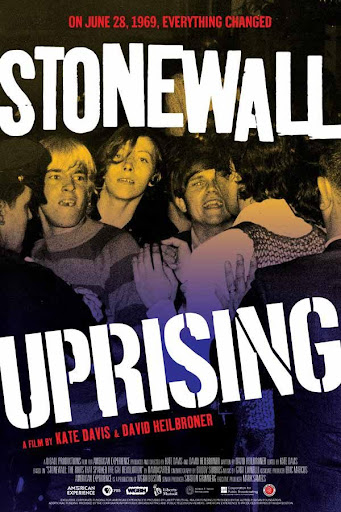
stonewall uprising
When you treat people as if they're subhuman and steal their voice and their liberty, they'll eventually turn on you. The Stonewall uprising was when the gay community finally had the sense to push back against a system that had failed them at every turn. The Mike Wallace appearance and the jaded history of the Atascadero State Hospital would make Josef Goebbels proud. This is some scary, scary history. Another "must-download" I dare say. Enjoy!

the stonewall uprising

From Stephen Holden at the N.Y Times:

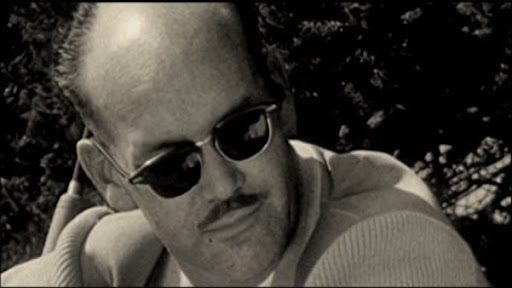
“The average homosexual, if there be such, is promiscuous. He is not interested in, nor capable of, a lasting relationship like that of a heterosexual marriage.” So declared Mike Wallace in authoritative voice-of-God tones in “The Homosexuals,” a tawdry, sensationalist 1966 “CBS Reports,” excerpted in Kate Davis and David Heilbroner’s valuable film, “Stonewall Uprising.” Funny how yesterday’s conventional wisdom can become today’s embarrassment.

The most thorough documentary exploration of the three days of unrest beginning June 28, 1969, when patrons of the Stonewall Inn, a seedy Mafia-operated gay bar in Greenwich Village, turned on the police after a routine raid, “Stonewall Uprising” methodically ticks off the forms of oppression visited on gays and lesbians in the days before the gay rights movement. “Before Stonewall there was no such thing as coming out or being out,” says Eric Marcus, the author of “Making Gay History: The Half-Century Fight for Lesbian & Gay Equal Rights.” “People talk about being in and out now; there was no out, there was just in.”

the stonewall uprising

At the time of the riots, homosexuality was illegal in every state except Illinois. Before the laws were changed, one commentator observes, gay bars offered the same kind of social haven for an oppressed minority as black churches in the South before the civil rights movement. The cultural demonizing of gay men in public service films depicted them as at best, psychologically damaged and at worst, ruthless sexual predators. Lesbians were nearly invisible.

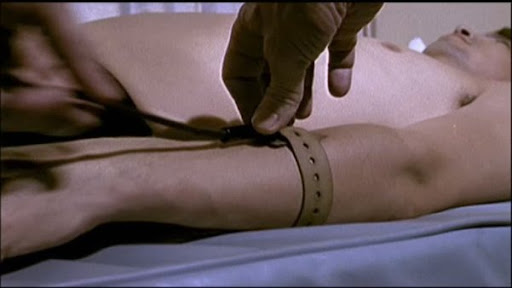
The same “CBS Reports” peddled the medical opinion, since discredited, that homosexuality was determined in the first three years of life. The movie has ominous vintage footage of electroshock aversion therapy being administered, accompanied by the suggestion that it might be a promising cure for what was widely regarded as a mental illness. The most unsettling historical tidbit concerns the treatment of homosexual patients at a mental hospital in Atascadero, Calif., where some were injected with a drug that simulated drowning, a process that one commentator describes as “chemical waterboarding.”

the stonewall uprising

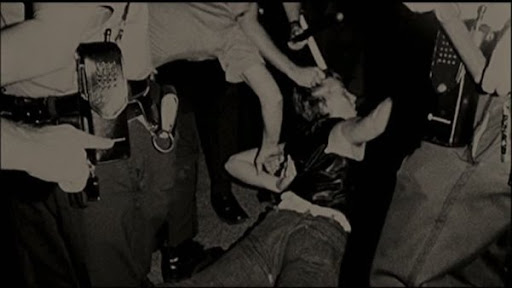
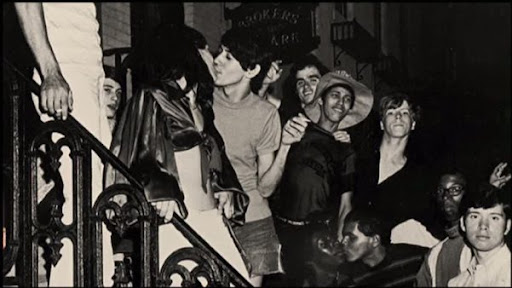
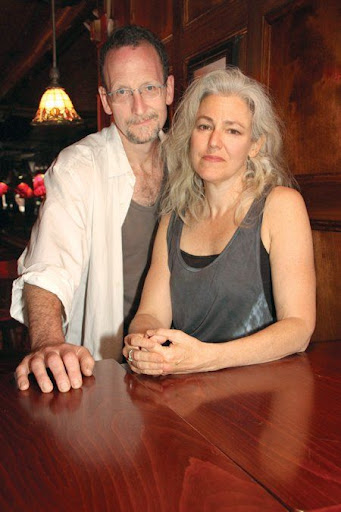
It is a sad indication of the marginalization of homosexuality in the late 1960s that media coverage of the Stonewall riots was mostly after the fact. And even then it was cursory and often condescending. Because so little photographic documentation exists of the unrest, the film relies mostly on eyewitnesses, including Seymour Pine, the now-retired police officer who led the initial raid of six officers and who describes it as “a real war.” The details of the raid are reconstructed by several who were present, including Howard Smith and Lucian Truscott IV, journalists for The Village Voice whose offices were nearby. The film focuses on the first night of the unrest.

As one rioter remembers: “All of a sudden the police faced something they had never seen before. Gay people were never supposed to be threats to police officers. They were supposed to be weak men, limp-wristed, not able to do anything. And here they were lifting things up and fighting them and attacking them and beating them.” It was the first stirring of what came to be known as gay pride. “This was the Rosa Parks moment, the time that gay people stood up and said no,” Mr. Truscott recalls. “And once that happened, the whole house of cards that was the system of oppression of gay people started to crumble.”

the stonewall uprising

Technical Information:

Title: Stonewall Uprising
Year: 2010
Country: USA
Directors: Kate Davis, David Heilbroner

Source: Retail DVD5
DVD Format: NTSC
Container: .iso + mds
Size: 4.16 GB
Length: 1:23:21
Programs used: ImgBurn

Resolution: 720x480
Aspect Ratio: 16:9
Video: MPEG2 @~ 5800 kb/s
Frame Rate: 29.97 fps

Audio Channel 1: Dolby AC3 5.1 @ 448 kb/s
Audio Channel 2: Dolby AC3 Stereo @ 224 kb/s

Subtitles: English

Menu: Yes
Video: Untouched
DVD Extras: None
the stonewall uprising

(Use JDownloader to speed up downloading and avoid file stalls.)

Stonewall Uprising Megaupload Links
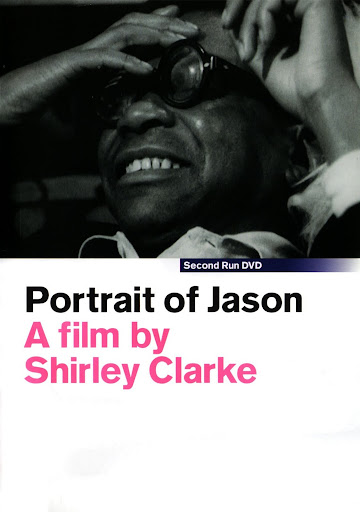


G-A-Y Day(s): Shirley Clarke- Portrait of Jason (1967)- DVD9 (PAL Format)

shirley clarke- portrait of jason
Ingmar Bergman's favorite film?!? Good enough for me.


shirley clarke- portrait of jason

From Frank at Cathode Ray Tube:

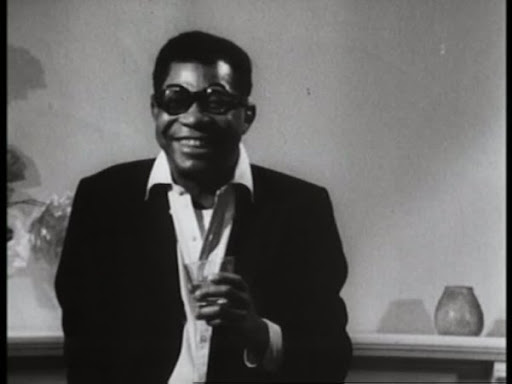
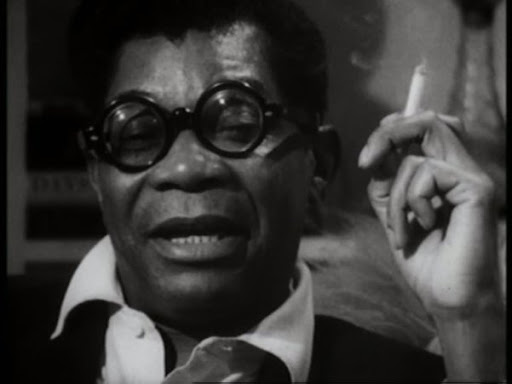
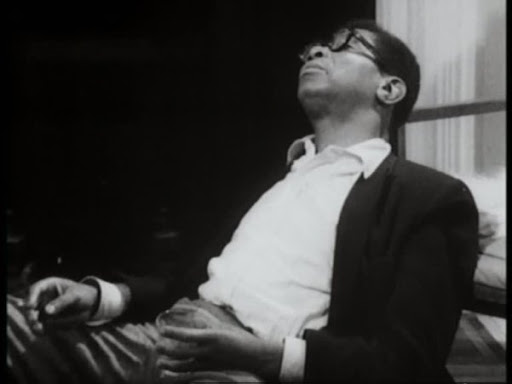
As fantastic a piece of cinéma vérité that you could wish for, this film by avant-garde artist and performer Shirley Clarke deserves to be seen as just as influential a work as the films of "D. A."Pennebaker, the Maysles and Warhol. It transcends a number of forms and genres and is a documentary, a pre-Stonewall gay confessional, an art film and a record of an extraordinary 'performance'.

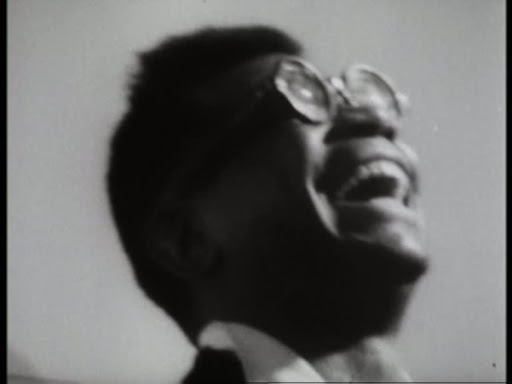
For over 90 minutes Jason Holliday, who we learn is simply the pseudonym for Aaron Payne, holds court. The camera, as in Warhol's singular cinematic portraits, is fixed on this one man as he slowly unravels under the influence of drink and drugs. It is brutal and voyeuristic and with the goading of Clarke and Jason's friends Carl and Richard from behind the camera it pre-empts much of reality television's territory of ritual humiliation and redemption.

It mirrors current media obsession with the 'real' that emerges from what Laurie Ouelette and Susan Murray define as reality television in "nonscripted access to 'real' people in ordinary and extraordinary situations" and where "the access to the 'real' is presented in the name of dramatic uncertainty, voyeurism and popular pleasure." Clarke's film is not just about the 'real' of reality television but it is also concerned with the construction of the real, the realness of Jason's identity, particularly the 'realness' that he himself offers as a mark of his 'genuine' gay self.


shirley clarke- portrait of jason

With gay identity at the centre of the film, Clarke also pre-figures what gay men themselves will determine as their 'realness' within a heteronormative culture that takes us from the drag queens facing up to riot police in Greenwich Village in 1969 right through to the 'realness' of young black gay teenagers in Jenny Livingston's Paris is Burning, a 1990 documentary that introduced us to another form of gender performance in 'vogueing'.

In Jason Holliday's ritualisation of being black and gay in late 1960s America we see an embryonic equivalent of Livingston's film where 'realness' becomes an effect of postmodernism and what Tim Dean sees as the "the imitative and fictive structure of identity."

As the film progresses, Jason weaves a self-narrative and slowly uncovers a multiple of identities - gay hustler, house-boy, aspiring cabaret star, and his upbringing with a violent, homophobic father 'Brother Tough'. Whether you find much of it funny depends on your sense of humour and, while it may be reductive to say that the majority of gay viewers will recognise much of themselves in Jason, the film should be celebrated for its revelatory nature about a black gay life in pre-Liberation America, providing a schizophrenic picture of wantoness, truth and self-delusion such that only the books of John Rechy, especially City of Night and Numbers or Mart Crowley's Boys in the Band would later touch upon in the period.


shirley clarke- portrait of jason

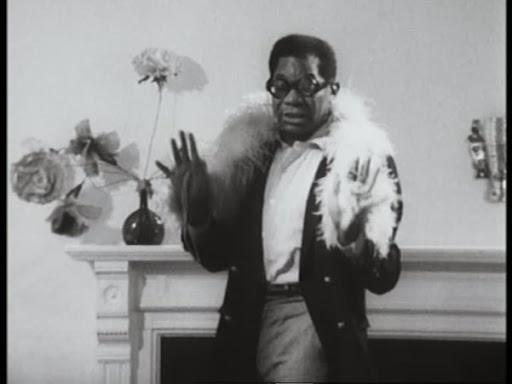
Certainly those of us who understand how gay men use self-deprecation, bitchiness and bathos, as a survival mechanism that helps us to assess and set appropriate expectations as well as amuse in social situations, will find a form of kinship here. This is evident in the frank and knowing way Jason explains the palette of sexual activity he indulges in as a gay whore, in the preview of his cabaret act which comes complete with drag props such as hats and feather boa to regale us with a Mae West impression, and in the often hilarious anecdotes about his work as a house boy for rich, white clients in San Francisco. One of the most unsettling and extraordinary moments is when he imitates Butterfly McQueen's Prissy from Gone With the Wind and spectacularly conflates racial stereotyping and the performative codes of drag while also offering these gay and racial stereotypes as part of his own solipsist identity.

When he does explore his childhood roots and the pain endured from an ignorant father's beatings then the film certainly becomes less about recording a nightclub turn and more about exhuming the social forces that shape gay men's characters and nature.

It also becomes the focal point from which you can extrapolate Jason's mode of existence and his drift into a world of rent boys and skivvying for white, rich sociopaths.


shirley clarke- portrait of jason

How much of this is 'real' or 'performance' is never clear because as much as Clarke's camera plunges in an out of focus or the screen goes black (signifiers, along with the off camera questions, of the constructed nature of this performance and the film itself), Jason slips and slides across a number of identities and you do wonder how much of this is merely an opportunity to finally perform his nightclub act while revealing some very private and personal truisms learned from a particularly harsh life on the streets.

When he bursts into song (singing 'The Music That Makes Me Dance' from Funny Girl as he expounds on his attempt to carve out a nightclub act) he reveals as much about his own desires for the right man to come along, his own desires to make it, as he does about his taste in musicals. Jason, in summing up the harsh reality of his life, offers “It only hurts when you think of it. And if you’re real you’ll think of it a long, long time” and clearly Clarke did offer him a long time to mull it over. This 90 odd minutes is culled from a 12 hour period of filming "a stoned whore" as Jason candidly refers to himself.

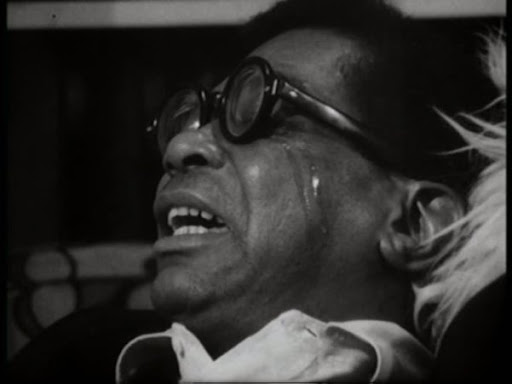
The final third of the film is raw and emotional. By this point, Jason has literally worn himself down, and many viewers will probably feel he has done the same to them, and the drugs and drink have taken their toll. The 'performance' boils away to reveal the rather damaged, lonely individual beneath with a certain amount of unpleasant barracking from his friends behind the camera, with one describing him as "a rotten queen", reducing him to tears of frustration and identity confusion.


shirley clarke- portrait of jason

It is at this point that the film is revealed as a provocation on behalf its makers who clearly wanted to get beneath the skin of someone they knew and regarded with a mixture of love and loathing. Amazingly, Jason remains strong throughout and does not fall into a trap of self-pity because, as Tom Sutpen rightly states in his review of the film, "Jason is far too intelligent and too keenly awake to the absurdities in his life for his moments of excessive self-loathing to be anything more than another emotional hue on his palette, let alone the remnant of a wholly uncommon tragedy".

Portrait of Jason an extraordinary film and a fascinating record of being out, gay and black in pre-Stonewall America and, while it captures one man walking through the frustrated ambitions and past misdemeanours of his life in public, it is also achieved knowing that Jason has willingly entered into a pact with a film-maker who knows what she wants from the film and who understands the subject all too well.

The version on DVD here is a new digital transfer of the fully-restored film print prepared by the Film Department of the Museum of Modern Art (MoMA), New York. The quality isn't particularly stunning but then you should not expect this from a black and white, 16mm piece of cinéma vérité that's probably been gathering its fair share of dust over the years. It's raw and uncomplicated cinema.


shirley clarke- portrait of jason

Technical Information:

Title: Portrait of Jason: A Film By Shirley Clarke
Year: 1967
Country: USA
Director: Shirley Clarke

Source: DVD9 Retail
DVD Format: PAL
Container: .iso + mds
Size: 6.07 GB
Length: 1:38:23
Programs used: ImgBurn

Resolution: 720x576
Aspect Ratio: 4:3
Video: MPEG2 @ ~5800 kb/s
Frame Rate: 25 fps

Audio: English- Dolby AC3 Stereo @ 192 kb/s
Subtitles: None

Menu: Yes
Video: Untouched
DVD Extras: Introductions by Wendy Clarke, The "Love Tapes"


Special thanks to RBone for the original up!


shirley clarke- portrait of jason

(Use JDownloader to speed up downloading and avoid file stalls.)

Portrait of Jason Megaupload Links


An American Family- The Complete Series (1973-2003)- VHS Rip (XviD)


"But leclisse...hardly anyone knows about the Loud family. Why in Gods name would you be posting such a trivial early seventies television program? So what if An American Family was the very first reality show ever, Lance Loud was the first openly gay person in the history of American television, and the program foreshadowed the ever-so-slow degradation of consumer based American society. That's boring!"

"Whatever..."

Here's An American Family. Welcome to the American Dream!


LoveAndSqualor's editorial note: We posted the first three episodes a while back, and then had some trouble uploading the rest of them to Megavideo. They're all streaming now, along with links for downloading.

The VHS rip quality is godawful, but it's still substantially better than the other versions out there. We will upgrade when we can (apparently, the library at NYU has a set of DVDs sourced from the masters, so if anyone has access and could make us a copy, we would be very very appreciative...)

leclisse note: This is a complete re-working of our older post, pre-Cinema Verite. I cannot believe what a crappy Lance Loud HBO got for the part. They (HBO) made the horrid mistake of giving the bad actor a David Cassidy hair-do too, and Lance would have never been caught dead with a David Cassidy hair-do. Did they not bother to watch the original program? Other than the Lance mis-step and the poor dialogue handed to James Gandolfini, Cinema Verite was a very interesting program. Tim Robbins and the oh-so-beautiful Diane Lane were the perfect Bill and Pat Loud.

For all you young retards out there in RetardLand that thought The Real Life was the first reality show...well...you were sadly mistaken. We have An American Family to thank, or curse.


From subci.com:

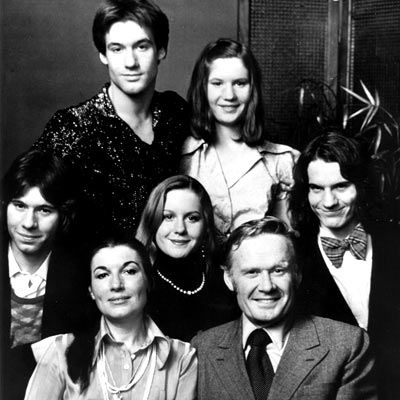
An American Family was television's first reality show, shot documentary style in 1971 and first aired in the United States on PBS in 1973. The show was twelve episodes long, edited down from about 300 hours of footage, and chronicled the experience of a nuclear family, the Loud family of Santa Barbara, California, during a period of time when parents Bill and Pat Loud separated (in a infamous and powerful on-camera sequence) and Pat filed for divorce.

The Louds had five children. One of them, Lance, was a gay 20-year-old man who occasionally wore lipstick and women's clothes and took his mother to a drag show in the second episode of the series. He lived in the Chelsea Hotel during its Warholesque heydey and this is captured in the second episode (Holly Woodlawn was his neighbor and appears in several scenes, along with Candy Darling, Jackie Curtis, and other famous drag queens of the time). Scholars sometimes mention that Lance came out of the closet on TV, but this is technically incorrect — he was simply gay without announcement or drama; his family says that they had known for quite a while. As such, Lance was the first openly gay character on television and has become something of a gay icon.

On airing, the show drew over 10 million viewers — phenomenal viewership for PBS in 1973 (or even presently) — and drew considerable controversy. The series was widely discussed in the media in 1973, and the Loud family appeared on the cover of the March 12, 1973 issue of Newsweek magazine.

In 1983, PBS broadcast AMERICAN FAMILY REVISITED, and in 2003 PBS broadcast A DEATH IN AN AMERICAN FAMILY, shot in 2001, visiting Lance and his family again at Lance's request. Lance was 50 years old, had gone through 20 years of addiction to crystal meth, and was HIV positive and dying of hepatitis C. In the winter of 2001, a few months after 9/11, Lance Loud was gone. Far from a conventional "happy ending", watching the entire arc of this brilliant masterpiece from start to finish is unforgettable: Lance's downfall from a young, vibrant and magnetically alive kid in 1973, to a man reaching middle age in 1983 (with shorter hair but still cheerful) to the incredibly painful final images of him in 2001(at the age of 50), walking with a cane, losing teeth, looking like a non-survivor of a concentration camp ... it is a truly shattering experience.


pbs- an american family

Technical Information:

Show Title: An American Family
Year: 1973
Country: USA

Source: VHS rip
Video Codec: XviD
Container: .avi
Programs used: Unknown

Resolution: 368x272
Aspect Ratio: 4:3
Video: MPEG 4 @ ~848 kb/s
Frame Rate: 29.97 fps

Audio: English- MP3 Stereo @ 99 kb/s
Subtitles: None


Episode: 01
Size: 355 MB
Length: 0:58:33


Episode 01 Megaupload Link


Episode: 02
Size: 346 MB
Length: 0:59:10


Episode 02 Megaupload Link


Episode: 03
Size: 332 MB
Length: 0:58:18


Episode 03 Megaupload Link


Episode: 04
Size: 370 MB
Length: 0:58:53


Episode 04 Megaupload Link


Episode: 05
Size: 369 MB
Length: 0:58:41


Episode 05 Megaupload Link


Episode: 06
Size: 332 MB
Length: 0:58:04


Episode 06 Megaupload Link


Episode: 07
Size: 336 MB
Length: 0:58:26


Episode 07 Megaupload Link


Episode: 08
Size: 364 MB
Length: 0:59:03


Episode 08 Megaupload Link


Episode:09
Size: 288 MB
Length: 0:58:48


Episode 09 Megaupload Link


Episode: 10
Size: 414 MB
Length: 0:58:21


Episode 10 Megaupload Link


Episode: 11
Size: 353 MB
Length: 0:58:27


Episode 11 Megaupload Link


Episode: 12
Size: 349 MB
Length: 0:58:33


Episode 12 Megaupload Link


Technical Information:

Show Title: An American Family
Episode: Revisited: The Louds 10 Years Later
Year: 1983
Country: USA

Source: VHS rip
Video Codec: XviD
Container: .avi
Size: 297 MB
Length: 0:55:38
Programs used: Unknown

Resolution: 384x288
Aspect Ratio: 4:3
Video: MPEG 4 @ ~747 kb/s
Frame Rate: 29.97 fps

Audio: English- MP3 Stereo @ 104 kb/s
Subtitles: None


The Louds 10 Years Later Megaupload Link


Technical Information:

Show Title: An American Family
Episode: Lance Loud: A Death in an American Family
Year: 2003
Country: USA

Source: VHS rip
Video Codec: XviD
Container: .avi
Size: 405 MB
Length: 0:56:57
Programs used: Unknown

Resolution: 384x288
Aspect Ratio: 4:3
Video: MPEG 4 @ ~994 kb/s
Frame Rate: 29.97 fps

Audio: English- MP3 Stereo @ 104 kb/s
Subtitles: None


A Death in an American Family Megaupload Link


pbs- an american family

(Use JDownloader to automate downloading)

Complete Series Megaupload Links


Peter Robinson- Asylum (1972)- DVD5 (NTSC Format)

peter robinson- asylum
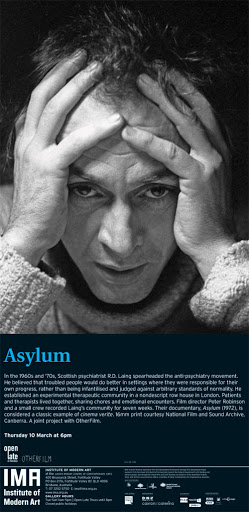
And here's what Mansion of Madness would look like in real life...


peter robinson- asylum

From Richard W. Adams at the Laing Society:

In early 1970 a frequent partner of mine on film projects, the late Peter Robinson, was introduced by his wife to R. D. Laing’s The Divided Self and The Politics of Experience. He was overwhelmed -- and determined, successfully, to contact Laing and persuade the famous “anti-psychiatrist” to let us film him discussing his work and his views on traditional treatments for schizophrenia. The result was a pair of short films called Psychiatry and Violence and Breathing and Running -- as well as Laing’s blessing on Peter’s wish to make a film about the therapeutic community that Laing had launched six years earlier on a five-year lease at Kingsley Hall, and which now was located in three condemned rowhouses in London’s Archway district. In early 1971, Peter and I returned to London to film Laing offering some opening remarks for the proposed film, and to visit the community, with film equipment, to see whether the residents would take to us and give us their blessing.

Peter Beverly Robinson was one of several talented children of a colorfully prominent Canadian family, had been an R.C.A.F. fighter pilot over Dunkirk, survived getting shot down over France, showed great talent as a painter, moved to New York City, where as an actor he won minor parts in major Broadway plays, and then got into documentary filmmaking. When I met him he was production manager on a three-screen film project called To Be Alive! that became a hit of the 1964 New York World’s Fair, won an Oscar, and was shown again at the Montreal Expo in 1967.


peter robinson- asylum

I had always felt comfortable working with Peter, but on seeing some murky black-andwhite silent footage shot at Kingsley Hall, and hearing Peter’s thumbnail sketches of some of the more bizarre residents, and knowing that at least two television crews had been thrown out or denied permission, and reading The Politics of Experience, and having somnambulated wistfully through the 1960s as an utter square, I felt I was simply not hip enough to be the cameraman on such a project. But then my unconscious was startled by a far more personal encounter with Laing than I’d have thought possible. I had been reading The Divided Self in preparation for the filming, and one night I dreamt the door to my bedroom was opened and in peeked R.D.Laing himself. It was probably then that I began to feel a certain claim of my own on the project.

So on our second trip to London we filmed Laing explaining briefly the origin of his therapeutic community. He had apparently felt some embarrassment on seeing in the first two films his degree of unselfconscious glee in recounting primitive approaches to mental illness in the past. So he spoke this time with an uncharateristically somber, dour mien. And then we spent an afternoon and an evening visiting the Archway community and giving the residents a chance to size us up. I was relieved that so many were so friendly and that some of the behaviors were only slightly and unthreateningly strange. I was more anxious about the apparent lack of activity throughout the day than about the heavy smell of incense in some of the rooms.


peter robinson- asylum

What would there be to film?, I wondered. As a sort of test for both us and them, and in order to be able to include a glimpse of Laing himself before his departure for a year’s retreat in India, we filmed a smaller group in discussion, with Laing a characteristically passive presence (offering nothing but one magnificently sardonic smile that is itself worth the price of admission). I can’t remember whether a vote was taken that night or the next day, but several residents came right out and said they liked us. Permission was soon granted, and before long it was no longer “us and them”.

I think what had softened the corners of the square in me and prepared me best not to feel threatened was a short spate of Jungian dream analysis that had made me feel simultaneously more in tune with myself and more empathetic toward those more troubled. I believe all three of us on that small crew - Peter as producer/director, William Steele as sound recordist and second cameraman (now a successful photographer), and I as cameraman/editor - were deeply touched by the experience, each in a different way.

What the first half of the film does is expose the viewer to some of the same disquiet and ambiguity that a visitor might feel, not knowing who the “patients” are and who the doctors. By the time a pillar of society bursts in (so to speak) to fetch his son for the holidays, one may have become sufficiently attuned to the spirit of the community to be able to observe “normal behavior” from a new perspective. The second half of the film, introduced by Laing again as he gives his, the community’s, and the film’s definition of “Asylum” as “a safe place to be”, offers more comfortably articulated explanations of how the Archway Community worked.


peter robinson- asylum

It was not a treatment center but simply a residence, like Kingsley Hall, affording a haven from both mental hospitals and dysfunctional families. When it comes to harmony and longevity I suspect it fared as well as most counter-cultural communes of the 60s and 70s. It was a place where neurotic Americans and Canadians who had discovered Laing could try to find themselves, where more severely “disturbed” Brits on the National Health could afford the rent and out-patient therapy, and where one who felt the need (like the legendary Mary Barnes from Kingsley Hall), could “let oneself go” into a tunnel of madness from which one might emerge more whole in the end. Voluntary medication was encouraged but there were no men in white coats maintaining order through needles. It was an experiment that demanded massive personal commitment, and several years later one of the therapists admitted that it was an overwhelming task to attempt without some recourse to medication

What I feel strongly as a mere layman is that the community as captured in the film demonstrates in vividly human terms that medication, by the same token, cannot work without a context of strong interpersonal support. That may be a truism, but a number of younger graduates of psychiatric training have told me after recent screenings of ASYLUM that the field is beginning to recognize that with the success of chemical treatments, the interpersonal element has tended to be underrated, but is now being re-appreciated. It is my belief that in its own way, ASYLUM is a reminder of one of the most important contributions of R.D.Laing’s controversial legacy.


peter robinson- asylum

Technical Information:

Title: Asylum
Year: 1972
Country: USA, UK
Director: Peter Robinson

Source: DVD5 Retail
DVD Format: NTSC
Container: .iso + mds
Size: 4.18 GB
Length: 1:35:16
Programs used: DVD Decrypter, ImgBurn

Resolution: 720x480
Aspect Ratio: 4:3
Video: MPEG2 @ ~6200 kb/s
Frame Rate: 29.97 fps

Audio: English- Dolby AC3 Stereo @ 160 kb/s
Subtitles: None

Menu: Yes
Video: Untouched
DVD Extras: None on source


peter robinson- asylum

(Use JDownloader to speed up downloading and avoid file stalls.)

Asylum Megaupload Links


Emmanuel Laurent- Deux de la Vague/Two in the Wave (2010)- DVD5 (NTSC Format)

emmanuel laurent- deux de la vague- two in the wave
We're posting some Truffaut/Godard stuff tonight for all you stuffy people. Enjoy!


emmanuel laurent- deux de la vague- two in the wave

From A.O. Scott at the New York Times:

In Emmanuel Laurent’s new documentary, “Two in the Wave,” the “two” are the filmmakers François Truffaut and Jean-Luc Godard. The wave, needless to say, is La Nouvelle Vague, a journalistic name that not only stuck to Truffaut, Mr. Godard and their colleagues, but that also changed the way film history is understood.

Since the days when that Gallic wave crashed ashore, critics and cinephiles have scanned the horizon looking for the next one, while groups of young directors and critics, sometimes consciously, sometimes not, seek to replicate the daring and self-confidence that bubbled up in France in the late 1950s and early ’60s.

Mr. Laurent, for his part, dutifully combs the beach, gathering wonderful bits of detritus from that much-mythologized moment. The surviving members of the New Wave — Truffaut died in 1984 — are by now venerated members of the old guard. (Mr. Godard, at 79, showed his new film at the Cannes Film Festival on Monday.) But “Two in the Wave” wisely resists the temptation to invite them to share memories of youth. Rather, it gathers newspaper clippings, newsreel footage and movie clips to assemble a present-tense essay that is both time capsule and collage.


emmanuel laurent- deux de la vague- two in the wave

Instead of featuring talking-head retrospective interviews, the movie frames its backward looks with images of the actress Isild Le Besco reading old magazine articles and occasionally visiting a historically significant spot in Paris. Her presence is puzzling for a while, until you begin to absorb some of the images that surround her — Jean Seberg in “Breathless,” Anna Karina in “A Woman Is a Woman” — and recall Mr. Godard’s axiom that all he needed to make a film was “a girl and a gun.” Mr. Laurent displays no firearms, but Ms. Le Besco’s silent presence suggests a corollary, namely that any movie can benefit from a beautiful woman with an interesting face.

There is also a third man in “Two in the Wave”: Jean-Pierre Léaud, the actor who worked frequently with both directors and who became the on-screen embodiment of their attitudes and styles.

For Truffaut, Mr. Léaud served as a frequent alter ego, appearing as Antoine Doinel in a series of autobiographical films, beginning with “The 400 Blows” in 1959. That movie and “Breathless,” Mr. Godard’s first feature, occupy much of Mr. Laurent’s documentary, which was written and narrated by the film critic Antoine de Baecque. The triumphant arrival of “The 400 Blows” at the Cannes Film Festival in 1959 and the release of “Breathless” a year later feel almost like a single event, one of those epochal moments that divide time into before and after.


emmanuel laurent- deux de la vague- two in the wave

Before, there was a group of young movie buffs, haunting the Cinémathèque Française and the offices of Cahiers du Cinéma, disciples of two high priests of postwar cinephilia: the archivist Henri Langlois and the critic André Bazin. They absorbed everything they saw, forming particular affinities with the American directors we now regard (thanks partly to the Cahiers gang) as idols of classic Hollywood.

These Hitchcocko-Hawksians, as they were sometimes known, set out to change French cinema, and in assessing their campaign, “Two in the Wave” becomes frustratingly vague. The grandiose rhetoric of revolution and reinvention is certainly there — mostly courtesy of Mr. Godard, a fount of aphorisms on the nature of “le cinéma” — but apart from a few remarks about hand-held cameras and jump cuts, there is not much in the way of concrete analysis. So the audience is left to guess at what exactly made Truffaut’s and Mr. Godard’s work so transformative.

And yet the evidence provided by the films themselves is a powerful reminder of just how exciting that work remains. “Two in the Wave,” while it provides plenty of biographical information, is above all interested in the artistic personalities of its subjects. It was, after all, the shared love of film that brought them together, despite their differences in temperament and background. And it was partly their divergent ideas about what cinema should become that drove the two men apart.


emmanuel laurent- deux de la vague- two in the wave

After their initial triumphs, with “The 400 Blows” and “Breathless,” Truffaut and Mr. Godard continued to work closely together through the 1960s. But as Mr. Godard’s work became increasingly politicized, and as his always uncompromising and prickly personality grew even more so, a schism emerged that would become irreparable in 1973.

That year Mr. Godard wrote a letter to Truffaut attacking his film “Day for Night” and enclosing an equally venomous letter to Mr. Léaud. Truffaut returned that letter, along with one of his own — 20 handwritten pages condemning the selfishness and pigheadedness of his longtime friend.

And that is where Mr. Laurent’s story ends, as so many tales of artistic camaraderie do. But “Two in the Wave” honors that collaboration by carefully recounting its details and arguing for its significance. The films of Truffaut and Mr. Godard stand or fall by themselves, but together they made history.


emmanuel laurent- deux de la vague- two in the wave

Technical Information:

Title: Deux de la Vague/Two in the Wave
Year: 2010
Country: France
Director: Emmanuel Laurent

Source: DVD5 Retail
DVD Format: NTSC
Container: .iso + mds
Size: 3.78 GB
Length: 1:32:32
Programs used: MacTheRipper, ImgBurn

Resolution: 720x480
Aspect Ratio: 1.85:1
Video: MPEG2 @ ~6800 kb/s
Frame Rate: 29.97 fps

Audio: French- Dolby AC3 Stereo @ 192 kb/s
Subtitles: English (hard-coded)

Menu: Yes
Video: Untouched
DVD Extras: None on source


emmanuel laurent- deux de la vague- two in the wave

(Use JDownloader to automate downloading)

Deux de la Vague Megaupload Links


Morgan Dews- Must Read After My Death (2007)- DVD5 (NTSC Format)

morgan dews- must read after my death
This documentary is tripped out. That's all I'm going to say.


morgan dews- must read after my death

From Roger Ebert:

Here is a cry from the grave. A woman who died some eight years ago at the age of 89 left behind about 50 hours of audiotapes, 200 home movies and 300 pages of documents, a record that all ended, 30 years before that, on the death of her husband. The cache was labeled, in bold marker on a manila envelope, "Must Read After My Death." What an anguished story it tells, of a marriage from hell.

The woman was named Allis. Her grandson, Morgan Dews, has created this film from her archives, and understandably represses her family name. She met her husband, Charley, when they were both married to others. What she wanted was a nice little house with a white picket fence, where she would bear his children, whether or not they were married, because she knew they would have beautiful children together. They were married, and until death did not part.

It was an "open marriage." Charley was away much of the year in business, often to Australia. They decided to exchange Dictaphone recordings, and later tape recordings, and Allis saved hours of taped telephone messages. Charley is forthright about his adventures with "interesting women" he has met in Australia, "good dancers" and obviously good at more than that, but "the international operators listen in." Allis tells only of one weekend affair. She says she thinks she "helped" the man rebuild his self-confidence.


morgan dews- must read after my death

Charley is such a perfect bastard. His dry voice objectively slices through everything. He speaks of love and travel arrangements in the same tone. When he's home, there is always fighting. Always. Not about sex; he sees the real problems in their marriage as housekeeping and finances. Allis says she was meant to be a good mother but was never a housekeeper. She speaks four languages, went to college, was married first to a European, did some kind of unspecified singing. We hear not a word about Charley's first marriage.

Charley and Allis have three sons and a daughter. Charley is relentless with them about their "chores." He's an alcoholic, and it seems to make him a perfectionist. He's tall, balding, handsome in that Harry Smith way. Allis is small, tidy, worried. There are tapes of screaming rages involving Charley and his sons; their daughter, Morgan's mother, not much heard, leaves home at 16, following the advice in Philip Larkin's famous poem about destructive families "This Be the Verse:"

Get out as early as you can.

The first line of that poem certainly describes the marriage of Charley and Allis. All four children are angry, miserable, neurotic in various ways. The family falls into the clutches of a psychiatrist named Lenn, who wrongly sends one son to a mental institution, diagnoses Charley as "the worst inferiority complex I've ever seen" and strews misery and anguish as freely as his advice. What we learn of the children later in life is that three of them, anyway, grew up into apparently happily married adults with children.


morgan dews- must read after my death

It was the family itself that was toxic. They needed to get out. Charley is hated by the children, and Allis thinks of herself as not meant for such a life. She and Charley never have a real talk about "open marriage," but it certainly suits good-time Charley, a man without a single moment of introspection in this film.

Home movies and now the ubiquitous videotape mean that everyday lives are now recorded with a detail not dreamed of earlier. We will never hear all Allis' recordings and see all her images, but this distillation by Morgan Dews might have been what she had in mind when she stored away those records of pain. They act as her justification of her life, her explanation of the misery of her children. I watched this film horrified and fascinated. There is such raw pain here. Allis might have read or seen "Revolutionary Road" and by comparison envied that marriage.

There are things you will see here that will lead you to some conclusions. I will leave you to them. All I can say is that I believe the daughter's guess at the end is correct. We learn that after Charley died, Allis moved to her own small cottage in Vermont and "continued her volunteer work." She lived another 30 years. She never mentioned Charley again.


morgan dews- must read after my death

Technical Information:

Title: Must Read After My Death
Year: 2007
Country: USA
Director: Morgan Dews

Source: DVD5 Retail
DVD Format: NTSC
Container: .iso + mds
Size: 3.54 GB
Length: 1:13:04
Programs used: Unknown

Resolution: 720x480
Aspect Ratio: 16:9
Video: MPEG2 @ ~5500 kb/s
Frame Rate: 29.97 fps

Audio: English- Dolby AC3 Stereo @ 192 kb/s
Subtitles: None

Menu: Yes
Video: Untouched

DVD Extras:
- Q&A (Los Angeles Film Festival and IFC Center)
- Trailer
- Dictaphone Recordings
- Anne's Wedding Photos
- Allis Singing
- Allis's Childhood Photos


morgan dews- must read after my death

(Use JDownloader to automate downloading)

Must Read After My Death Megaupload Links


Andrew Jarecki- Capturing the Friedmans (2003)- DVD9 (PAL Format)

andrew jarecki- capturing the friedmans
Two back-to-back docs that are the perfect companion, due to the sicko dads that inhabit both. We're starting off with Capturing the Friedmans, which shows how deeply a family can eat away at each other and slowly devolve into muck. You know...one of those "feel bad" documentaries that most sane people run from that we here at ForTheDishwasher run towards and embrace. Enjoy!


andrew jarecki- capturing the friedmans

From Jesse Friedman:

t was important to me that Capturing the Friedmans would raise awareness about the issue of imaginary crimes. I have been working with the National Center for Reason and Justice to help those much less fortunate than I -- namely those still in prison unjustly due to mass-hysteria sex-abuse scandals.

I want to thank all the thousands of well-wishers who contacted me with support and compassion over the years. That outpouring of support has given me strength to carry on the good fight and work towards building a new life for myself.

The day after my parole my wife Elisabeth and I left for a coast-to-coast road trip; a much deserved vacation. Along the way we stopped in Las Vegas and got married on January 2, 2007. We got married on our honeymoon. What could be better than that! Here are some PHOTOS FROM OUR TRIP!!


andrew jarecki- capturing the friedmans

I have continued to post some updates {last update 03/22/08} about the status of my appeal, and other events.

With regards to my personal life: I am finally (mostly) a free man. The nightmare is not over. I am still struggling with learning how to be happy, but this has been the longest stretch of my life without a crisis since 1987. For that I am thankful. Mostly, I carry on from day to day like everyone else. I love my wife beyond measure. She makes me happy, but life is still a struggle.

I have been doing some editing with Final Cut Pro of our honeymoon videos. Two of them are posted with You Tube.

Please feel free to write to me, Jesse@freejesse.net. I love hearing from people who have seen the film and feel moved to write. I do my best to reply personally to everyone, and I am keeping an e-mail mailing list to update people about my appeal as events warrant.


andrew jarecki- capturing the friedmans

Technical Information:

Title: Capturing the Friedmans
Year: 2003
Country: USA
Director: Andrew Jarecki

Source: DVD9 Retail
DVD Format: PAL
Container: .iso + mds
Size: 7.63 GB
Length: 1:43:36
Programs used: ImgBurn

Resolution: 720x576
Aspect Ratio: 16:9
Video: MPEG2 @ ~5500 kb/s
Frame Rate: 25 fps

Audio: English- Dolby AC3 Stereo @ 192 kb/s
Subtitles: Spanish

Menu: Yes
Video: Untouched

DVD Extras (English with Spanish subtitles):
- Trailer
- Director interviewed by Charlie Rose
- Deleted scenes
- The Case
- The Family


andrew jarecki- capturing the friedmans

(Use JDownloader to automate downloading)

Capturing the Friedmans Megaupload Links


Berlin Week: Peter Molloy/Bill Treharne Jones-The Lost World of Communism (2009)- DVD9 (PAL Format)

bbc- the lost world of communism- 2009
Another excellent BBC documentary whose part one has ties to Berlin by way of Unser Sandmännchen...and that's good enough for us! Enjoy!


bbc- the lost world of communism- 2009

From Tim Dowling at The Guardian:

These days it's easy to think of the eastern bloc as a bygone parallel universe that we can occasionally revisit and mine for its cool graphics. Or maybe it's just easy for me. The Lost World of Communism series (Saturday, BBC2) is full of the sort of faintly absurd official footage (programme two opens with the sight of hundreds of Czechoslovakian men doing synchronised calisthenics in their pants) that can make the whole era seem quaintly, harmlessly lame.

In fact, these scenes provide a chilling counterpoint to the reality, which here comes in blurry snatches smuggled out of the country at considerable risk, including jumpy footage of the hut erected outside Vaclav Havel's country home to shelter the police who followed him when he walked his dog. Most chilling of all are the scenes from show trials. They look like clips from cheaply made, badly acted courtroom dramas, which is more or less what they were - everyone, including the accused, is reading from a script.


bbc- the lost world of communism- 2009

It is the little samples of popular culture, however - the Czech-language version of Somethin' Stupid, the terrible-looking cowboy movie that was meant to parody western capitalism - which resonate, and it's a story in which popular culture played a vital role. Marta Kubisova, the pop star of the Prague Spring, recorded the unofficial anthem of the resistance in secret just after the Soviet invasion. It was the arrest of a beardy rock band called the Plastic People of the Universe (for "organised disturbance of the peace") which led to Havel founding the civil rights movement Charter 77.

Then there is Karel Gott, the regime-approved pop star of the post-invasion "normalisation", a man who clearly still thinks he was Czechoslovakia's answer to Elvis, when he wasn't even their answer to Englebert Humperdinck. "In the 1970s and 80s I had become so popular," he says, "not only in the west and here, but in the vast Soviet Union." The government, he says, used his amazing popularity to bring in foreign currency (I don't know about you, but he never got any of mine). They also managed to persuade him to sign their anti-Charter 77 charter. "I didn't know it was an anti-charter," he says now. "I thought it was an attendance list." So he didn't mean to join forces with the regime in opposing civil rights; he just wanted everyone to know he was there that day.


bbc- the lost world of communism- 2009

Technical Information:

Title: The Lost World of Communism
Director: Peter Molloy/Bill Treharne Jones
Year: 2009

Source: DVD9 Retail
DVD Format: PAL
Container: .iso + mds
Size: 7.53 GB
Programs used: ImgBurn

Resolution: 720x576
Aspect Ratio: 16:9/4:3
Video: MPEG2 @ ~7800 kb/s
Frame Rate: 25 fps

Audio: English- Dolby AC3 Stereo @ 192 kb/s
Subtitles: English

Menu: Yes
Video: Untouched
DVD Extras: None on source


Episode List:

Episode One: A Socialist Paradise
Episode Two: The Kingdom of Forgetting
Episode Three: Socialism in One Family


bbc- the lost world of communism- 2009

(Use JDownloader to automate downloading)

The Lost World of Communism Megaupload Links


Berlin Week: Matt Frei/Sam Hobkinson/David Vincent- Berlin: Dangerous Ideas, Ruined Visions and Ich bin ein Berliner (2009)- DVD Rip (XviD)

matt frei- bbc- berlin
This documentary is EXCELLENT! Matt Frei weaves the history of Berlin seamlessly into a story that almost seems unbelievable at times. This documentary was one of the main reason for having Berlin Week, and although it's in XviD, the picture quality is excellent. But as always, we'll upgrade when we find the DVD. This is EXCELLENT!!!


matt frei- bbc- berlin

From the Open University:

Berlin has seen everything from Nazi imperialism to the first gay mayor; it has been home to some of history’s most influential people including Bertholt Brecht, Marlene Dietrich and Einstein; and it’s a city that has been steeped in controversy and contradiction throughout the centuries. Co-produced by The Open University, Berlin is a new three-part documentary written and presented by award-winning, German-born, journalist Matt Frei, who unveils the turbulent and dramatic story of this city from the Prussian years right through to the fall of the Berlin Wall.

Matt Frei, now Anchor of BBC World News America and host of ‘Americana’ on Radio Four, took up the post of the BBC’s Bonn Correspondent in Germany on the same day as the fall of the Berlin Wall, and revisits his own past in this series: “Making a film about a city I love, whose happiest milestone I was lucky enough to witness and where layers of history, good but mostly bad, have collided with consequences for the rest of the world is a gift for any journalist. To do it in both English and German was a first for me."


matt frei- bbc- berlin

Drawing bold connections between events, characters, art and architecture from 200 years of turbulent history, the series – which is shot in English and German - reveals how the ideas, buildings and people of Berlin have become iconic symbols of our times. Travelling back and forth in time between the fall of the Berlin wall in 1989, the 18th century Prussian years, Hitler’s Third Reich and Cold War Berlin, we discover a city of contrasts – divided and shaped by its own history.

Dr Sylvia Warnecke, an expert in the cultural policy of the former East Germany, is The Open University’s academic consultant to the series and was involved in underground democratic political movements in East Germany in the 1980s. Sylvia said: “Unlike many other European cities, Berlin’s identity has moved and shifted as history has unfolded, something that has been reflected in its cultural scene. In a sense, Berlin is braver because of its turbulent past, and there is a real sense of endeavour and innovation. The series gets to the essence of this unique city, and brings a fresh view to a place that many viewers will think that they already know.”


matt frei- bbc- berlin

Part 1 Technical Information:

Show Title: Berlin
Episode: Part 1: Dangerous Ideas
Original Airdate: November 14, 2009
Director: Sam Hobkinson
Writer/Presenter: Matt Frei
Country: UK

Source: DVD Retail
Video Codec: XviD
Container: .avi
Size: 745 MB
Length: 0:58:26
Programs used: Unknown

Resolution: 704x400
Aspect Ratio: 16:9
Video: MPEG4 @ ~2000 kb/s
Frame Rate: 25 fps

Audio: English- Dolby AC3 Stereo @ 192 kb/s
Subtitles: None


Part 1: Dangerous Ideas Megaupload Link


matt frei- bbc- berlin

Part 2 Technical Information:

Show Title: Berlin
Episode: Part 2: Ruined Visions
Original Airdate: November 21, 2009
Director: Sam Hobkinson and David Vincent
Writer/Presenter: Matt Frei
Country: UK

Source: DVD Retail
Video Codec: XviD
Container: .avi
Size: 745 MB
Length: 0:59:00
Programs used: Unknown

Resolution: 704x400
Aspect Ratio: 16:9
Video: MPEG4 @ ~2000 kb/s
Frame Rate: 25 fps

Audio: English- Dolby AC3 Stereo @ 192 kb/s
Subtitles: None


Part 2: Ruined Visions Megaupload Link


matt frei- bbc- berlin

Part 3 Technical Information:

Show Title: Berlin
Episode: Part 3: Ich bin ein Berliner
Original Airdate: November 28, 2009
Director: Sam Hobkinson
Writer/Presenter: Matt Frei
Country: UK

Source: DVD Retail
Video Codec: XviD
Container: .avi
Size: 745 MB
Length: 0:58:55
Programs used: Unknown

Resolution: 704x400
Aspect Ratio: 16:9
Video: MPEG4 @ ~2000 kb/s
Frame Rate: 25 fps

Audio: English- Dolby AC3 Stereo @ 192 kb/s
Subtitles: None


Part 3: Ich bin ein Berliner Megaupload Link


matt frei- bbc- berlin