.:[Double Click To][Close]:.

Online CPM Advertising | Advertising blog
Showing posts with label dvd tv. Show all posts

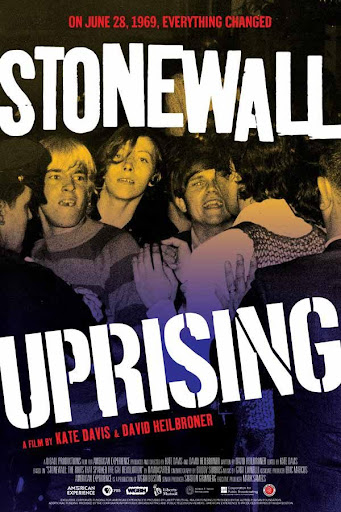
G-A-Y Day(s)- Kate Davis/David Heilbroner- Stonewall Uprising (2010)- DVD5 (NTSC Format)

stonewall uprising
When you treat people as if they're subhuman and steal their voice and their liberty, they'll eventually turn on you. The Stonewall uprising was when the gay community finally had the sense to push back against a system that had failed them at every turn. The Mike Wallace appearance and the jaded history of the Atascadero State Hospital would make Josef Goebbels proud. This is some scary, scary history. Another "must-download" I dare say. Enjoy!


the stonewall uprising

From Stephen Holden at the N.Y Times:

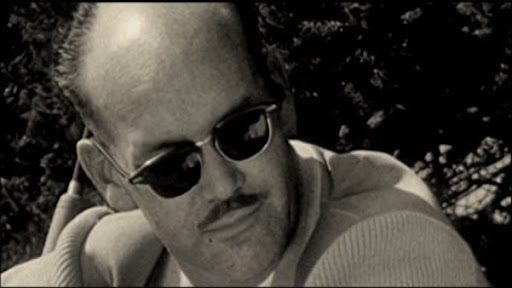
“The average homosexual, if there be such, is promiscuous. He is not interested in, nor capable of, a lasting relationship like that of a heterosexual marriage.” So declared Mike Wallace in authoritative voice-of-God tones in “The Homosexuals,” a tawdry, sensationalist 1966 “CBS Reports,” excerpted in Kate Davis and David Heilbroner’s valuable film, “Stonewall Uprising.” Funny how yesterday’s conventional wisdom can become today’s embarrassment.

The most thorough documentary exploration of the three days of unrest beginning June 28, 1969, when patrons of the Stonewall Inn, a seedy Mafia-operated gay bar in Greenwich Village, turned on the police after a routine raid, “Stonewall Uprising” methodically ticks off the forms of oppression visited on gays and lesbians in the days before the gay rights movement. “Before Stonewall there was no such thing as coming out or being out,” says Eric Marcus, the author of “Making Gay History: The Half-Century Fight for Lesbian & Gay Equal Rights.” “People talk about being in and out now; there was no out, there was just in.”


the stonewall uprising

At the time of the riots, homosexuality was illegal in every state except Illinois. Before the laws were changed, one commentator observes, gay bars offered the same kind of social haven for an oppressed minority as black churches in the South before the civil rights movement. The cultural demonizing of gay men in public service films depicted them as at best, psychologically damaged and at worst, ruthless sexual predators. Lesbians were nearly invisible.

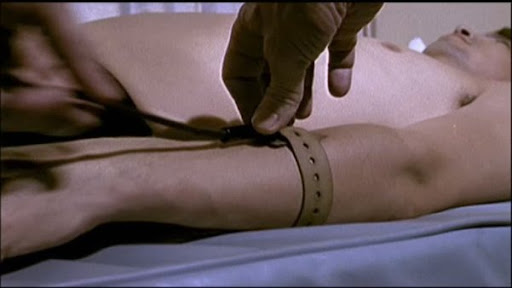
The same “CBS Reports” peddled the medical opinion, since discredited, that homosexuality was determined in the first three years of life. The movie has ominous vintage footage of electroshock aversion therapy being administered, accompanied by the suggestion that it might be a promising cure for what was widely regarded as a mental illness. The most unsettling historical tidbit concerns the treatment of homosexual patients at a mental hospital in Atascadero, Calif., where some were injected with a drug that simulated drowning, a process that one commentator describes as “chemical waterboarding.”


the stonewall uprising

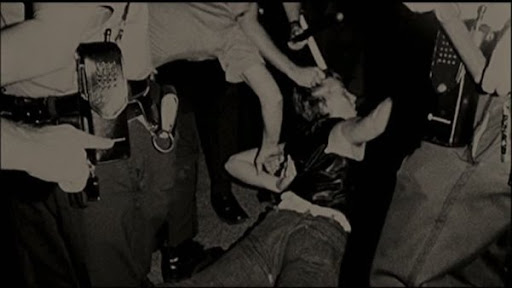
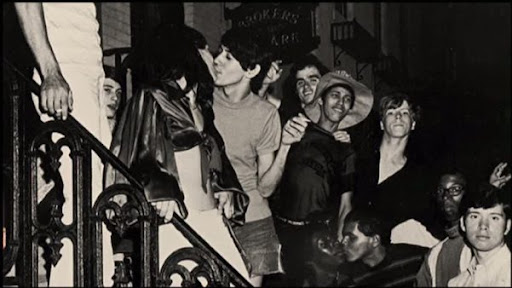
It is a sad indication of the marginalization of homosexuality in the late 1960s that media coverage of the Stonewall riots was mostly after the fact. And even then it was cursory and often condescending. Because so little photographic documentation exists of the unrest, the film relies mostly on eyewitnesses, including Seymour Pine, the now-retired police officer who led the initial raid of six officers and who describes it as “a real war.” The details of the raid are reconstructed by several who were present, including Howard Smith and Lucian Truscott IV, journalists for The Village Voice whose offices were nearby. The film focuses on the first night of the unrest.

As one rioter remembers: “All of a sudden the police faced something they had never seen before. Gay people were never supposed to be threats to police officers. They were supposed to be weak men, limp-wristed, not able to do anything. And here they were lifting things up and fighting them and attacking them and beating them.” It was the first stirring of what came to be known as gay pride. “This was the Rosa Parks moment, the time that gay people stood up and said no,” Mr. Truscott recalls. “And once that happened, the whole house of cards that was the system of oppression of gay people started to crumble.”


the stonewall uprising

Technical Information:

Title: Stonewall Uprising
Year: 2010
Country: USA
Directors: Kate Davis, David Heilbroner

Source: Retail DVD5
DVD Format: NTSC
Container: .iso + mds
Size: 4.16 GB
Length: 1:23:21
Programs used: ImgBurn

Resolution: 720x480
Aspect Ratio: 16:9
Video: MPEG2 @~ 5800 kb/s
Frame Rate: 29.97 fps

Audio Channel 1: Dolby AC3 5.1 @ 448 kb/s
Audio Channel 2: Dolby AC3 Stereo @ 224 kb/s

Subtitles: English

Menu: Yes
Video: Untouched
DVD Extras: None

the stonewall uprising

(Use JDownloader to speed up downloading and avoid file stalls.)

Stonewall Uprising Megaupload Links


Spy vs. Jazz: John Irvin- Tinker, Tailor, Soldier, Spy (1979)- DVD5/DVD9 (NTSC Format)

john irvin- tinker tailor soldier spy- 1979
We've had the Week From Hell, and there hasn't been much posting going on. But now we're back with a vengeance, and we've brought with us Spies vs. Jazz.

"But leclisse...why are spies dueling it out with Jazz? One's a film and t.v. genre, and the other is a bunch of black dudes that toot horn atonally. This doesn't make sense."

There's white Jazz players, but there's not one black spy.

"But leclisse...you're forgetting Bill Cosby. He was a spy. For East berlin."

Dear Lord. I had no idea. But anyway...we're starting out Spy vs. Jazz with the best spy drama ever. Enjoy.


john irvin- tinker tailor soldier spy- 1979

From Toby Manning at The Guardian:

The BBC's 1979 adaptation of John le Carré's thriller is still unmatched in its evocation of the chilly, cynical cold war era. "If you can't beat it," says one spook, out on a windy heath, "spy on it." It's a place where spook spies on fellow spook, and trust is as much a casualty as the agent shot in Czechoslovakia at the start.

The story, the hunt for a mole deep within the secret service, is based on double-agent Kim Philby, who duped MI5 for decades – junior spook Le Carré included. He created his spybuster George Smiley, a dumpy, elderly cuckold, as the "anti-James Bond". Alec Guinness, perfectly cast, might not look so good in a pair of skintight trunks, but Smiley's brains and guile are worth all of Bond's gadgets put together. His dissection of the commie conspiracy is riveting from start to bloody finish.


john irvin- tinker tailor soldier spy- 1979

Tinker, as much about atmosphere as action, depicts a very British, very bureaucratic, and very bumbling secret service: a clutch of pipe-smoking, snobbish, sniggering schoolboys, repressed homosexuality seething through grey strip-lit corridors. "Poor loves," says Connie Sachs, the Soviet-watcher and old soak played by Beryl Reid, "trained to rule the waves".

Watch the seven 50-minute episodes back-to-back and betrayal starts to feel all part of a day's work. It's shot in suitably leeched colours, too: if it's not raining, then it's snowing; and the vibrantly spangly (and deeply ugly) 70s wallpaper occasionally swallows Smiley whole. The Russian doll-within-doll title sequence is perfectly judged, while Geoffrey (Brideshead) Burgon's end of empire music is a delight.

Then there's the acting. Ian Richardson invests even the lifting of a teacup with meaning, while Patrick Stewart, as Smiley's Russian nemesis, can speak volumes without uttering a word.


john irvin- tinker tailor soldier spy- 1979

Disc 1 Technical Information:

Title: Tinker, Tailor, Soldier, Spy (Disc 1)
Year: 1979
Country: U.K.
Director: John Irvin

Source: DVD9 Retail
DVD Format: NTSC
Container: .iso + mds
Size: 5.63 GB
Programs used: ImgBurn

Resolution: 720x480
Aspect Ratio: 4:3
Video: MPEG2 @ ~5800 kb/s
Frame Rate: 29.97 fps

Audio: English- Dolby AC3 Stereo @ 192 kb/s
Subtitles: cc- English

Menu: Yes
Video: Untouched

DVD Extras:
- Interview w/ John le Carré
- John le Carré Biography
- Production Notes
- Filmographies


Disc 1 Megaupload Links


john irvin- tinker tailor soldier spy- 1979

Disc 2 Technical Information:

Title: Tinker, Tailor, Soldier, Spy (Disc 2)
Year: 1979
Country: U.K.
Director: John Irvin

Source: Retail DVD5
DVD Format: NTSC
Container: .iso + mds
Size: 3.94 GB
Programs used: ImgBurn

Resolution: 720x480
Aspect Ratio: 4:3
Video: MPEG2 @ ~5800 kb/s
Frame Rate: 29.97 fps

Audio: English- Dolby AC3 Stereo @ ~192 kb/s
Subtitles: cc- English

Menu: Yes
Video: Untouched
DVD Extras: None


Disc 2 Megaupload Links


john irvin- tinker tailor soldier spy- 1979

Disc 3 Technical Information:

Title: Tinker, Tailor, Soldier, Spy (Disc 3)
Year: 1979
Country: U.K.
Director: John Irvin

Source: Retail DVD5
DVD Format: NTSC
Container: .iso + mds
Size: 3.93 GB
Programs used: ImgBurn

Resolution: 720x480
Aspect Ratio: 4:3
Video: MPEG2 @ ~5800 kb/s
Frame Rate: 29.97 fps

Audio: English- Dolby AC3 Stereo @ ~192 kb/s
Subtitles: cc- English

Menu: Yes
Video: Untouched
DVD Extras: None


Disc 3 Megaupload Links


john irvin- tinker tailor soldier spy- 1979


Berlin Week: Unser Sandmännchen: Pittiplatsch, Schnatterinchen und Moppi (1958)- DVD5 (PAL Format)

 unser sandmännchen- pittiplatsch, schnatterinchen und moppi
Okay...quit complaining that "there's no subtitles, dammit!", and think of how much German you'll learn from your new found pals Moppi, Schnatterinchen, and everyones favorite...Pittiplatsch. I can't think of a better way to impress a colleague than to sing them the Unser Sandmännchen theme, sans undertitles.


 unser sandmännchen- pittiplatsch, schnatterinchen und moppi

From Thomas Köster at the Goethe Institut (translated by Jonathan Uhlaner):

Every evening the sandman is there when children prepare for bed. The wise child-like sprite with the goatee and pointed cap is also a prime example of East-West German media history. He was first seen on East German television at the end of 1959.

The Sandman is a child of the Cold War, his first appearance having been a surprising pre-emptive strike by the German Democratic Republic. There, at the beginning of November 1959, the head of programming for the GRD’s German Television, Walter Heynowski, learned of the plan of Radio Free Berlin (SFB) to broadcast a daily good-night program named The Sandman. Heynowski suspected a deliberate provocation by the enemy station, designed to torpedo the GRD series Abendgruß.

The SFB’s war for the nursery showed, wrote Heynowski to his director, “that our program also went down well with West Berlin children and their parents”. “Large political effects and emotions”, he continued, are bound up with this. And: “The opposing party’s intention of taking viewers away from us” should not be underestimated.


 unser sandmännchen- pittiplatsch, schnatterinchen und moppi

Goatee instead of full beard

The first episodes of the Western series, using a hand puppet, had long been in the can. German Television had hurriedly to upgrade its program. In a cloak-and-dagger operation, it developed a puppet with a distinctive goatee and pointed cap that would throw sand in the eyes not only of socialist youth but also of children in the Federal Republic.

The makers of the program at the broadcast center in Berlin-Adlershof needed only three weeks to produce the first episode, which was shot with expensive stop-motion special effects. On November 22, 1959, at 6:55 pm, Our Sandman (Unser Sandmännchen went on the air on GDR television – a full week ahead of his full-bearded rival at SFB.

“Oh my nose!”

The GDR rush job is as yet a fairly languid spectacle: it ends with the night-capped hero himself falling asleep in the snow-covered street. This prompted letters from several children offering him their beds, while grandmothers wanted to knit him warmer clothing. So as to make such offers superfluous, the Sandman was soon made better rested and given big round eyes and a new pointed cap. It was the beginning of an unprecedented television career.

As the framing figure for Mr. Fox and Mrs. Magpie, Hoppel and Mautz, Pittiplatsch and Schnatterlinchen, Plumps and the Chick, the Sandman developed into the most popular character on East German television. Plittiplatsch’s cry “Oh my nose!” became a common exclamation and the challenging Sandman theme-song composed by Wolfgang Richter, with its counterpoint and dissolving dissonances, became the GDR’s secret national anthem.


 unser sandmännchen- pittiplatsch, schnatterinchen und moppi

The Sandman shock

Like the 1950s race in space between the Soviet Union and the U.S.A., the final spurt to be first with the Sandman was also a bitter defeat for the West. Nor was this state of affairs altered when, in 1962, after West German television stations had made several false starts, North German Broadcasting (NDR) gave the figure a complete overhaul.

The German Television also saw things in this way – and not only repeatedly sent its puppet into film universe in a rocket model to commemorate the Communist double victory, but also into the real universe with East German cosmonaut Sigmund Jähn. Thus the Sandman became, along with Jähn, the first German in outer space. In the film comedy Good bye, Lenin, original footage of the event recalls this great moment in 2003.

Unrestricted exit permit

On earth, the East German Sandman could throw his narcotic in the eyes of children all over the world – except in 1974, the 25th anniversary of the founding of the GDR, so as to avoid an ambiguous “political symbolism” in the visualized idiom (“throw sand in the eyes”), as the script of the episode comments with over-wary ideological correctness.

Altogether, the Sandman was a constant defector with an unrestricted exist permit. He was allowed to go not only to Young Pioneer camps, to the National People’s Army, to the Leipzig Fair and to the official GDR holiday destinations of Hungary and the Soviet Union, but also to Japan, Lapland and Africa. He repeatedly traveled to fabled West Germany, to the Bremen Town Musicians, for instance, and to the Seven Swabians.


 unser sandmännchen- pittiplatsch, schnatterinchen und moppi

In the jeep of the class enemy

Having originated in the literary fairy-tale (E.T.A. Hoffmann and Hans Christian Andersen), the Sandman constantly boarded various vehicles to travel towards a progressivist, socialist future of the “Workers’ and Farmers’ State”. Whether in a horse-drawn carriage or on a combine harvester, street car or cement car, fashionable Trabbi convertible or the class enemy’s Land Rover, the dream figure invariably came to his viewers in elaborately wrought high-tech inventions.

Other means of transport used by the Sandman include back-pack booster rockets, a revolutionary waste bin emptying machine and a dolphin airship constructed according to “secret plans”, which hovered over a model of the newly re-built Alexanderplatz in a 1974 episode. There were over 200 vehicles altogether. A 1961 episode that took place on the Baltic Sea with a sailboat had to be re-shot: after the building of the Wall, free travel on the “wet border” of the open sea was prohibited.


 unser sandmännchen- pittiplatsch, schnatterinchen und moppi

What remains of East Germany

For nearly thirty years the East and West German Sandmen cruised the airwaves over a divided Germany in peaceful co-existence. Only after the fall of the Wall in 1989 was the turf in dreamland re-allocated.

The citizens of the GDR were glad to give up the East German mark and Spreewald pickles, but not their cult figure. When rumors were bruited about that Our Sandman was to be switched off along with German Television, there was a storm of protest. A “Sandman community of interest” collected thousands of signatures; parents in the new federal states took to the streets on behalf of their children. “If you are going to fail with any man in this country”, a journalist warned the new commissioners for broadcasting, “then it is the Sandman!” The West German media watchdogs probably never dreamed that they could trigger such a popular uprising.

The reunification was not to founder because of the GDR Sandman. Instead of him, his Western colleague was sent into retirement. Now, every day at 6:55 pm, Our Sandman brings over a million children throughout Germany to bed.


 unser sandmännchen- pittiplatsch, schnatterinchen und moppi

Technical Information:

Title: Unser Sandmännchen: Pittiplatsch, Schnatterinchen und Moppi
Year: 1958/2005

Source: DVD5 Retail
DVD Format: PAL
Container: .iso + mds
Size: 2.68 GB
Programs used: ImgBurn

Resolution: 720x576
Aspect Ratio: 4:3
Video: MPEG2 @ ~6800 kb/s
Frame Rate: 25 fps

Audio: German- Dolby AC3 Stereo @ 192 kb/s
Subtitles: None

Menu: Yes
Video: Untouched
DVD Extras: None on source


Episode List:

- Als Moppi einen Witschel bewachte
- Wer gweinnt das Apfelmännchen?
- Die Osterhasenfalle
- Als Moppi bei Pitti schneller wachsen wollte
- Moppi und das Puppenbaby
- Das Winterecho am Bach
- Als Schnatterinchen Lehrerin sein wollte
- Als Moppi den gartenofen erfand
- Eine seltsame Abendmusik


 unser sandmännchen- pittiplatsch, schnatterinchen und moppi

(Use JDownloader to automate downloading)

Unser Sandmännchen Megaupload Link


Berlin Week: Peter Molloy/Bill Treharne Jones-The Lost World of Communism (2009)- DVD9 (PAL Format)

bbc- the lost world of communism- 2009
Another excellent BBC documentary whose part one has ties to Berlin by way of Unser Sandmännchen...and that's good enough for us! Enjoy!


bbc- the lost world of communism- 2009

From Tim Dowling at The Guardian:

These days it's easy to think of the eastern bloc as a bygone parallel universe that we can occasionally revisit and mine for its cool graphics. Or maybe it's just easy for me. The Lost World of Communism series (Saturday, BBC2) is full of the sort of faintly absurd official footage (programme two opens with the sight of hundreds of Czechoslovakian men doing synchronised calisthenics in their pants) that can make the whole era seem quaintly, harmlessly lame.

In fact, these scenes provide a chilling counterpoint to the reality, which here comes in blurry snatches smuggled out of the country at considerable risk, including jumpy footage of the hut erected outside Vaclav Havel's country home to shelter the police who followed him when he walked his dog. Most chilling of all are the scenes from show trials. They look like clips from cheaply made, badly acted courtroom dramas, which is more or less what they were - everyone, including the accused, is reading from a script.


bbc- the lost world of communism- 2009

It is the little samples of popular culture, however - the Czech-language version of Somethin' Stupid, the terrible-looking cowboy movie that was meant to parody western capitalism - which resonate, and it's a story in which popular culture played a vital role. Marta Kubisova, the pop star of the Prague Spring, recorded the unofficial anthem of the resistance in secret just after the Soviet invasion. It was the arrest of a beardy rock band called the Plastic People of the Universe (for "organised disturbance of the peace") which led to Havel founding the civil rights movement Charter 77.

Then there is Karel Gott, the regime-approved pop star of the post-invasion "normalisation", a man who clearly still thinks he was Czechoslovakia's answer to Elvis, when he wasn't even their answer to Englebert Humperdinck. "In the 1970s and 80s I had become so popular," he says, "not only in the west and here, but in the vast Soviet Union." The government, he says, used his amazing popularity to bring in foreign currency (I don't know about you, but he never got any of mine). They also managed to persuade him to sign their anti-Charter 77 charter. "I didn't know it was an anti-charter," he says now. "I thought it was an attendance list." So he didn't mean to join forces with the regime in opposing civil rights; he just wanted everyone to know he was there that day.


bbc- the lost world of communism- 2009

Technical Information:

Title: The Lost World of Communism
Director: Peter Molloy/Bill Treharne Jones
Year: 2009

Source: DVD9 Retail
DVD Format: PAL
Container: .iso + mds
Size: 7.53 GB
Programs used: ImgBurn

Resolution: 720x576
Aspect Ratio: 16:9/4:3
Video: MPEG2 @ ~7800 kb/s
Frame Rate: 25 fps

Audio: English- Dolby AC3 Stereo @ 192 kb/s
Subtitles: English

Menu: Yes
Video: Untouched
DVD Extras: None on source


Episode List:

Episode One: A Socialist Paradise
Episode Two: The Kingdom of Forgetting
Episode Three: Socialism in One Family


bbc- the lost world of communism- 2009

(Use JDownloader to automate downloading)

The Lost World of Communism Megaupload Links


Berlin Week: That Was the GDR: A History of the Other Germany (1993)- DVD9 (NTSC Format)

that was the gdr: a history of the other germany
We've been posting some amazing docs as of late, and That Was the GDR is another rare DEFA find that attempts to explain an era clouded by secrecy and fear. We here at ForTheDishwasher have been soaking up as much Soviet era content as we can lay our hands on, so add this one to the collection. Also, an excellent doc starring the loveable unser Sandmännchen is in the works, so be on the lookout for it!


that was the gdr: a history of the other germany

From Jake Meaney at PopMatters:

This past November marked the 20th anniversary of the fall of the Berlin Wall – a signal world event, the impact of which still galvanizes at 20 years removed. Though a popular reference point used to mark the beginning of the end of Eastern European communism and the sudden end of the unnatural division of Germany, the actual significance of the razing of the Wall was, and still is, largely symbolic.The opening of the border between West and East Germany was just one of several events that snowballed into the collapse of Eastern bloc communist states, a series of events so complex and dense that it falls outside the scope of this review.

That Was the GDR, a sort of people’s history of East Germany, made for German television in the early ‘90s, rightly skirts any attempt to parse the history of these momentous events, for the most part (its coverage of the lead up to the collapse is at once cursory, and incredibly dense, if that makes any sense). On the one hand, it’s a matter of perspective – filmed in 1993 (but released now for the first time on DVD), close enough that the dust really hadn’t fully settled on events, That Was the GDR doesn’t have the proper distance to allow for historical assessment. But it’s also a matter of focus – the six hours of run time here could have been exhausted just by trying to untangle the complicated dynamics of 1989, and without the proper context, they’d be even more impenetrable.

Instead, That Was the GDR focuses on the 40-year lifespan of East Germany, on the sometimes bizarre, but usually just depressing, history of life under the SED, the East German communist regime. The six individual episodes hone in on the typical and specific aspects of a recounting of the life of a nation - from the tumultuous birth of the East German state in the immediate aftermath of World War II; through its troubled economic convulsions and stagnations under the yoke of the Soviet Union; to the establishment of a Big Brother network of political police under the notorious Stasi.


that was the gdr: a history of the other germany

Though each episode presents a narrative account of major political and economic events, moving the history forward year by year and decade by decade, the really draw is the social history aspect. Compiled from interviews with East Germans from all walks of life, from all strata of society—from the communist elite down to the harried farmers, from former soldiers to hairdressers—these stories form the heart of the series and are the main draw here.

The most fascinating aspect is how much wistful nostalgia colors some of their reminiscences. Perhaps it’s a function of still being so close to the well worn, familiar routines of their old lives, and now being flung into a world of chaos and confusion after the well-defined rigidity of life under communism. But it’s startling to hear people actually longing for the good old days of SED rule—of collectivist farms, Stasi surveillance, and circumscribed lives.

For many, the communist ideal and dream was a real and vibrant thing, something to invest oneself in completely. For others, I imagine the rather sudden dissolution of a binary, black and white world, and surety of knowing who the enemy was, was still rather shocking. There’s a certain lure to such… well, certainty, to knowing where everything fits, knowing one’s place in the machine.


that was the gdr: a history of the other germany

But there’s plenty of counterpoint to these views, plenty of people who express rage at the political, economic and intellectual limits that East Germans were forced to live under. The stories of political prisoners are, as to be expected, harrowing and depressing – and at times, as in the case of one family who were put through the wringer trying to get adequate care for their disabled son in West Germany, absolutely heartbreaking.

The release of That Was the GDR, coinciding with the anniversary of the Fall of the Berlin Wall, makes sense from an education standpoint, though as an artifact, it’s a bit of a curiosity. Though I’m sure that better material exists out there now scholarship-wise, as a time capsule of the immediate aftermath (well, if five years post collapse is immediate) of the fall of East Germany, it’s somewhat invaluable. A similar documentary made now, with the distance of 20 years, would obviously be colored by subsequent events, and the way that reunification ramped up in the ‘90s – and would lose much of the immediacy and force arising the anecdotal stories and feelings of individuals who have just had their entire world pulled out from under them.


that was the gdr: a history of the other germany

Technical Information:

Title: That Was the GDR: A History of the Other Germany
Year: 1993/2009
Country: Germany
Directors: Various

Source: DVD9 Retail
DVD Format: NTSC
Container: .iso + mds

Size:
Disc 1- 6.40 GB
Disc 2- 6.36 GB

Length:
Disc 1- 1:29:05
Disc 2- 0:43:58

Programs used: ImgBurn

Resolution: 720x480
Aspect Ratio: 4:3
Video: MPEG2 @ ~6800 kb/s
Frame Rate: 29.97 fps

Audio: German/English- LPCM Stereo
Subtitles: English (Hard coded, where needed)

Menu: Yes
Video: Untouched
DVD Extras: None on source


that was the gdr: a history of the other germany

(Use JDownloader to automate downloading)

That Was the GDR Megaupload Links:

Disc 1
Disc 2


Berlin Week: Rainer Werner Fassbinder- Berlin Alexanderplatz (1980)- DVD9 (NTSC Format)

rainer werner fassbinder- berlin alexanderplatz
Ahhhhhhhh...Berlin Week.

And what better way to start out this cavalcade of BDR and GDR goodness than with some Fassbinder. So sit back and watch what we come up with, and hope that we post some interesting and (mostly subtitled) stuff. Das wird gut!

rainer werner fassbinder- berlin alexanderplatz

From Tom Tykwer at Frankfurter Allgemeine Zeitung (translated by Stephen Locke):

“To listen to this, and to meditate on it, will be of benefit to many who, like Franz Biberkopf, live in a human skin, and, like this Franz Biberkopf, ask more of life than a piece of bread and butter.” —Alfred Döblin, from the preface to Berlin Alexanderplatz

It is once again time to think, to speak, and to write about this fifteen-hour film, which, at the onset of the eighties (that decade that would later bring with it an end to the cold war and a comeback for capital), enraged the national spirit and occasioned assaults by the yellow press and (in the wake of this) protests from “millions of television viewers” who felt themselves “robbed of their subscription fees” (Bild newspaper).

The public protest against this work, which everyone who was in the vicinity of Germany at the time remembers—and many remember the outrage even better than the film itself—was directed against the television stations, the filmmakers, the ensemble, and naturally, above all, against the director, Rainer Werner Fassbinder. Although the film’s alleged unacceptability in technical matters (it was accused of considerable flaws in image and sound quality) was thrust into the center of attention, these problems, it appeared, were hardly worthy of such a storm of indignation. The pain caused by the film somehow went deeper, and with each further episode, broadcast one week after the other, it seemed like a dirty thorn was boring itself deeper and deeper into the wound of this republic, a country that wasn’t very comfortable in its own skin anyway and, accordingly, was soon thereafter to fall into a cultural and political stupor (Fassbinder died in 1982; Kohl became chancellor). At the time, Germany had no desire at all for the celebrated excesses of this film, its prancing obscenity and unshrinking crassness, a kind of German swan song, and all the more so since all these elements meandered—freely floating and without commentary, always asking but never answering, in other words completely ignoring the brief for public edification vested in public television—over a period of thirteen long television weeks.


rainer werner fassbinder- berlin alexanderplatz

If you take into account the almost unlimited freedom—despite, for that time, the considerable expense of the production—with which Fassbinder was able to realize this extremely introspective, almost inaccessible film concept, it sheds light on the exceptional position he enjoyed as a filmmaker then. Just having turned thirty-four years of age, he already had some forty films under his belt, including his latest and greatest box-office triumph, The Marriage of Maria Braun. Nowhere in Berlin Alexanderplatz does one get the feeling that he is holding back or censoring himself; it is one of those films, perhaps like only Jacques Rivette’s Out 1, that completely turns its back on traditional, economical narrative conventions—and that at the same time, seemingly paradoxically, feels bound to the narrative, coming back to it time and time again, sometimes even in a compulsively conservative way, only to undermine it right away for the sheer delight of it. It is a film that plunges directly into its topic, a story straight out of everyday life, tears it piece by piece away from its concrete, reality-oriented style, and, with an extremely intimate, almost private view, dissects it, stretches it, and then, above all, spins it out into time, expands it, as it were, to such a degree that interim spaces are torn open in this drawn-out time; and Fassbinder wants to gaze down into the fissures in this vastly stretched-out time, to rip them even farther apart, to look even deeper, until time itself seems no longer expansible—and then splits completely asunder.

What follows this is merely an epilogue, a final chord in the midst of the Black Hole of this temporal rift.

In other words, Berlin Alexanderplatz, this thirteen-part film plus the said “epilogue,” was never really a TV movie. It is a narrative experimental film that, juggling various theatrical principles, seeks a hideaway between the traditional and the avant-garde.


rainer werner fassbinder- berlin alexanderplatz

Concerning the visual aspect, Fassbinder and his cameraman, Xaver Schwarzenberger, appear to have been flouting the medium of television here as well: their joint disdain for the alarm signal on the camera’s light meter as it no doubt wildly lashed out seems otherwise too provocative. As a result, the night shots, which were obviously composed for the big screen and a sensitive film emulsion, were watered down into a faint, flat, gray-black blur on most of the German Telefunken TV sets available at the time.

From then on the film seemed ostracized as “unbroadcastable,” even “unshowable,” but resistance arose on the part of some festivals and individual movie theaters, and, long after Fassbinder’s death, a few increasingly scratched 16 mm prints began touring through the art houses and film museums of the world—until these prints, too, were no longer watchable.

Now, Juliane Lorenz, with her Fassbinder Foundation, has been able to convince a number of cultural and film subsidies, as well as technical film companies, to undertake, under Schwarzenberger’s direction, the painstaking restoration of the negative of the film—originally shot on 16 mm and blown up to 35 mm—and above all to dare to make a new optical and color correction, which, in view of the technology now available, appeared to be a very promising undertaking. And in fact the legendary “darkness problem” has more or less disappeared; except for a few shots, it was possible to bring out the contrasts in the monochrome night compositions to such a degree that there is always an intelligible picture and not just a picture puzzle. Never before have the filigree compositional stylistics of Berlin Alexanderplatz been seen—one could hardly even have imagined them—in this form. At the same time, Schwarzenberger has taken care not to lose the quality of this intimate night spectacle, precisely because the choking confinement evoked by the slightly soft-focused darkness of the images reflects the narrowness of a world that is constantly threatening to crush Franz Biberkopf.


rainer werner fassbinder- berlin alexanderplatz

Disc 1 Technical Information:

Title: Berlin Alexanderplatz
Director: Rainer Werner Fassbinder
Disc: 01
Year: 1980
Country: West Germany

Source: DVD9 Retail
DVD Format: NTSC Format
Container: .iso + mds
Size: 7.04 GB
Programs used: DVD Decrypter

Resolution: 720x480
Aspect Ratio: 4:3
Video: MPEG2 @ ~5500 kb/s
Frame Rate: 29.97 fps

Audio: German- Dolby AC3 Mono @ 192 kb/s
Subtitles: English

Menu: Yes
Video: Untouched
DVD Extras: None on source


Episode List:

Part I: The Punishment Begins
Part II: How Is One to Live if One Doesn't Want to Die?


Disc 1 Megaupload Links


rainer werner fassbinder- berlin alexanderplatz

Disc 2 Technical Information:

Title: Berlin Alexanderplatz
Director: Rainer Werner Fassbinder
Disc: 02
Year: 1980
Country: West Germany

Source: DVD9 Retail
DVD Format: NTSC Format
Container: .iso + mds
Size: 7.41 GB
Programs used: DVD Decrypter

Resolution: 720x480
Aspect Ratio: 4:3
Video: MPEG2 @ ~5500 kb/s
Frame Rate: 29.97 fps

Audio: German- Dolby AC3 Mono @ 192 kb/s
Subtitles: English

Menu: Yes
Video: Untouched
DVD Extras: None on source


Episode List:

Part III: A Hammer Blow to the Head Can Injure the Soul
Part IV: A Handful of People in the Depths of Silence
Part V: A Reaper with the Power of Our Lord


Disc 2 Megaupload Links


rainer werner fassbinder- berlin alexanderplatz

Disc 3 Technical Information:

Title: Berlin Alexanderplatz
Director: Rainer Werner Fassbinder
Disc: 03
Year: 1980
Country: West Germany

Source: DVD9 Retail
DVD Format: NTSC Format
Container: .iso + mds
Size: 7.34 GB
Programs used: DVD Decrypter

Resolution: 720x480
Aspect Ratio: 4:3
Video: MPEG2 @ ~5500 kb/s
Frame Rate: 29.97 fps

Audio: German- Dolby AC3 Mono @ 192 kb/s
Subtitles: English

Menu: Yes
Video: Untouched
DVD Extras: None on source


Episode List:

Part VI: Love Has Its Price
Part VII: Remember- An Oath Can Be Amputated
Part VIII: The Sun Warms the Skin, But Burns It Sometimes Too


Disc 3 Megaupload Links


rainer werner fassbinder- berlin alexanderplatz

Disc 4 Technical Information:

Title: Berlin Alexanderplatz
Director: Rainer Werner Fassbinder
Disc: 04
Year: 1980
Country: West Germany

Source: DVD9 Retail
DVD Format: NTSC Format
Container: .iso + mds
Size: 7.45 GB
Programs used: DVD Decrypter

Resolution: 720x480
Aspect Ratio: 4:3
Video: MPEG2 @ ~5500 kb/s
Frame Rate: 29.97 fps

Audio: German- Dolby AC3 Mono @ 192 kb/s
Subtitles: English

Menu: Yes
Video: Untouched
DVD Extras: None on source


Episode List:

Part IX: About the Eternities Between the Many and the Few
Part X: Loneliness Tears Cracks of Madness Even in Walls
Part XI: Knowledge Is Power and the Early Bird Catches the Worm


Disc 4 Megaupload Links


rainer werner fassbinder- berlin alexanderplatz

Disc 5 Technical Information:

Title: Berlin Alexanderplatz
Director: Rainer Werner Fassbinder
Disc: 05
Year: 1980
Country: West Germany

Source: DVD9 Retail
DVD Format: NTSC Format
Container: .iso + mds
Size: 7.13 GB
Programs used: DVD Decrypter

Resolution: 720x480
Aspect Ratio: 4:3
Video: MPEG2 @ ~5500 kb/s
Frame Rate: 29.97 fps

Audio: German- Dolby AC3 Mono @ 192 kb/s
Subtitles: English

Menu: Yes
Video: Untouched
DVD Extras: None on source


Episode List:

Part XII: The Serpent in the Soul of the Serpent
Part XIII: The Outside and the Inside and the Secret of Fear of the Secret


Disc 5 Megaupload Links


rainer werner fassbinder- berlin alexanderplatz

Disc 6 Technical Information:

Title: Berlin Alexanderplatz
Director: Rainer Werner Fassbinder
Disc: 06
Year: 1980
Country: West Germany

Source: DVD9 Retail
DVD Format: NTSC Format
Container: .iso + mds
Size: 7.55 GB
Programs used: DVD Decrypter

Resolution: 720x480
Aspect Ratio: 4:3
Video: MPEG2 @ ~5500 kb/s
Frame Rate: 29.97 fps

Audio: German- Dolby AC3 Mono @ 192 kb/s
Subtitles: English

Menu: Yes
Video: Untouched

DVD Extras:
- Fassbinder's "Berlin Alexanderplatz" (2007)


Episode List:

Epilogue


Disc 6 Megaupload Links


rainer werner fassbinder- berlin alexanderplatz

Disc 7 Technical Information:

Title: Berlin Alexanderplatz
Director: Rainer Werner Fassbinder
Disc: 07
Year: 1980
Country: West Germany

Source: DVD9 Retail
DVD Format: NTSC Format
Container: .iso + mds
Size: 7.63 GB
Programs used: DVD Decrypter

Resolution: 720x480
Aspect Ratio: 4:3/16:9
Video: MPEG2 @ ~5500 kb/s
Frame Rate: 29.97 fps

Audio: German- Dolby AC3 Mono @ 192 kb/s
Subtitles: English

Menu: Yes
Video: Untouched

DVD Extras:
- Notes on the Making of "Berlin Alexanderplatz" (1979)
- "Berlin Alexanderplatz" Remastered (2006)
- Berlin Alexanderplatz (1931)
- Peter Jelavich Interview (2007)


Disc 7 Megaupload Links


rainer werner fassbinder- berlin alexanderplatz


David Lynch/Mark Frost- Twin Peaks (1990-91)- Complete Series Box Set- DVD9 (NTSC Format)

david lynch- twin peaks
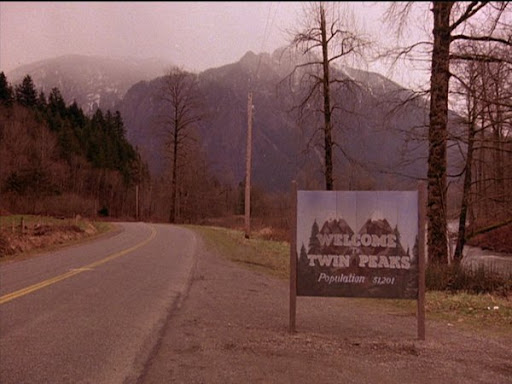
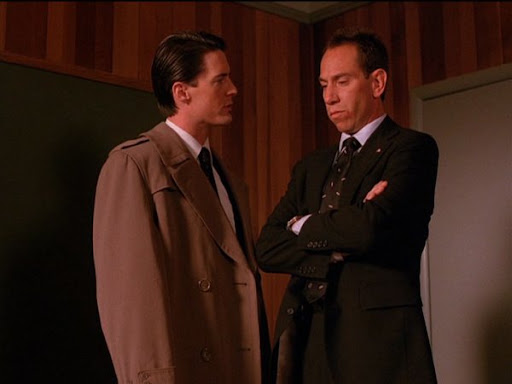
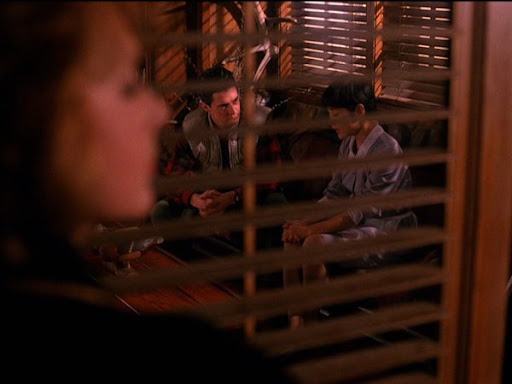
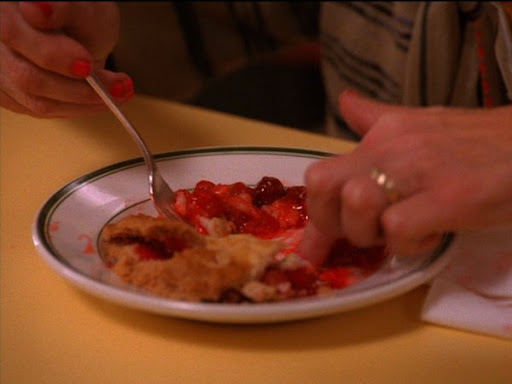
Twin Peaks. It was just a matter of time before we got around to it. This mega-post takes me back to those days when this site had a T.V. section that could only have been described (back then, mind you) as ghetto. Soweto ghetto to be exact. But now it's sprouting like a turnip, and L&S and I don't have to make excuses for it anymore. Twin Peaks (the best version out there) makes it even that much better of a section. Enjoy some quality American T.V.

david lynch- twin peaks

From Andrew Anthony at The Observer:

It's hard to recall now the excitement generated by David Lynch's Twin Peaks when it first aired on British television back in 1990. But it managed to make staying in seem urgent and exhilarating. There were Twin Peaks evenings, at which fans gathered in each other's houses to watch this revolutionary entertainment, a sort of surreal soap-cum-murder-mystery. Offices practically had to install water-coolers just so their staff could stand around them and speculate on who killed Laura Palmer. It was one of those moments when American popular culture reminded us just how cool it could be.

It also marked a decisive turning point in US television drama. Before Twin Peaks there was plenty of well-made American TV, though it was mostly generic and limited in ambition. But Lynch, a cinema auteur, tore up conventions and almost single-handedly reinvented TV drama. The standard narrative arc went out of the window, and in its place came idiosyncratic character studies, an elliptical plot, dialogue that brought the bizarre and the banal together in a captivating verbal marriage, and imagery quite unlike anything seen on the small screen. There was also, of course, the haunting theme music by Angelo Badalamenti that seemed to plug directly into the eerier quarters of the subconscious.

The audience was not just hooked but enthralled, beguiled and bewildered.


david lynch- twin peaks

Suddenly television was full of possibilities. Five years earlier, the high-water mark of innovation had been reached in British television with The Singing Detective, but thereafter the British model struggled to develop and thrive. By contrast, American TV hasn't looked back.

It would be wrong to attribute all that's since taken place to the creative impact of Twin Peaks but Lynch's legacy can nonetheless be seen in dramas in a whole range of recent TV shows. For a start, Lynch helped make television attractive to film stars. Kyle MacLachlan, who played the other-worldly Special Agent Dale Cooper, had been the lead in Blue Velvet. The message was that television was no longer a Hollywood ghetto. Without Agent Cooper perhaps there would have been no Jack Bauer. Similarly, it's hard to imagine that JJ Abrams's high-concept genre-mashing with Lost would have happened if Lynch hadn't pioneered the way. And in David Chase's casting in The Sopranos it's possible to see the influence of Lynch, who used almost forgotten character actors like Richard Beymer.

In the end, Twin Peaks didn't quite deliver on its fabulous promise, trailing off in its second series into paranormal confusion. But by then it had already worked its magic. "That's a damn fine cup of coffee," Agent Cooper liked to say. One way or another, American TV woke up and smelt it.


david lynch- twin peaks

Disc 01 Technical Information:

Title: Twin Peaks
Disc: 1
Year: 1990-1991

Source: DVD9 Retail
DVD Format: NTSC
Container: .iso + mds
Size: 6.83 GB
Programs used: Unknown

Resolution: 720x480
Aspect Ratio: 4:3
Video: MPEG2 @ ~7200 kb/s
Frame Rate: 29.97 fps

Audio 1: English- Dolby AC3 5.1 @ 448 kb/s
Audio 2: English- Dolby AC3 Stereo @ 192 kb/s
Audio 3: Spanish- Dolby AC3 Stereo @ 192 kb/s
Audio 4: Portuguese- Dolby AC3 Stereo @ 192 kb/s

Subtitles: English, Spanish, Portuguese

Menu: Yes
Video: Untouched
DVD Extras: Log Lady Intro


Episode List:

Pilot: Northwest Passage (Original Version)
Pilot: Northwest Passage (International Version)


Disc 01 Megaupload Links

david lynch- twin peaks

Disc 02 Technical Information:

Title: Twin Peaks
Disc: 2
Year: 1990-1991

Source: DVD9 Retail
DVD Format: NTSC
Container: .iso + mds
Size: 7.53 GB
Programs used: Unknown

Resolution: 720x480
Aspect Ratio: 4:3
Video: MPEG2 @ ~7200 kb/s
Frame Rate: 29.97 fps

Audio 1: English- Dolby AC3 5.1 @ 448 kb/s
Audio 2: English- Dolby AC3 Stereo @ 192 kb/s
Audio 3: Spanish- Dolby AC3 Stereo @ 192 kb/s
Audio 4: Portuguese- Dolby AC3 Stereo @ 192 kb/s

Subtitles: English, Spanish, Portuguese

Menu: Yes
Video: Untouched
DVD Extras: Log Lady Intros


Episode List:

01. Traces to Nowhere
02. Zen, or the Skill to Catch a Killer
03. Rest in Pain


Disc 02 Megaupload Links


david lynch- twin peaks

Disc 03 Technical Information:

Title: Twin Peaks
Disc: 3
Year: 1990-1991

Source: DVD9 Retail
DVD Format: NTSC
Container: .iso + mds
Size: 6.75 GB
Programs used: Unknown

Resolution: 720x480
Aspect Ratio: 4:3
Video: MPEG2 @ ~7200 kb/s
Frame Rate: 29.97 fps

Audio 1: English- Dolby AC3 5.1 @ 448 kb/s
Audio 2: English- Dolby AC3 Stereo @ 192 kb/s
Audio 3: Spanish- Dolby AC3 Stereo @ 192 kb/s
Audio 4: Portuguese- Dolby AC3 Stereo @ 192 kb/s

Subtitles: English, Spanish, Portuguese

Menu: Yes
Video: Untouched
DVD Extras: Log Lady Intros


Episode List:

05. Cooper's Dreams
06. Realization Time
07. The Last Evening


Disc 03 Megaupload Links


david lynch- twin peaks

Disc 04 Technical Information:

Title: Twin Peaks
Disc: 4
Year: 1990-1991

Source: DVD9 Retail
DVD Format: NTSC
Container: .iso + mds
Size: 7.70 GB
Programs used: Unknown

Resolution: 720x480
Aspect Ratio: 4:3
Video: MPEG2 @ ~7200 kb/s
Frame Rate: 29.97 fps

Audio 1: English- Dolby AC3 5.1 @ 448 kb/s
Audio 2: English- Dolby AC3 Stereo @ 192 kb/s
Audio 3: Spanish- Dolby AC3 Stereo @ 192 kb/s
Audio 4: Portuguese- Dolby AC3 Stereo @ 192 kb/s

Subtitles: English, Spanish, Portuguese

Menu: Yes
Video: Untouched
DVD Extras: Log Lady Intros


Episode List:

08. May the Giant Be with You
09. Coma
10. The Man Behind Glass


Disc 04 Megaupload Links


david lynch- twin peaks

Disc 05 Technical Information:

Title: Twin Peaks
Disc: 5
Year: 1990-1991

Source: DVD9 Retail
DVD Format: NTSC
Container: .iso + mds
Size: 7.68 GB
Programs used: Unknown

Resolution: 720x480
Aspect Ratio: 4:3
Video: MPEG2 @ ~7200 kb/s
Frame Rate: 29.97 fps

Audio 1: English- Dolby AC3 5.1 @ 448 kb/s
Audio 2: English- Dolby AC3 Stereo @ 192 kb/s
Audio 3: Spanish- Dolby AC3 Stereo @ 192 kb/s
Audio 4: Portuguese- Dolby AC3 Stereo @ 192 kb/s

Subtitles: English, Spanish, Portuguese

Menu: Yes
Video: Untouched
DVD Extras: Log Lady Intros


Episode List:

11. Laura's Secret Diary
12. The Orchid's Curse
13. Demons
14. Lonely Souls


Disc 05 Megaupload Links


david lynch- twin peaks

Disc 06 Technical Information:

Title: Twin Peaks
Disc: 6
Year: 1990-1991

Source: DVD9 Retail
DVD Format: NTSC
Container: .iso + mds
Size: 7.65 GB
Programs used: Unknown

Resolution: 720x480
Aspect Ratio: 4:3
Video: MPEG2 @ ~7200 kb/s
Frame Rate: 29.97 fps

Audio 1: English- Dolby AC3 5.1 @ 448 kb/s
Audio 2: English- Dolby AC3 Stereo @ 192 kb/s
Audio 3: Spanish- Dolby AC3 Stereo @ 192 kb/s
Audio 4: Portuguese- Dolby AC3 Stereo @ 192 kb/s

Subtitles: English, Spanish, Portuguese

Menu: Yes
Video: Untouched
DVD Extras: Log Lady Intros


Episode List:

15. Drive with a Dead Girl
16. Arbitrary Law
17. Dispute Between Brothers
18. Masked Ball


Disc 06 Megaupload Links


david lynch- twin peaks

Disc 07 Technical Information:

Title: Twin Peaks
Disc: 7
Year: 1990-1991

Source: DVD9 Retail
DVD Format: NTSC
Container: .iso + mds
Size: 7.30 GB
Programs used: Unknown

Resolution: 720x480
Aspect Ratio: 4:3
Video: MPEG2 @ ~7200 kb/s
Frame Rate: 29.97 fps

Audio 1: English- Dolby AC3 5.1 @ 448 kb/s
Audio 2: English- Dolby AC3 Stereo @ 192 kb/s
Audio 3: Spanish- Dolby AC3 Stereo @ 192 kb/s
Audio 4: Portuguese- Dolby AC3 Stereo @ 192 kb/s

Subtitles: English, Spanish, Portuguese

Menu: Yes
Video: Untouched
DVD Extras: Log Lady Intros


Episode List:

19. The Black Widow
20. Checkmate
21. Double Play


Disc 07 Megaupload Links

david lynch- twin peaks

Disc 08 Technical Information:

Title: Twin Peaks
Disc: 8
Year: 1990-1991

Source: DVD9 Retail
DVD Format: NTSC
Container: .iso + mds
Size: 7.46 GB
Programs used: Unknown

Resolution: 720x480
Aspect Ratio: 4:3
Video: MPEG2 @ ~7200 kb/s
Frame Rate: 29.97 fps

Audio 1: English- Dolby AC3 5.1 @ 448 kb/s
Audio 2: English- Dolby AC3 Stereo @ 192 kb/s
Audio 3: Spanish- Dolby AC3 Stereo @ 192 kb/s
Audio 4: Portuguese- Dolby AC3 Stereo @ 192 kb/s

Subtitles: English, Spanish, Portuguese

Menu: Yes
Video: Untouched
DVD Extras: Log Lady Intros


Episode List:

23. The Condemned Woman
24. Wounds and Scars
25. On the Wings of Love


Disc 08 Megaupload Links

david lynch- twin peaks

Disc 09 Technical Information:

Title: Twin Peaks
Disc: 9
Year: 1990-1991

Source: DVD9 Retail
DVD Format: NTSC
Container: .iso + mds
Size: 6.05 GB
Programs used: Unknown

Resolution: 720x480
Aspect Ratio: 4:3
Video: MPEG2 @ ~7200 kb/s
Frame Rate: 29.97 fps

Audio 1: English- Dolby AC3 5.1 @ 448 kb/s
Audio 2: English- Dolby AC3 Stereo @ 192 kb/s
Audio 3: Spanish- Dolby AC3 Stereo @ 192 kb/s
Audio 4: Portuguese- Dolby AC3 Stereo @ 192 kb/s

Subtitles: English, Spanish, Portuguese

Menu: Yes
Video: Untouched

DVD Extras:
- Log Lady Intros
- Deleted Scenes
- Production Documents


Episode List:

27. The Path to the Black Lodge
28. Miss Twin Peaks
29. Beyond Life and Death


Disc 09 Megaupload Links


david lynch- twin peaks

Disc 10 Technical Information:

Title: Twin Peaks
Disc: 10
Year: 1990-1991

Source: DVD9 Retail
DVD Format: NTSC
Container: .iso + mds
Size: 7.79 GB
Programs used: Unknown

Resolution: 720x480
Aspect Ratio: 4:3/16:9
Video: MPEG2 @ ~7200 kb/s
Frame Rate: 29.97 fps

Audio: English- Dolby AC3 Stereo @ 192 kb/s
Subtitles: English, Spanish, Portuguese

Menu: Yes
Video: Untouched

DVD Extras:
- A Slice of Lynch
- Secrets from Another Place: Creating Twin Peaks
- Saturday Night Live
- Twin Peaks Festival
- The Black Lodge Archive


Disc 10 Megaupload Links


david lynch- twin peaks