.:[Double Click To][Close]:.

Online CPM Advertising | Advertising blog
Showing posts with label DVD9. Show all posts

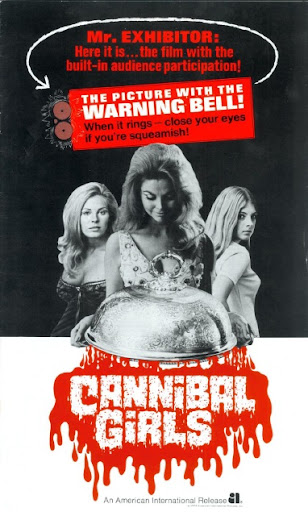
Canada Day Horror Movie Marathon: Ivan Reitman- Cannibal Girls (1973)- DVD9 (PAL Format)

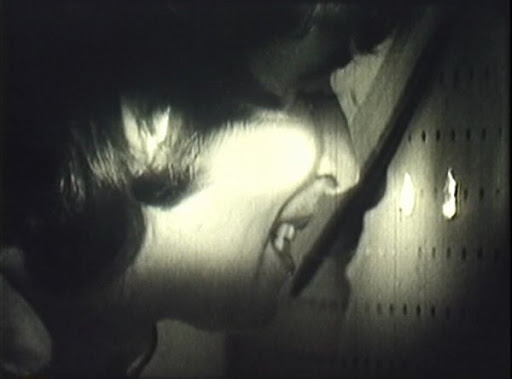
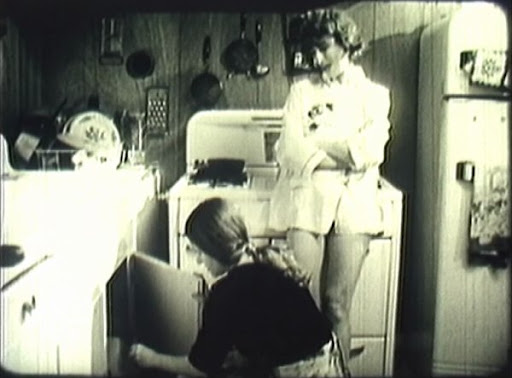
ivan reitman- cannibal girls
We're taking a brief break from our G-A-Y Day(s) celebration to give you some of the best of the worst of Canadian film.

Here are some Cannibal Girls to say "Happy Canada Day" to everyone back home in the Motherland.

ivan reitman- cannibal girls

From Canuxploitation:

Shot in 1972 by a then-unknown filmmaker Ivan Reitman, Cannibal Girls may not have been the first Canadian horror film ever made, but it quickly gained a reputation as one of the sleaziest Canadian B-movie concoctions of its era. Where previous attempts at horror in Canadian cinema had largely been sober affairs like the blood and sex-free Reincarnate or Catholicism-driven Quebecois efforts like The Pyx, Cannibal Girls took its pulpy cues from drive-in fare south of the border and delivered a more visceral experience to audiences. A purposely trashy and surreal tale of a couple that has a run-in with some blood-hungry honeys in an isolated small town community, the film was an important harbinger of things to come for a young Canadian film industry still grappling with its own identity. The country's first big international B-movie hit, it set new standards of depravity (and comedy!) and served an important incubation ground for both Reitman, who would become one of Hollywood's most sought-after talents in the wake of 1984's Ghostbusters, and future SCTV performers Andrea Martin and Eugene Levy, both appearing in their first major feature film role.

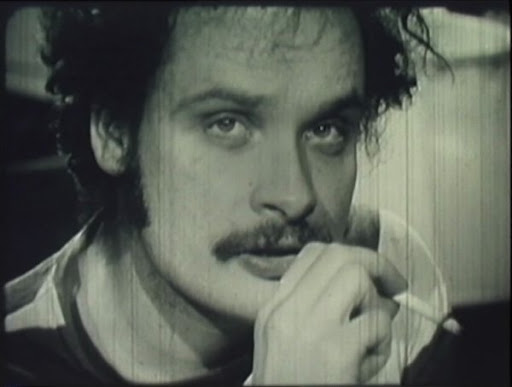
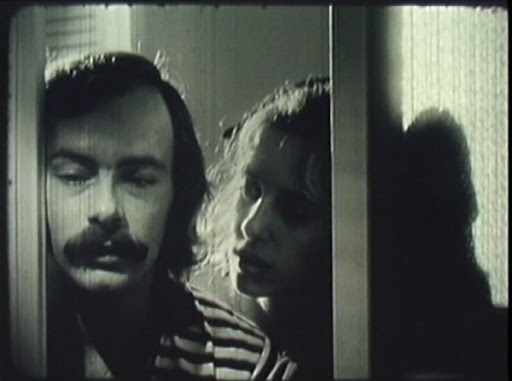
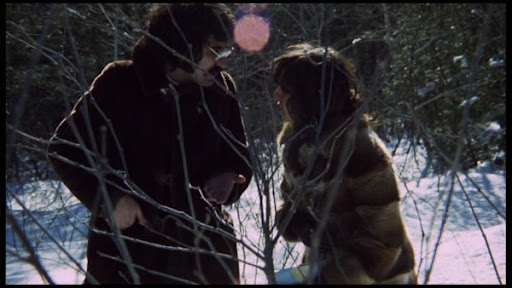
The movie follows Cliff (Levy, sporting an impressive afro and moustache combo) and his new girlfriend Gloria (Martin), who are stranded in snow-bound Farnhamville after their car breaks down. While waiting for the run-down service station, the pair decide to crash at a local motel. There, the owner tells them of the town legend, about a trio of young girls who would bring men home to kill them and eat their remains. Since that dark period, the house where the girls once satisfied their unnatural desires has become a fancy local eatery.

ivan reitman- cannibal girls

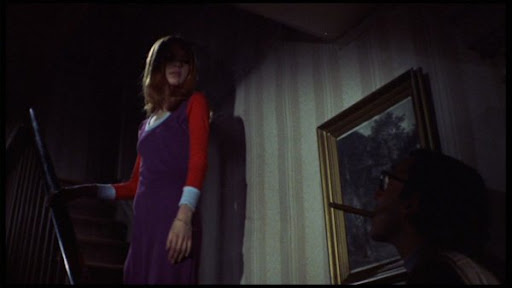
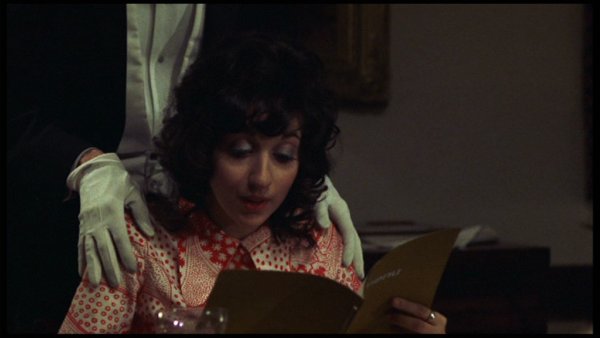
Fascinated and slightly repulsed, Cliff and Gloria nevertheless decide to head to the town's most infamous address for dinner. The only customers of the night, they are welcomed by the mysterious proprietor Reverend Alex St. John (Ronald Ulrich), who regales them with more grisly local stories as three familiar-looking waitresses serve their meals. The meal is wonderful, even if the company is somewhat awkward, but the meal goes so long that the Reverend suggests the couplespend the night in the house, despite Gloria's protests and insistence that something is quite wrong with the whole creepy set-up.

Turns out Gloria had good reason to worrybefore long, the Reverend enters their bedroom with his three girls in tow. Cliff is quickly chained to the bedposts, and the Reverend attempts to hypnotize Gloria to kill her boyfriend with a knife. Mortified, she escapes and manages to hitch a ride with a doctor, who gives her a sedative and promises to take care of her. When Gloria awakens, she is back in her motel bed with Cliff. She suddenly realizes that her harrowing experience at the house was nothing but a bad dream... or was it?

Even before Cannibal Girls, Reitman and his film partner Dan Goldberg had become infamous names in Canadian cinema circles for their daring student feature The Columbus of Sex, which landed the pair in the Ontario courts over obscenity charges (which were eventually dropped). After securing CFDC funding, the partners made a sexy college comedy follow-up Foxy Lady, but it was a mostly unsatisfying experience that encouraged Reitman and Goldberg to set their sights on the lucrative horror market, from which many enthusiastic young directors graduated to mainstream filmmakers. Shot for only $12,000 with a vague premise and largely improvised dialogue, Cannibal Girls is a fun little exercise in Canadian horror even though it doesn't stand up to much scrutinythe story is frequently confusing, the acting sometimes suspect, and the extended dream sequence plot twist discouraging. While some of this can probably be attributed to the extensive re-shoots Reitman and Goldberg decided were needed to flesh out the story, there's no denying that Cannibal Girls is a quintessential example of 1970s grindhouse cinemamessy, amateurish, crude and not afraid to wallow in its sleazy subject matter.

ivan reitman- cannibal girls

What's most notable, however, is that the film is frequently laugh-out-loud funny. There's a noticeable vein of dark humour running throughout, as a pre-SCTV Eugene Levy and Andrea Martin manage riff off of each other as the young couple that can't seem to catch a break, but their performances are largely deadpan, such as when Levy awkwardly impales a cigarette to the loose end of a guitar string, or Martin coaxes the stalled car back to life by telling it how much she loves it. The humorous bits don't fully blend in well with the sleazier horror aspects of the premise, resulting in a sometimes unsure tone, but the seeds of Reitman's spooky humour are evident. Much more interesting is Ronald Ulrich's unsettling, sometimes campy turn as the Reverend. A charismatic Svengali in a top hat, cape and gloves, the Reverend is part Charles Manson and part Vincent Price, and is fond of quoting Shakespeare and vaguely demonic poetry. Imposing pictures of him are seen all around town, hovering over kitchen tables as the locals chow down on large hunks of raw meat and comment on the taste of human flesh as though they were discussing fine cuisine. Also keep an eye out for Fishka Rais, better known as Igor on the Hilarious House of Frightenstein, who has a short cameo as a deli owner.

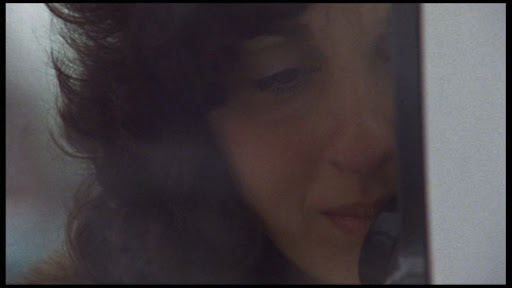
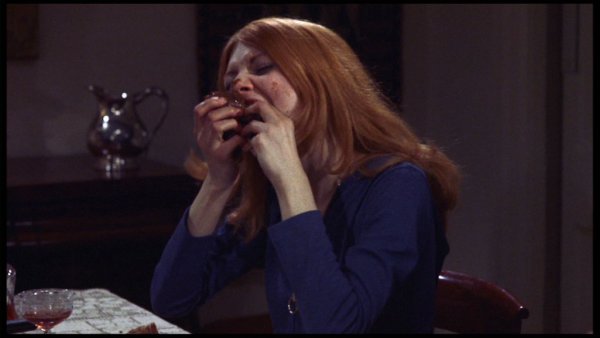
Despite its lurid title, Cannibal Girls is not as drenched in the red stuff as most viewers might expect. The bloodshed never gets more gruesome than in one flashback sequence of the girl's earlier flesh-eating fun, in which one man is chained to the bed while the girls pour blood over his chest and proceed to eat him alive. This lack of solid spectacle turned out to be a major problem for the picture when it was picked up for distribution by American International Pictures, home of schlock king Roger Corman. Unsure of what to do with the bewildering and bizarre picture, a special "warning buzzer" gimmick was added which was heavily advertised in the film's advertising campaign (in fact, the trick was "borrowed" from 1966's Chamber of Horrors) . The gimmick worked like this: before a scene of potentially squeamish fun,a buzzer would go off, and easily-upset members of the audience would know to close their eyes until a doorbell sound indicated the surely indescribable horror was over. The William Castle-style ballyhoo obviously made an impression on some, including teenager Lawrence Zazalenchuk, who copied it for his Sudbury-shot gore effort The Corpse Eaters the following year.

ivan reitman- cannibal girls

But The Corpse Eaters wasn't the only film intent on imitating Cannibal Girls' makeshift ode to the box office power of boobs and blood. By looking beyond our borders and gaining U.S. distribution, the film once again opened up international market to budding Canadian shlockmeisters in a way that hadn't been achieved with 1963's The Mask, the first Canadian B-movie to make a splash outside of the country when it was scooped up by Warner Brothers. Similar exploitation films like Deranged, Shivers and Death Weekend followed almost immediately, the latter two even produced by Reitman, who had since hooked up with the likeminded masterminds at Cinepix, John Dunning and Andre Link. While arguable not as successful as these later films, Cannibal Girls nevertheless did pave the way for a more lurid brand of Canadian B-cinema, one that was, for a while, unquestionably supported by the government's film programs.

Another unique aspect of Cannibal Girls is that it is an unabashedly Canadian film that is actually set where it was filmed. A University of Toronto sticker and a maple leaf flag are clearly seen, and the dialogue specifically references Toronto on at least one occasion. The Toronto suburb of Richmond Hill stands in for the fictional Farnhamville, and the film plays on the terror of small town isolation that is part of most Canadians' upbringings. When Cliff and Gloria discover the breadth of the community-wide conspiracy of cannibalism, there's simply no escape without access to a carthey are destined to remain part of the terrifying town forever, in the clutches of the Reverend's vampire-like cabal of bloodthirsty killers. Reitman also makes the most out of his snowy locale to strand the couple and then heighten their claustrophobiain fact, Cannibal Girls was the first snowbound Canadian horror ever made, and is topped only by The Ghostkeeper's use of the frozen landscape as a source of despair and loneliness.

Despite some obvious problems, Cannibal Girls remains a true slice of vintage Canadian B-cinema that holds up better than many of the more restrained horror efforts that preceeded it. Harkening a new age of unabashed exploitation in Candaian cult filmmaking, it's a landmark effort that remains essential viewing for Canuxploitation fans who, despite the film's rarity, already know that these girls "do EXACTLY what you think they do!"


ivan reitman- cannibal girls

Technical Information:

Title: Cannibal Girls
Year: 1973
Country: Canada
Director: Ivan Reitman

Source: DVD9 Retail
DVD Format: PAL
Container: .iso + mds
Size: 7.31 GB
Length: 1:19:25
Programs used: DVD Decrypter, ImgBurn

Resolution: 720x576
Aspect Ratio: 16:9
Video: MPEG2 @ ~6800 kb/s
Frame Rate: 25 fps

Audio 1: English (with warning bell)- Dolby AC3 Stereo @ 192 kb/s
Audio 2: English (no warning bell)- Dolby AC3 Stereo @ 192 kb/s

Subtitles: English

Menu: Yes
Video: Untouched

DVD Extras:
- Cannibal Guys: Ivan Reitman & Daniel Goldberg in Conversation
- Meat Eugene: Eugene Levy Talks
- French Credits
- Trailers
- TV and Radio spots
- Gallery
- PDFs of Press Book and Take One


ivan reitman- cannibal girls

(Use JDownloader to speed up downloading and avoid file stalls.)

Cannibal Girls Megaupload Links


G-A-Y Day(s)- Curt McDowell- Thundercrack! (1975)- DVD9 (PAL Format)

curt mcdowell- thundercrack
Homeslice here, just chillaxin' with my homegirl...on G-A-Y Day(s)!

I bet you didn't know that today was the anniversary of the Stonewall riots. Well, around here at ForTheDishwasher we are up on all that historical shit, so we decided to celebrate the Stonewall anniversary by having G-A-Y Day(s)! Yay!

But homeslice...I didn't know that you were G-A-Y.

I'm not. Although I've always thought Ryan Seacrest looked handsome in a suit.

That's pretty fucking G-A-Y, homeslice.

You think? Oh well, things could be worse. Here's Thundercrack to kick off G-A-Y Day(s). Enjoy...and quit picking the cucumber out of your salad. There's starving children in Biafra!


curt mcdowell- thundercrack

From Steven Puchalski at Shock Cinema:

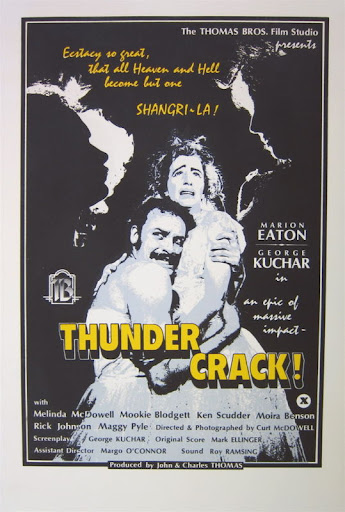
If you're at all familiar with underground cinema, than you've probably heard tales about this flick for years. But actually seeing the damned thing is a different matter entirely. Crass, sick and hilarious, this no-budget b&w feature is filled with the essence of pure, undiluted cinematic derangement. Like the earliest works of John Waters, it revels in taboo-shattering shocks and an undying love for Hollywood kitsch. Glorious overwritten by George Kuchar, and directed by the late Curt McDowell (who was one of Kuchar's first students), it's a torrent of comically-lit cliches, heated to the point of lurid parody.

The time: A dark and stormy night. The setting: An old, secluded mansion -- the home of the terrifically obscene Mrs. Gert Hammond (Marion Eaton), who staggers about the place with heavy, mismatched eyebrows and a vomit-caked wig. And as the night progresses, more and more visitors arrive at her doorstep, stranded by the inclement weather. One guy has a fear of ladies' girdles, another is the Christian wife of a country western singer, a few more were in a car wreck, and George Kuchar himself shows up (and steals the show) while transporting circus animals.


curt mcdowell- thundercrack

The characters then proceed to fight, fuck and spout pages and pages of dialogue, while Marion plays voyeur through secret peepholes -- watching the males play with vacuum-powered penis enlargers as she masturbates with a huge cucumber. A smorgasbord of 42nd Street goodies are left out for the guests' disposal (the predictable array of blow-up dolls, jellies, dildos, et cetera), and they're certainly tested out thoroughly.

Everyone has dark, nasty secrets. Everyone has weaknesses which are eventually exposed. And all the men have hairy asses (which we get in WAY-too-loving close-up). Of course, the best is yet to come, when the viewer is introduced to Marion's dead hubbie, who she had pickled in jars after he was killed by locusts; and her son, who's kept locked in the basement with Elephantitis of the balls. Plus, since the filmmakers have every other sexual combo on display, why not toss in a horny gorilla with a taste for young men, and Kuchar's indescribably demented story of having sex with an ape?!...


curt mcdowell- thundercrack

With a running time of over two hours, the film may sound like a task, but it never slows down and NEVER shuts up, not even for the sex scenes. Never one to waste film stock, Kuchar has the characters rambling incessantly, even in the middle of a blow job. This is a full-blown, near-perfect parody which cobbles together a cast of Irwin Allenesque characters, and then steeps them in hardcore sex and disturbing imagery, until it becomes a twisted, OLD DARK HOUSE-style soap opera.

The performers are all appropriately hyperactive, with Kuchar bringing power (and flying spittle) to every word. But the flick's true joy lies in George's gift for scriptwriting. The movie's packed with long, lush monologues, wall-to-wall revelations, plus dialogue so dense (and often drowned out by the score) that it's impossible to ingest in only one sitting. But is it erotic, you wonder? Not to the unimaginative mainstream viewer, but I certainly found something cruelly, crudely seductive in its fondness for fetish and secret pleasures. Without question, THUNDERCRACK! is one of the great underground sleaze epics, and a touchstone for all independent filmmakers to come!


curt mcdowell- thundercrack

Technical Information:

Title: Thundercrack!
Year: 1975
Country: USA
Director: Curt McDowell

Source: DVD9 Retail
DVD Format: PAL
Container: .iso + mds
Size: 6.98 GB
Length: 2:00:28
Programs used: ImgBurn

Resolution: 720x576
Aspect Ratio: 4:3
Video: MPEG2 @ ~6200 kb/s
Frame Rate: 25 fps

Audio 1: English- Dolby AC3 Stereo @ 192 kb/s
Audio 2: Russian Overdub- Dolby AC3 Stereo @ 192 kb/s
Subtitles: Norsk, Dansk, Suomi

Menu: Yes
Video: Untouched

DVD Extras:
- Jack Stevenson Essay
- Slideshow
- Trailershow


curt mcdowell- thundercrack

(Use JDownloader to speed up downloading and avoid file stalls.)

Thundercrack! Megaupload Links


"I Saw the Dead Koreans" Weekend: Nah Hong-jin- 추격자/The Chaser (2008)- DVD9 (NTSC Format)

nah hong-jin- the chaser
"I Saw the Dead Koreans" Weekend has been carried over into Monday, so let's all pretend that this is a lazy Sunday evening, okay?

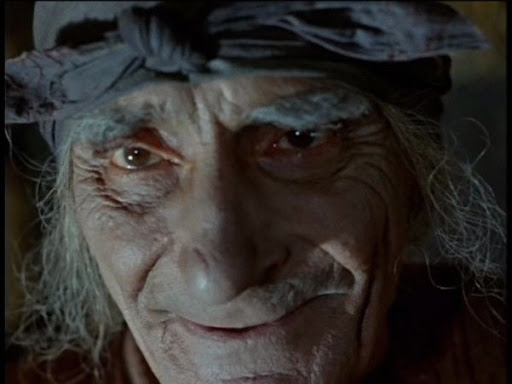
The Chaser is a bit formulaic and has a quite unbelievable ending...but I liked it. It would make for one heck of a good rental. You see, here in the States the concept of a "good rental" is practically dead and The Chaser fits the bill perfectly. There's a serial killer on the loose who's quite good with a hammer who preys on escort girls, homeowners and anyone else who gets in his way. And there's chases, but they're not moped chases down stairs...they're foot chases. Actual running. I wonder what Hollywood's going to replace the running with when they remake this film? Segauy's??? Does Matt Damon know how to chase in a Seguay?

This country's going to Hell in a handbasket. You realize that, right???

nah hong-jin- the chaser

From Sarah Ward at KOFFIA Blog:

Korean filmmaking has come of age in the past decade, with directors such as Park Chan-wook, Bong Joon-ho and Kim Ji-woon revitalising their national film industry. With features such as Old Boy, Thirst, The Host, Mother, A Tale Of Two Sisters and A Bittersweet Life receiving much-deserved critical acclaim, international exposure and box office success, modern Korean cinema is evolving into a must-watch genre all of its own.

The Chaser typifies this new breed of Korean film, in essence a traditional shock and splatter serial killer thriller akin to Zodiac, Seven and The Silence Of The Lambs, but within a culturally specific and suitably post-modern frame. Directed and co-written by first-timer Na Hong-jin loosely based on the real-life Korean case of Yoo Young-cheol (responsible for the murders of 21 prostitutes and wealthy elders during 2003 and 2004), The Chaser is an unpredictable and suspenseful feature that lives up to the promise of its compatriots, and well worth watching before the upcoming US remake (by The Departed scribe William Monahan, with Leonardo DiCaprio rumoured for the lead).

In the early hours of the evening, on a poorly-lit back street in Seoul's Mangwon district, an attractive young woman parks her car and enters an adjoining house, joking to a friend on the phone that she won't be there long. Days later, patrolling police find the vehicle in the same spot by the side of the road convinced it has been abandoned; former detective turned pimp Joong-ho (Kim Yoon-suk), in search of one of his increasing number of absent staff, assumes the same.


nah hong-jin- the chaser

Business is struggling for Joong-ho - with mounting debts, decreasing customers, and disappearing workers - so when young mother Mi-jin (Seo Young-hee) calls in sick the next evening, he is afraid that she too is planning to walk out on the world's oldest profession, and orders her to attend the premises of Young-min (Ha Jung-woo), a lucrative and particular customer. Too late, Joong-ho realises that his other missing girls each visited the same fussy client before disappearing, and when he is unable to reach Mi-jin by phone, he sets out after her, embarking on a race against time and a fight against police bureaucracy to get to the truth.

Certain to please fans of the crime genre and of the recent renaissance of Korean film, The Chaser bursts with dark emotion, surprising twists and thrilling suspense, much like its predecessors. More than just another slick killer flick (despite frantic chases, energetic fist fights, and the mandatory quota of blood and gore) the film is infused with poignant depth and slow-burning character development, complete with unlikeable and morally questionable yet human protagonists fleshed out by their sins but not defined solely by their deeds.


nah hong-jin- the chaser

Though the action is largely condensed into a single twelve-hour period, director Na Hong-jin and fellow scribes Hong Won-chan and Lee Shinho ensure that the feature remains unhurried and focused on character motivation, helped largely by seamless direction and adept casting. The three leads - Kim Yoon-suk, Ha Jung-woo and Seo Young-hee - play their roles with skill, ensuring that the fallen cop, chilling killer and tortured prostitute are more than just cinematic cliches. Kim Yoon-suk, in particular, provides a standout performance, allowing the measured growth of his unexpectedly complex character to bloom in a completely believable and authentic fashion, firmly grounded in the narrative. An interesting, dramatic and gloomy anti-hero police procedural, this latest Korean masterpiece is a strong and satisfying film that exposes the underbelly of crime, its victims and its consequences, with style and skill.

Capturing the complexity of urban crime and the darkness of the serial killer genre, The Chaser is a multi-layered and expertly crafted film experience. Worthy of the acclaim showered upon it, and of a place in Korean cinema history beside the work of master directors Park Chan-wook, Bong Joon-ho and Kim Ji-woon, it is essential viewing for astute film fans.


nah hong-jin- the chaser

Technical Information:

Title: 추격자/Chugyeogja/The Chaser
Year: 2008
Country: South Korea
Director: Nah Hong-jin

Source: Retail DVD9
DVD Format: NTSC
Container: .iso + mds
Size: 7.24 GB
Length: 2:04:46
Programs used: ImgBurn

Resolution: 720x480
Aspect Ratio: 16:9
Video: MPEG2 @ ~7600 kb/s
Frame Rate: 29.97 fps

Audio 1: 한국어/Korean- Dolby AC3 5.1 @ 192 kb/s
Audio 2: 한국어/Korean- Dolby DTS 5.1 @ 768 kb/s
Audio 3: 한국어/Korean Commentary- Dolby AC3 @ 192 kb/s
Subtitles: 한국어/Korean, English

Menu: Yes
Video: Untouched
DVD Extras: Director's Commentary (Korean Only)


nah hong-jin- the chaser

(Use JDownloader to speed up downloading and avoid file stalls.)

The Chaser Megaupload Links


"What Happened to You, Zhang Yimou?": Zhang Yimou- 活着/To Live (1994)- DVD9 (NTSC Format)

zhang yimou- to live
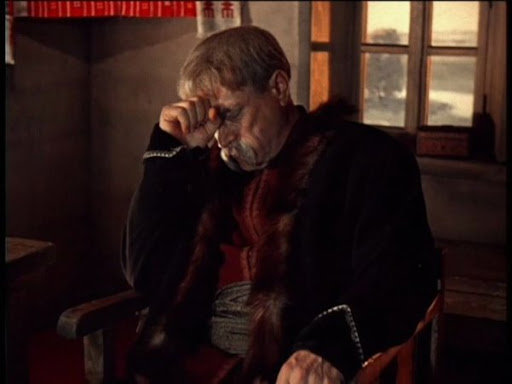
Pretty safe to say that this is Zhang Yimou's masterpiece, although Raise the Red Lantern will always be my personal favorite. Both Ge You and Gong Li are amazing in this epic film about a family's struggle to live through the Maoist regime. The only word that can describe Gong Li's acting prowess in this film is sublime. This is why we're posting these films- so that viewers so dumbed-down by westernized mediocrity can be exposed to Yimou's practically hidden masterworks that pre-dated the shit he's been pumping out lately. What happened to you, Zhang Yimou? What the hell happened?

Sorry, but this guy pisses me off to no end. I'll get off my soap-box now. Enjoy the film.

zhang yimou- to live

From Caryn James at the New York Times:

In the gambling house where Fugui (Ge You) spends his nights, letting his family fortune slip from his grasp, he is treated like a young prince. The setting is China in the prerevolutionary 1940's, and after hours of gambling, Fugui is carried home at dawn through the streets of his small town on the back of a man who deposits him at his extravagant house. Fugui's wife, Jiazhen (Gong Li), begs him to stop gambling, for the sake of their small daughter and the child she is carrying.

Of course, he doesn't, and soon loses the family home to a bounder called Long Er. One of many great comic ironies in "To Live," Zhang Yimou's family melodrama that sweeps through 30 years of Chinese history, is that this misfortune turns out to be a major piece of luck. When the revolution comes, the house is burned by the Communists and the landowning Long Er is executed. There, but for the grace of his gambling, goes Fugui.


zhang yimou- to live

"Your family's timber was first-rate," a good Communist tells him, describing how fast the house went up in flames. By then Fugui has developed a sense of survival that is by turns funny and heartbreaking and that expresses the very soul of this tragicomic film. "That wasn't my family's timber," he says. "That was counterrevolutionary timber."

"To Live" is purposefully more sentimental than anything Mr. Zhang has done before. After Fugui has lost the house, he takes over a traveling shadow puppet show. While he and his friend Chungsheng are on the road with their theater, they are captured by the losing Nationalist army. When Fugui returns to his much-changed town, he finds that Jiazhen earns a living by delivering water door to door. An illness has left their daughter, Fengxia, deaf. And their son, Youqing, is a spirited boy who becomes the victim of his father's desperate need to disguise his past as a wealthy man.


zhang yimou- to live

This film is also less sumptuously photographed than Mr. Zhang's other works; in the lives of these characters, touches of red on a gray uniform have to pass for glamour. Depicting the characters responding to Mao's changes, "To Live" brings to mind Chen Kaige's "Farewell, My Concubine," though set among poor townspeople rather than against the rich backdrop of the Beijing Opera. In its emphasis on individuals, "To Live" has less in common with Mr. Zhang's earlier, less dramatic films, "Red Sorghum" and "Ju Dou," than with his recent ones, the glorious soap opera "Raise the Red Lantern" and the comic tale of a rebellious woman, "The Story of Qiu Ju." (All of them starring Gong Li.)

But the masterly Mr. Zhang knows he's creating melodrama and exaggerates to profound effect. The family tragedies in "To Live" demonstrate how China's politics scarred individuals who were treated as pawns in Mao's progress, and its sentimentality shows that ideology is no comfort in the face of personal anguish. In two magnificent performances, Gong Li carries the story's emotions and Ge You the weight of history. Gong Li is, as always, a powerful heroine. But Mr. Ge is a revelation, evoking sympathy and pity as a man whose weakness causes him to bend like a reed in the changing winds of Chinese politics and whose strength allows him to endure the consequences.


zhang yimou- to live

During the Great Leap Forward in the 1950's (the historical changes are explained clearly in succinct titles through the film), the entire town donates all metal objects to support steel production. Even the family's pans are taken away, and everyone eats at the communal kitchen. That is where the mischievous Youqing pours a huge amount of chili sauce on a big bowl of noodles, then calmly dumps it on the head of a boy who has been taunting his sister. For that, Fugui publicly spanks his son, agreeing that the little boy's gesture was a counterrevolutionary act meant to undermine the communal kitchen.

Irreverent though Mr. Zhang's take on Chinese history is, "To Live" is primarily a story of living with sadness. Fugui's old friend Chungsheng becomes a district leader and accidentally causes a death. "You owe us a life," Jiazhen screams at him, and the line becomes a refrain that resonates through the film.


zhang yimou- to live

In the 60's, during the Cultural Revolution, Fugui and Jiazhen hear that their prospective son-in-law, a committed Maoist, is tearing their house apart. They race home only to find him helpfully repairing the roof and painting huge murals of Mao on the walls. Throughout, Mr. Zhang creates an inescapable sense of the tension and fear that informs the characters' daily lives.

The Communist revolution is increasingly blamed for the family's tragedies. When someone dies because the reactionary doctors have been taken away from the hospital, leaving only inept students behind, there is no mistaking the political toughness of this melodrama's message.

This film has created serious problems for Mr. Zhang. The Chinese Government was unhappy that "To Live" was entered in competition at this year's Cannes Film Festival, where Gong Li and Ge You were present and won best acting awards. In the last few weeks, the Government has stopped production on Mr. Zhang's new movie, partly financed with French money, and barred him from working on foreign co-productions.


zhang yimou- to live

Technical Information:

Title: 活着/Huózhe/To Live
Year: 1994
Country: China
Director: Zhang Yimou

Source: Retail DVD9
DVD Format: NTSC
Container: .iso + mds
Size: 6.97 GB
Length: 2:12:26
Programs used: ImgBurn

Resolution: 720x480
Aspect Ratio: 1.85:1
Video: MPEG2 @ ~6800 kb/s
Frame Rate: 29.97 fps

Audio: 简体中文/Mandarin- Dolby AC3 Stereo at 192 kb/s
Subtitles: English, French, Spanish

Menu: Yes
Video: Untouched
DVD Extras: Theatrical trailer


zhang yimou- to live

(Use JDownloader to speed up downloading and avoid file stalls.)

活着 Megaupload Links


Georgi Kropachyov/Konstantin Yershov/Alexander Ptushko- Вий/Viy/Spirit of Evil (1967)- DVD9 (NTSC Format)

georgi kropachyov- konstantin yershov- viy
L&S informed me that our StatCounter numbers have been slipping as of late, so she's been yelling at me to "FIND MORE ACTION FLIX, LIKE 'MY DINNER WITH ANDRE'!!!!"
So I asked myself "what would a Russian 'bro do in this situation?" Then a heavily accented voice whispered in my ear "post Вий." So I did.


georgi kropachyov- konstantin yershov- viy

From Kelly Vance at East Bay Express:

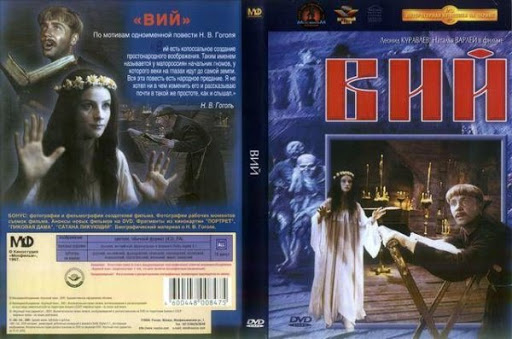
The fantastic aspects of Alexander Ptushko, Konstantin Ershov, and Giorgi Kropachyov's 1967 fantasy Viy, are front and center, and thoroughly Russian.

No one does ghost stories like the Russians. And director-animator Ptushko's fanciful adventures of heroes, witches, Swiftian kingdoms, and sorcerers--now receiving a long-awaited mini-retrospective at the Pacific Film Archive, through June 8--are among the most amazing the former Soviet Union has to offer. Viy (1967) has been one of the most elusive of Ptushko's films for US audiences, and is just now receiving its stateside premiere at the PFA. Typical of Ptushko's work, it mixes gothic horror (from a short story by Nikolai Gogol) and grotesque animated effects in a proletarian automatic blender. And what it lacks in production values it makes up for in its lingering sense of dread.


georgi kropachyov- konstantin yershov- viy

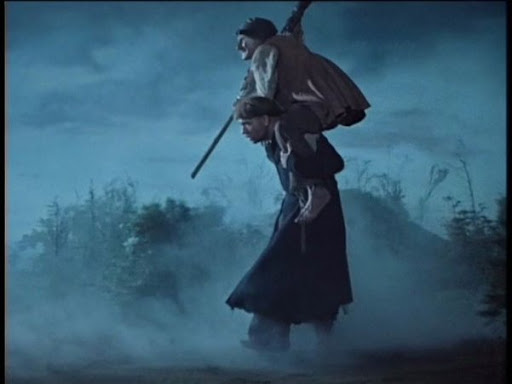
A brawny, fun-loving seminarian named Khoma Brutus (played by Russian movie star Leonid Kuravlyov) is turned loose along with several dozen of his classmates for spring vacation, sometime in the 19th century. The seminarians immediately create chaos and havoc in the nearby town, exactly like 20th-century students, but eventually Khoma and two of his buddies find themselves lost in the country with nightfall approaching. They knock at a farmhouse gate begging for a place to sleep, and are welcomed by an old woman who seemingly takes a fancy to Khoma. Sure enough, she's a witch. After Khoma spurns her amorous advances in a haystack, the old woman casts a spell, rides him around the courtyard like a horse, and flies him through the air. The resourceful Khoma wakes up in midair, forces a rough landing, and escapes. But the witch isn't finished with him.


georgi kropachyov- konstantin yershov- viy

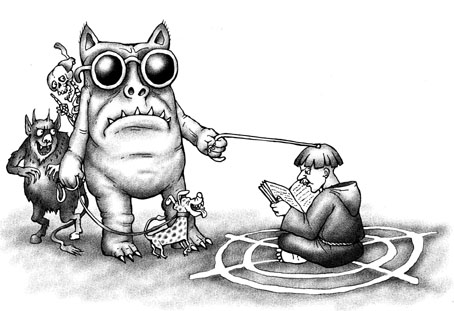
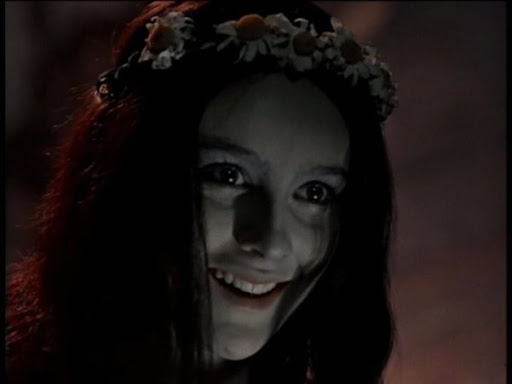
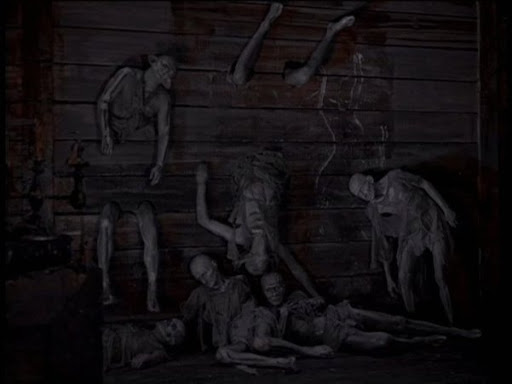
Khoma's travels then take him to a village where a local landowner is calling for a priest to administer to his recently deceased daughter. He goes to the estate and is offered this proposition: he must pray over the dead young woman's body for three nights; if he succeeds in placing her soul at rest, he'll be rewarded; if he tries to run, the landlord's cossacks will kill him. Inside a spooky wooden chapel hung with Eastern Orthodox icons, the deceased rests in her coffin. She is played by actress Natalya Varley, who bears a startling resemblance to Winona Ryder. Khoma begins to recite his prayers, and from then on the action goes from the subtly gothic to the baldly fantastic to the gleefully absurd, with brief stopovers in the languidly grim. The corpse refuses to lie still. In a Ukrainian minute the dead girl, evidently possessed by the aforementioned witch, opens her eyes and begins a successful campaign to blow poor Khoma's mind--by commanding furniture, surfing through the air in her coffin, summoning up an army of claymation demons, etc.


georgi kropachyov- konstantin yershov- viy

In the manner of Sergei Paradzhanov and other Soviet-era filmmakers working the antirealistic side of the street, the prolific Ukrainian Ptushko (1900-1973) grasps the cinematic essence of unnerving fantasy: oddly formed human faces combined with erratic movement. The witch's sexuality--in both her guises--is the key to the film, a major source of bewilderment for the seminarian. The color is magnificent, and Armen Hachaturyan's music is also especially thrilling with its vertiginous string crescendos. Viy, which plays one night only--next Thursday, June 7--at the PFA, comes highly recommended, as do all the Ptushko films.


georgi kropachyov- konstantin yershov- viy

Technical Information:

Title: Вий/Viy/Spirit of Evil
Year: 1967
Country: USSR
Director: Georgi Kropachyov, Konstantin Yershov, Alexander Ptushko

Source: Retail DVD9
DVD Format: NTSC
Container: .iso + mds
Size: 7.73 GB
Length: 1:11:52
Programs used: ImgBurn

Resolution: 720x480
Aspect Ratio: 4:3
Video: MPEG2 @~ 7300 kb/s
Frame Rate: 29.97 kb/s

Audio Channel 1: Русский/Russian- Dolby AC3 @ 448 kb/s
Audio Channel 2: English- Dolby AC3 @ 448 kb/s
Audio Channel 3: Français- Dolby AC3 @ 448 kb/s

Subtitles: English, Русский, Français, Deutsch, Español, Italiano, Português, Nederlands, Svenska, 日本語/Japanese

Menu: Yes
Video: Untouched
DVD Extras: Trailer


georgi kropachyov- konstantin yershov- viy

(Use JDownloader to speed up downloading and avoid file stalls.)

Вий Megaupload Links


Louis Malle- My Dinner with Andre (1981)- 2 Disc Special Edition- DVD9 (NTSC Format)

louis malle- my dinner with andre
Well...we got passed over during The Rapture, so we're back to posting. I'm guessing Jesus doesn't have the sense of humor that I thought he did, so, in effect, L&S and I are fucked. But whatever. On to bigger and better earth-bound issues.

A few weeks back, someone (who shall remain nameless) was complaining that "your site doesn't have enough action movies, and I like action movies, 'bro! I hella like to see shit blow up and bloody daggers whizz past my face. 'Bro, you need to chill on the wordy flicks!"
Then he did one of those internet sad faces and said "You got served!" To me. He said that to me.

And he was right. I had just gotten "served" for the very first time...'bro.

So, in Wakamatsuian "self critique" tradition, I began to search my soul (the same soul that apparently wasn't up to Jesus's standards on May 21st) and asked myself "is ForTheDishwasher one of those stuffy elitist sites that only cater to people with beret's and soul patches???"

"But leclisse...you do post action movies. What about "Fuck You, Tarantino!" Week. There was lot's of cars blowing up, hot Japanese titties and Kung-fu. That ass of a poster was wayyyyyyy off base. God, you're handsome."

But maybe the 'bro was right. Maybe L&S is a bit stuffy.

So we decided to make a concerted effort to post more action flicks for you, the unwashed masses. And to start out, we've picked the Godfather of all action movies, My Dinner with Andre. The movie does require a warning, though. There is a graphic sex scene where Andre performs cunnilingus on a nubile young waitress in an exploding car while being tracked by homosexual robots with fully erect metal penises. If you're under 18, please DO NOT download this flick, 'bro. You have been warned and served. Enjoy!


louis malle- my dinner with andre

From Matt Mazur at PopMatters:

Louis Malle hit the ground running his first time out of the gate, directorially-speaking, as an outspoken critic of the bourgeoisie with such provocative films as Elevator to the Gallows and The Lovers. Through his decades-spanning career, he continued to touch on issues of class disparity with interesting takes on poverty and socio-economic mores with films such as Pretty Baby, Atlantic City, and even his more slick early ‘90s offering Damage. My Dinner with Andre is a different kind of directorial vision from Malle, yet is a film that firmly remains true to his critical spirit.

Found bereft and weeping on the street after hearing Ingrid Bergman’s line in Autumn Sonata (“I could always live inside my art but not my life”), Andre bumps into a mutual acquaintance of his and Wally’s before the film begins, and the men schedule a meet up for the titular meal at a high-end eatery. This is not simply a film of two men talking for hours, as it can often be reduced to – it is a grand, intimate philosophical dissection of love, art, creative freedom and self-importance, and the time flies listening in, voyeuristically, as this intimacy is exchanged between these two multitasking storytellers.


louis malle- my dinner with andre

Wally (Wallace Shawn) wonders if his friend Andre (Andre Gregory) is happy with his life, and points out that most people don’t have the kind of privileges the theater impresario has been able to enjoy. After all, Andre has frolicked in the Polish forest with an experimental theater troupe in the moonlight, and has given his body and soul over to discovering his process—a luxury afforded to him by his financial autonomy. Shawn, a struggling poet-actor-writer, is keen to point out, perhaps acting as a surrogate for Malle, that these kind of lofty activities are generally not what real people have in mind when they think of “art”.

“Art”, Wally (Shawn) reasons isn’t something that will pay the bills. Perhaps it will satisfy the soul, but his friend Andre (Gregory), a kind of globe-trotting, theater world bon vivant would beg to differ, as he is apparently independently wealthy and can afford the quirky opportunities that come his way. “You need to cut out the noise,” says Andre, in order to achieve artistic nirvana. Wally, ever the devil’s advocate, says that without the “noise” he would be lost.


louis malle- my dinner with andre

Gregory and Shawn penned this eloquent conversation and starred as the characters based on themselves, so that they so effortlessly slip into the roles is hardly a surprise – though both men, on the disc’s excellent extras interviews, talk about the difficulty in performing the piece for film. They knew “Wally” and “Andre” on many planes of existence, yet Malle challenged them to uncover the unforeseen truths of the script, taking them outside of their comfort zones, effectively killing the idea that they are just “playing themselves”. Their back and forth provides a look into how different approaches to the artistic process can converge into a virtual waterfall of results when the current is swift enough.

In the hour-long [...] extras, writer-director Noah Baumbach nestles into the catbird seat and actually sits down with both Gregory and Shawn (separately) for a kind of follow-up to the film, to assess their experiences of working with the late Malle. Gregory says that he had no clue as to “what director would want to watch two completely unknown people talk for two hours”, and jokes that he and Shawn bandied about names such as Akira Kurosawa in their fantasies of who would helm the project in its early stages.


louis malle- my dinner with andre

He goes on to explain that Malle called him “sobbing” on the phone extolling the virtues of the “beautiful script”. He thought someone was pulling his leg. Malle humbly offered to direct, or at least produce. He was so passionate about the content of Gregory and Shawn’s experimental script that he had to be involved somehow.

If the creative process is examined with a fine-toothed comb in the feature, the extras provide a fascinating behind-the-scenes look at the process the film’s principles achieve with a thorough artistic synergy. The confines of Andre’s near-claustrophobic setting conversely sets the filmmakers free, and the resulting discussion of the meaning of art is the culmination of the smartest, most visionary guys in the room forming an alchemic cinematic brain trust.

Add in the contemporary element of Baumbach, a great writer, filmmaker and artist in his own right, and even more light is shed on the process of producing art. The theater actor had to become a film actor. The director of plays had to take a back seat to the auteur and give tips from the sidelines. The film seems a prime example of give and take, of ceding control when necessary and asserting oneself at the right times.


louis malle- my dinner with andre

Hearing about this particular kind of artistic generosity, hearing the stories of the participants being pushed out of usual comfort zones, is fascinating. Taking a hard look at the kind of commitment one must have to producing a final product called “art” is reminiscent of the kind of creative freedom that Gregory tries to explain to Wally in the film’s infamous “Polish Forest” scene.

Shawn, underrated all around, gives an illuminating talk in the extras about fear and his “personal goal” with the film: destroying the character he was playing. He wanted to “kill” that side of himself because he reasoned that the character was ultimately motivated by fear. Shawn said he was “sick of his own imagination” when he began to write the script for My Dinner with Andre, and was attracted to writing about “real things”. He talks of his passion for his own script, his passionate defense of even the minutest detail, down to specific sentences that he refused to let Malle cut.

Shawn goes on about the director’s own generosity in working with a virtual novice, yet allowing him to be, in Shawn’s words, “difficult”. Malle’s commitment to the material, and to Shawn (they would go on to do Vanya on 42nd Street), belies the fact that Shawn claims to not “understand the concept” of collaboration, a sharp, antonymous contrast to his onscreen partner Gregory.


louis malle- my dinner with andre

Roger Ebert, who was one of the first major US critics to embrace My Dinner with Andre (along with his own legendary onscreen partner Gene Siskel) said in his review “They are alive on the screen, breathing, pulsing, reminding us of endless, impassioned conversations we’ve had with those few friends worth talking with for hours and hours. Underneath all the other fascinating things in this film beats the tide of friendship, of two people with a genuine interest in one another.”

In an age where most people are more inclined to interact more with their computer screen or their Facebook friends than their families or real friends, My Dinner with Andre becomes more of a symbol for a kind of intimacy that seems antiquated or perhaps even dead. Has the art of conversation been laid to rest in favor of instant messaging, constant text-messaging and emailing? Could Wally and Andre still have these kinds of chats today or would they simply log onto Skype from the privacy and comfort of their apartments?


louis malle- my dinner with andre

Disc 1 Technical Information:

Title: My Dinner With Andre (Disc 1)
Year: 1981
Country: USA
Director: Louis Malle

Source: Retail DVD9
DVD Format: NTSC
Container: .iso + mds
Size: 7.05 GB
Length: 1:51:36
Programs used: ImgBurn

Resolution: 720x480
Aspect Ratio: 16:9
Video: MPEG2 @ ~8800 kb/s
Frame Rate: 29.97 fps

Audio: English- Dolby AC3 Mono @ 384 kb/s
Subtitles: English

Menu: Yes
Video: Untouched
DVD Extras: None on source


louis malle- my dinner with andre

Disc 2 Technical Information:

Title: My Dinner With Andre (Disc 2)
Year: 1981
Country: USA
Director: Louis Malle

Source: Retail DVD9
DVD Format: NTSC
Container: .iso + mds
Size: 6.89 GB
Length: N/A
Programs used: ImgBurn

Resolution: 720x480
Aspect Ratio: 16:9
Video: MPEG2 @ ~8800 kb/s
Frame Rate: 29.97 fps

Audio: English- Dolby AC3 Mono @ 384 kb/s
Subtitles: English

Menu: Yes
Video: Untouched

DVD Extras:
-Andre Gregory and Wallace Shawn
-"My Dinner With Louis"


louis malle- my dinner with andre

(Use JDownloader to speed up downloading and avoid file stalls.)

My Dinner with Andre Megaupload Links:

Disc 1
Disc 2


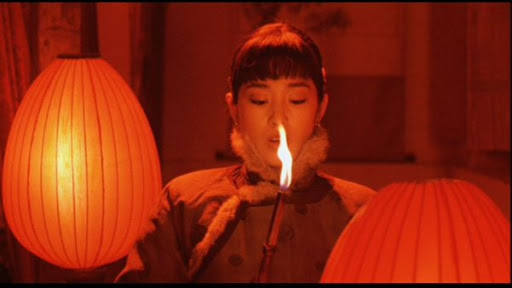
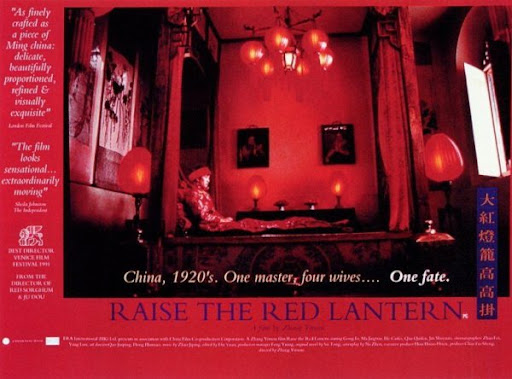
Zhang Yimou- 大红灯笼高高挂/Raise the Red Lantern (1991)- DVD9 (NTSC Format)

zhang yimou- raise the red lantern
Let me tell you a Zhang Yimou story...

L&S and I went to see a film lecture on Crouching Hero, Flying Dagger, and after the film there was a Q&A section with the film professor who hosted the event. The rest of the story isn't pretty. It involved me going on a rant about how low Zhang Yimou had sunk to be making movies as horrid as what I had just sat through, and how he'd gone "Hollywood". Then the professor informed me (as if I didn't already know) that Crouching Dagger, Flying House wasn't a Hollywood film...it was Chinese.

Then I went on a rant about how the horrid actress in the horrid film "was no Gong Li", but the professor didn't budge. He said that Crouching Hero, Hidden Dagger was a progression for the director, and then went on to say that "as Van Gogh painted with the colors of madness, Zhang Yimou painted with the colors of the seasons". Bullshit. Pure and utter bullshit.

Dear Lord...that movie sucked donkey dicks. The actors couldn't act their way out of a bag, and the story was boring. Beautiful colors and scenery do not make a great film.

So to prove to that jack-ass of a film professor, I'm going to be posting a calvalcade of Zhang Yimou films mostly long forgotten that are true masterpieces of cinema...and they'll all have Gong Li in them, not some two-bit impostor with no acting ability. To start off, here's Raise the Red Lantern. This film is beautiful, but it's also superbly acted and has a gripping story to back it up. We almost called this ongoing tribute "Remember When Zhang Yimou hadn't Sold His Soul?", but that would have been much too harsh...I think. Enjoy some classic Yimou with his muse, Gong Li.


zhang yimou- raise the red lantern

From David Neo at Senses of Cinema:

Only when things are investigated is knowledge extended; only when knowledge is extended are thoughts sincere; only when thoughts are sincere are minds rectified; only when minds are rectified are the characters of persons cultivated; only when characters are cultivated are families regulated; only when families are regulated are states well governed; only when states are well governed is there peace in the world.

– Confucius (551–479 B.C.)

Confucianism formed the basis of Chinese culture when the Han Emperor Wu, who ruled China from 140 to 87 B.C., instituted it as state ideology and orthodoxy. Zhang Yimou’s fourth film, Raise the Red Lantern, is the last of a trilogy (Red Sorghum [1987] and Judou [1990] are earlier instalments) that is deeply critical of Confucianism and Chinese culture. The film was banned in its home country and never made it to the silver screen in China; after the ban was lifted, it was “marginalised” and only shown on television.


zhang yimou- raise the red lantern

According to Sheldon Lu, the Fifth Generation filmmakers (such as Chen Kaige, Tian Zhuangzhuang and Zhang) were part of a nationwide intellectual movement that swept China in the mid- and late 1980s, and embarked on a cultural critique of the deep structure of the Chinese nation: “their (the Fifth Generation filmmakers’) frequent deployment of long takes, long shots, and deep focus, are anguished, self-reflexive, slow-paced, scathing critiques of entrenched patterns of traditional Chinese culture”. Raise the Red Lantern portrays life in a stifling and constrictive sanheyuan or Chinese courtyard house (which usually belong to families established for many generations). The family institution is central to Chinese culture, as according to Confucian philosophy, it is believed that only when families are well run, will the state also be well governed. The sanheyuan was developed in China based on Confucian ideology and epitomises classical Chinese architecture – the way in which space is outlined and occupied in these houses is an expression of the complex social rules that are supposed to embody domestic utopia. Sanheyuan(s) were self-contained and everything that one needed could be found within these courtyard houses; doctors and even entertainment were brought into the compound when required; at auspicious occasions, Chinese operas would be staged to entertain the household and guests. The Forbidden City in Beijing was the ultimate sanheyuan.


zhang yimou- raise the red lantern

Women would never venture beyond the enclosing walls of the sanheyuan, as it is supposed to protect them from the hardships of the outside world. Within these high walls, the writing of poetry and the study of Confucian philosophy were supposed to be pursued in celestial peace. But this is certainly not the idyllic setting that we find in Raise the Red Lantern, where infighting is rife and the web of deceit spun by the wives and maids is impenetrable! One of the lasting images that we are introduced to at the beginning of the film is when Songlian enters the sanheyuan in her school uniform. She is symmetrically framed by a huge Chinese plaque behind her, inscribed with archaic Chinese characters gilded in gold – the image is a presentiment of how the rules of the Chen household will eventually swallow her up. Songlian is immediately engaged in the intrigues of the house; when a maid disrespectfully acknowledges her as the “new” Fourth Mistress, our protagonist quickly foils the maid’s disrespect by responding, “yes, and you can bring my luggage in!”

Joann Lee analyses the film through what she calls the “Confucian/feminist matrix”. This “matrix” is indeed complex in Raise the Red Lantern. Ideally, the sanheyuan is supposed to protect the women from the hardships of the outside world, but ironically in Raise the Red Lantern the hardships found within its high walls are perhaps even more virulent! Quite the contrary to the pursuit of poetry and learning in the utopian celestial peace supposedly offered by the sanctuary of the sanheyuan, we witness the events of what is essentially a “domestic bordello” – where the wives ruthlessly fight for the lighting of red lanterns in their quarters, so that the master will spend the night with them, and they will subsequently receive the privilege of exotic foot massages. Throughout the film, Zhang demonstrates the “confusion ethics” that run amok within a sanheyuan!


zhang yimou- raise the red lantern

The Confucian/feminist “matrix” employed by Zhang poignantly highlights the ineffectualness and oppressiveness of the Chinese Confucian system. Confucianism fosters a patriarchal society through its emphasis on rigid class and gender lines, customs, ancestral worship and heavy priority placed on having a male heir to continue the family name. Daughters are not valued, as seen in Raise the Red Lantern, but treated as objects. They are not free to make major choices in life such as choosing their own life partner in a marriage; instead, marriages are often dictated by economic gains. Women have no identity apart from men, they are there simply to satisfy the male sexual appetite and provide a male heir, as we see in Raise the Red Lantern. Chinese women are imbibed to obey their fathers as children; obey their husbands when married; and follow their eldest sons when widowed. Therefore, when women gain their identity and stations in life from this oppressive structure, they in turn, gain satisfaction from enforcing these customs and rules on less powerful women. This is artfully portrayed in Raise the Red Lantern – having received more education compared to the other wives in the Chen household, we expect Songlian to be above the deceit of the wives and maids, but she becomes entrapped in household intrigues and is later instrumental in her maid’s death and the execution of the Third Mistress.

Fetishes are replete in Raise the Red Lantern. The foot massage stands out not only thematically and psychologically, but also culturally. Thematically, the foot massage is a symbol of power – it is a privilege enjoyed by the woman whom the master chooses to spend the night with. The enticing and haunting beat of tiny pebbles echoes throughout the house each evening as the woman whose soles are being beaten luxuriates in the sensation. She knows the master favours hers and basks in the sense of power and attention. As Second Mistress tells Songlian, “don’t underestimate the foot massage; if you get one everyday, you will be ruling the household!”.


zhang yimou- raise the red lantern

The foot massage is a fetish for both the patriarch and his wives (this fetish acting as a substitute for a woman’s “lack”). The woman is paradoxically the mechanism by which the man achieves phallic wholeness, from and through which he derives pleasure; yet at the same time renouncing it. Fetishism is commonly viewed as being derived from the castration complex, in which the fear of castration is repressed and displaced by fixating on some object; and in the case of Raise the Red Lantern, the foot massage is one form of fetish. The wives, of course, are another form of fetish – the more wives the master has, the greater the affirmation of his maleness. This is perhaps why Third Mistress’ infidelity poses such a threat to this patriarchal system – by having a lover, she assumes the “phallic” power that men enjoy. She is eventually executed, an ultimate form of castration. Confucianism dictates that every person knows his or her place in society, and that upholding family tradition takes precedence over the individual’s needs. In previous generations within the Chen household it was hinted that two women were murdered for cheating on their husbands. Songlian’s flute can also be regarded as a fetish (aside from its phallic shape). The flute in Chinese culture symbolises erudition and only men played the flute. The flute signifies Songlian’s privileged education that is denied the film’s other female characters. She has unwittingly inherited the flute from her father, but it is quickly wrested from her, emasculating her, reducing her to the level of the less educated wives. In Songlian’s own words, the level of animals who senselessly plot against each other!


zhang yimou- raise the red lantern

Historically and culturally in China, the metonymic relationship between a woman’s feet and sexuality is well known. It was a Chinese myth that the smaller a woman’s feet, the smaller her vagina – therefore, the better for the man. Between the 10th and 20th centuries, foot binding was part of the class dynamic. Only “privileged” girls had their feet bound, as it was perceived that the rich could keep their women idle – girls’ toes were turned under the soles of their feet, hence breaking them, and their flesh rotted into blood-soaked bandages. Foot binding also ensured that women would take smaller, daintier steps, attaining a more graceful gait. Zhang ingeniously reinscribes and critiques the Chinese tradition of foot binding by replacing it with the foot massage. The foot massages are seen less as a reward and privilege for women – for it serves the interests of the master or patriarch – than as a kind of foreplay to “prepare” the vagina as a receptacle for the penis. In the master’s words, to help her “better serve” him!

The Confucian/feminist “matrix” is effectively employed by Zhang to illustrate the oppression of the Chinese people, who are choked by their ineffectual “confusion ethics”. The film highlights that Chinese traditions and rituals are in dire need of re-evaluation; there is no investigation of knowledge or cultivation of characters advocated by Confucius – merely an oppressive system of rules. The film focuses on a family, but its fate also extends to a country and civilisation gone awry. The women in Raise the Red Lantern represent the Chinese people who are oppressed by an authoritarian government that allows no freedom of expression – surely the film makes obvious but coded reference to the Tiananmen Square Massacre that occurred in 1989. The many students murdered at the square are represented by the cruel execution of Third Mistress. It is no wonder that Raise the Red Lantern was banned in China when it was released in 1991 and was never screened in cinemas. Ironically, lanterns provide illumination, and therefore, are supposed to enlighten, as does Confucianism. Instead, they represent symbols of oppression in the film; used ritualistically to augment a barbaric system of class and gender exploitation that defines Zhang’s view of Confucianism.


zhang yimou- raise the red lantern

Technical Information:

Title: 大红灯笼高高挂/Dà Hóng Dēnglóng Gāogāo Guà/Raise the Red Lantern
Year: 1991
Country: China
Director: Zhang Yimou

Source: DVD9 Retail
DVD Format: NTSC
Container: .iso + mds
Size: 7.73 GB
Length: 2:04:58
Programs used: ImgBurn

Resolution: 720x480
Aspect Ratio: 16:9
Video: MPEG2 @ ~5800 kb/s
Frame Rate: 29.97 fps

Audio: 简体中文/Mandarin- Dolby AC3 @ 192 kb/s
Subtitles: English, Español, Français

Menu: Yes
Video: Untouched
DVD Extras: None


zhang yimou- raise the red lantern

(Use JDownloader to speed up the downloading of these files. DO NOT download thru your browser unless you like file stalls.)

大红灯笼高高挂 Megaupload Links