.:[Double Click To][Close]:.

Online CPM Advertising | Advertising blog
Showing posts with label spy vs jazz. Show all posts

Spy vs. Jazz: Keith Jarrett/Charlie Haden- Jasmine (2010)- CD Rip (FLAC)

keith jarrett- charlie haden- jasmine
Keith Jarrett and Charlie Haden together again. It's a beautiful thing...


keith jarrett- charlie haden- jasmine

From All About Jazz:

As close to a direct pipeline to the heart as anything, it's hard for music to be anything but intimate reflection of events transpiring in a musician's life. Pianist Keith Jarrett's last release—the stunning triple-disc Testament—Paris / London (ECM, 2009)—was, self-admittedly, impacted by the pianist's "incredibly vulnerable emotional state," but resulted in some of his deepest, most moving solo improvisations yet. Recorded in 2007, the year before the shows from which Testament was culled, the song choices on Jasmine—Jarrett's first non-solo/non-Standards Trio disc in 30 years—speak to the pianist's tenuous marital situation of the past several years. And yet, this collection of intimate, yearning love songs—recorded at Jarrett's home in an informal setting not unlike The Melody At Night, With You (ECM, 1999)—possesses a bittersweet mix of melancholy and joy, suggesting the inherently healing power of music.Participating in Reto Caduff's 2009 film about Charlie Haden (Rambling Boy) brought Jarrett together with the bassist for the first time since the dissolution of the pianist's much-heralded American Quartet. The two played for well over a decade—from Jarrett's debut as a leader, Life Between the Exit Signs (Atlantic, 1967), through to the American Quartet's swan song, Survivor's Suite (ECM, 1979). Reuniting in 2007 for the filming of Rambling Boy, their relaxed rapport encouraged Jarrett to invited Haden to his home, and the result is this elegant collection of well-heeled standards, including "Body and Soul," "For All We Know" and "Where Can I Go Without You."


keith jarrett- charlie haden- jasmine

Over the course of three decades, much has changed, but some things have remained. Both players have largely become interpreters rather than composers, although Jarrett has rightfully argued that interpretation is composition. Still, their empathic approach to this ballad-heavy set—only the swinging Evans/Mann chestnut, "No Moon At All," comes close to breaking a sweat—remains as profound as it was when they were collaborating regularly on original (and more left-of-center) music.

With no rehearsal other than, at most, running through a few changes, Jasmine's sound—like The Melody At Night—is more direct, more immediate than most of Jarrett's recent releases, recorded in larger concert halls. The dryness of the sound makes the warm but slightly funky tone of Jarrett's piano and deeply wooden timbre of Haden's bass feel particularly inviting. Recorded in Jarrett's small home studio, it feels like it was recorded in a living room, with both players at ease, turning a group of nine well-loved, well-known songs into informal conversations, where individual spotlights shine occasionally, but are far more often about gentle give-and-take, lyrical spontaneity and nothing-to-prove economy.

Critics of Jarrett' longstanding allegiance to solo and Standards Trio performances may be disappointed by this perhaps overdue foray outside those contexts, given the choice of material and renewal of a relationship that predates them. But they'd be missing the sublime beauty, elegant serenity and evocative resonance of Jasmine—an album that, like The Melody At Night, rests somewhere outside Jarrett's discography, yet simply couldn't have been made by anyone else.


keith jarrett- charlie haden- jasmine

Technical Information:

Artist: Keith Jarrett/Charlie Haden
Album: Jasmine
Year: 2010

Audio Codec(s): FLAC
Encoding: Lossless
Rip: split tracks
Avg. bitrate: 471 kb/s
Sample rate: 44100 Hz
Bits per sample: 16
Channels: 2
File size: 211 MB
Length: 1:02:54


Tracklisting:

01. For All We Know (9:49)
02. Where Can I Go Without You (9:25)
03. No Moon at All (4:42)
04. One Day I'll Fly Away (4:19)
05. I'm Gonna Laugh You Right Out of My Life (12:12)
06. Body and Soul (11:13)
07. Goodbye (8:04)
08. Don't Ever Leave Me (3:11)


keith jarrett- charlie haden- jasmine


Jasmine Megaupload Link


Spy vs. Jazz: Sydney J. Furie- The Ipcress File (1965)- BluRay Rip (720p-x264)

sydney j furey- the ipcress file
Spy vs. Jazz is beginning to wind its way down, and we're gearing up in the background for "Fuck you, Tarantino!" Week. But before we get ahead of ourselves, here's some hi-def The Ipcress File.


sydney j furey- the ipcress file

From Angie Errigo at Empire Magazine:

In the 60s the secret agent emerged as premier screen hero, cold warrior and sex symbol. No one could touch Sean Connery's James Bond — until Michael Caine's Harry Palmer. Palmer was the creation of novelist Len Deighton, whose Ipcress File was adapted into the first and best of the Palmer thrillers during the goldrush of filmmakers seeking to mine lucrative spy caper franchises. (Funeral In Berlin and Ken Russell's fun Billion Dollar Brain followed in 1966 and 1967.)

Bowing in the same year Bond was saving the world from total destruction in Thunderball, bespectacled Harry, more modestly engaged in slowing the brain drain of British scientists, immediately endeared himself to average blokes. Harry Palmer is forever enshrined as the credible everyman alternative to Bond. In conception and in Caine's performance he was a fantasy figure for guys who wear glasses, people living in anonymous flats, driving unglamorous, functional cars and shopping for groceries after work. You can relate to Harry Palmer. He's capable and crafty. He's sexy. And he can cook.


sydney j furey- the ipcress file

Bond's fabulous world is one of exotic locations, babes, stupendous stunts, ingenious gadgets and gizmos. It is rich with explosively lavish underground lairs of megalomaniacal masterminds with whom 007 contends when he isn't between the sheets, behind the wheel of an Aston Martin or BMW, in a casino or relaxing with a vodka martini. Palmer's world is surveillance shifts in a grotty attic, furtive shenanigans in British Rail stations, the rendezvous on park benches, an HQ disguised as a domestic employment bureau, and a villains' lair in a disused warehouse. Harry drinks whiskey, plays the horses, is issued the keys to a boring blue Zodiac that doesn't do anything except go, and he is the first swinging London bachelor to be seen grinding his own coffee.

One witty touch hinting at the fact that Harry may have read an Ian Fleming Bond novel or two with relish is his picking a woman's charm bracelet and his gun out of the bed before he leaves for work. What they have in common — in addition to John Barry musical scores accompanying their adventures — is a studied unemotional mien, the ability to focus coolly under pressure, and an insolent disregard for going by the book or kowtowing to bureaucratic disposable replacement for a murdered agent and when — having crossed paths fatefully with the CIA, cracked a dastardly foreign brainwashing, amnesia-inducing plot and exposed a traitor — he later reproaches his boss with, "I might have been killed or driven stark raving mad." He's briskly reminded, "That's what you're paid for." The risks of being killed or driven mad might be preferable to Palmer superiors. Bond has the suave insolence of an Old Etonian. Palmer's is the sturdy insolence of a Cockney squaddie.


sydney j furey- the ipcress file

An army sergeant assigned to a decidedly unglamorous corner of British Intelligence, Palmer is taken off surveillance and sent to a humble covert Home Office department to aid the search for a snatched physicist precisely because his qualities as an "insubordinate bastard" are called for. He's also a handy than the avalanche of paperwork and codespeak in this spy game. Amusing repeated references to the B107 (Palmer's career record), triplicate Tl 04s, LlOls, a TX82, a 3H, a CC1 — even a park bench is designated T108 — are sufficient motivation to drive him out of the office run by a Fag Ash Lil secretary called Alice. The seasoning of dry humour plays nicely against the subdued but tense cat and mouse action: a silent combat with the bald heavily code-named "House Martin" seen through the glass of a call box; a car park hostage exchange and confrontation; the assassination of Gordon Jackson's Jock after borrowing Harry's car.

These scenarios make the exciting, brutally in-your-face climax of Palmer's abduction and torture the more startling, Palmer enduring through his sheer bloody-mindedness and self-inflicted pain. Director Sidney J. Furie excelled himself pacing Palmer's adventure and got his ticket to Hollywood, where he was thereafter a moderately successful workhorse but never topped The Ipcress File. Caine, Zulu under his belt and Alfie ahead, is the cheeky working class but aspirational bright spark hero par excellence, captured at the exact moment he became a star


sydney j furey- the ipcress file

Technical Information:

Title: The Ipcress File
Year: 1965
Country: U.K.
Director: Sydney J. Furie

Source: BluRay Retail
Video Codec: 720p x264
Container: .mkv
Size: 4.36 GB
Length: 1:47:39
Programs used: mkvmerge

Resolution: 1280x544
Aspect Ratio: 2.35:1
Video: MPEG4 AVC H264 @ ~5167 kb/s
Frame Rate: 24 fps

Audio: English- Dolby AC3 5.1 Surround
Subtitles: English


sydney j furey- the ipcress file

(Use JDownloader to automate downloading)

The Ipcress File Megaupload Links


Spy vs. Jazz: Mission: Impossible- Season 2 (1967-68)- DVD Rip (480p-x264)

mission impossible- season 2- 1967-1968
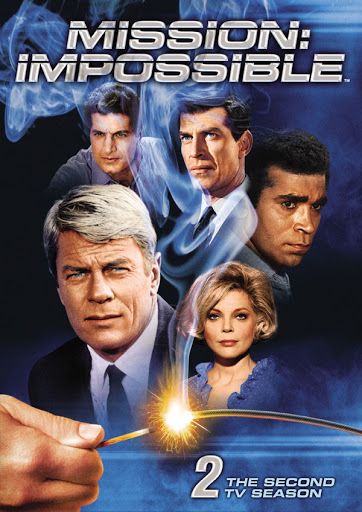
We posted season one of Mission Impossible awhile back, and it was such a pain-in-the-ass for L&S that I honestly didn't think there would ever be a season two posted. But (I'm supposing) realized that Martin Landau was still a cast-member, and it would be an abomination not to trudge through his tenure. Here's the fruits of her labor.


mission impossible- season 2- 1967-1968

Technical Information:

Show Title: Mission: Impossible
Season: 2
Year: 1967-1968
Country: USA

Source: DVD Retail
Video Codec: 480p-x264
Container: .mkv
Programs used: DVD Decrypter, Womble, JoinVobFiles, RipBot

Resolution: 720x480
Aspect Ratio: 4:3
Video: MPEG4 AVC H264 @ ~2048 kb/s
Frame Rate: 29.97/23.97 fps

Audio: English- Dolby AC3 5.1 @ 448 kb/s
Subtitles: None

mission impossible- season 2- 1967-1968

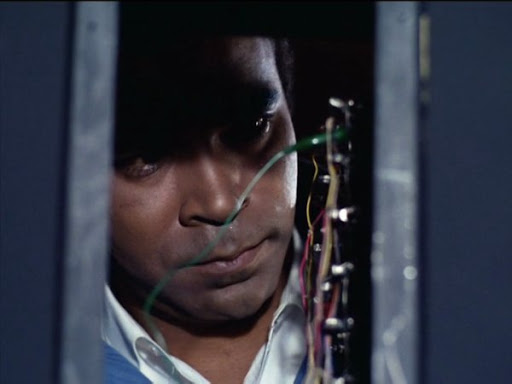
Episode: 01. The Widow
Original Airdate: September 10, 1967
Size: 896 MB
Length: 0:50:10

Synopsis: First episode to feature Peter Graves as Jim Phelps. The IMF capture a heroin distributor and Cinnamon goes undercover as his "widow" in order to shut down part of "the Syndicate."


The Widow Megaupload Link


mission impossible- season 2- 1967-1968

Episode: 02. Trek
Original Airdate: September 17, 1967
Size: 896 MB
Length: 0:50:11

Synopsis: The IMF team must recover some Incan gold artifacts, but their mission is further complicated when the one man who can lead them to the stolen artifacts goes blind.


Trek Megaupload Link

mission impossible- season 2- 1967-1968

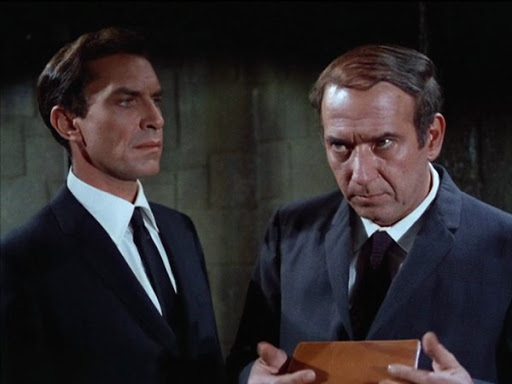
Episode: 03. The Survivors
Original Airdate: September 24, 1967
Size: 896 MB
Length: 0:50:11

Synopsis: The IMF team must rescue two top-secret governmental scientists and their wives who have been working on a dangerous new weapon.


The Survivors Megaupload Link


mission impossible- season 2- 1967-1968

Episode: 04. The Bank
Original Airdate: October 1, 1967
Size: 895 MB
Length: 0:50:10

Synopsis: The head of a bank in the East Zone (James Daly) murders would-be defectors after being entrusted with their money, and the IMF must eliminate him before he can use the embezzled money to launch a new Nazi movement.


The Bank Megaupload Link


mission impossible- season 2- 1967-1968

Episode: 05. The Slave (Part 1)
Original Airdate: October 8, 1967
Size: 895 MB
Length: 0:50:10

Synopsis: Unbeknownst to his brother, the king of a near-eastern nation is secretly practicing slavery, and the IMF team must put a stop to it. Part of the IMF's plan is to unleash a cloud of bats inside the prince's bedroom.


The Slave (Part 1) Megaupload Link


mission impossible- season 2- 1967-1968

Episode: 06. The Slave (Part 2)
Original Airdate: October 15, 1967
Size: 896 MB
Length: 0:50:12

Synopsis: Continuation of the previous episode. The IMF implicate the king in the slave trade by arranging to have the king's brother discover his kidnapped wife, an English woman, being bid on in a slave auction underneath the king's palace.


The Slave (Part 2) Megaupload Link

mission impossible- season 2- 1967-1968

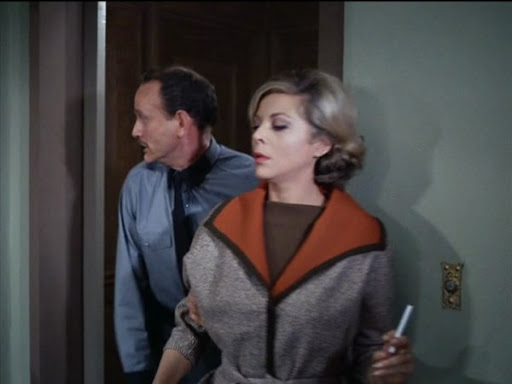
Episode: 07. Operation Heart
Original Airdate: October 22, 1967
Size: 896 MB
Length: 0:50:13

Synopsis: When an innocent American archaeologist becomes entangled in a plot to assassinate the president of a South American nation (Pernell Roberts), the IMF must rescue the seriously ill American and prevent the president being killed by his chief of security.


Operation Heart Megaupload Link


mission impossible- season 2- 1967-1968

Episode: 08. The Money Machine
Original Airdate: October 29, 1967
Size: 896 MB
Length: 0:50:13

Synopsis: An African banker (Brock Peters) is using counterfeit currency to finance his investments, and the IMF must put him out of business and recover the stolen printing plates he is using to make the counterfeits.


The Money Machine Megaupload Link


mission impossible- season 2- 1967-1968

Episode: 09. The Seal
Original Airdate: November 5, 1967
Size: 896 MB
Length: 0:50:10

Synopsis: A stolen jade statuette is sacred to a small Asian country, and in order to prevent an international incident the IMF must recover it from the private high-security collection of a wealthy American defense contractor (Darren McGavin) by using a specially-trained cat named Rusty.


The Seal Megaupload Link


mission impossible- season 2- 1967-1968

Episode: 10. Charity
Original Airdate: November 12, 1967
Size: 896 MB
Length: 0:50:10

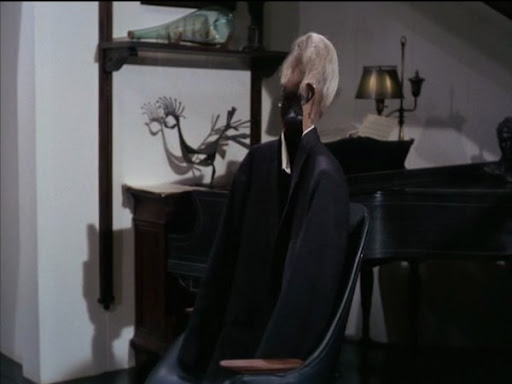
Synopsis: The IMF must stop a pair of married con-artists who are running a charity scam and buying platinum with the money they are stealing. The Wayne Manor set from the 1966 TV series Batman is featured in this episode.


Charity Megaupload Link

mission impossible- season 2- 1967-1968

Episode: 11. The Council (Part 1)
Original Airdate: November 19. 1967
Size: 895 MB
Length: 0:50:09

Synopsis: In order to close down an Italian crime syndicate, Rollin poses as its don, Frank Wayne.


The Council (Part 1) Megaupload Link


mission impossible- season 2- 1967-1968

Episode: 12. The Council (Part 2)
Original Airdate: November 26, 1967
Size: 896 MB
Length: 0:50:11

Synopsis: Continuation of the previous episode. This two-part story was released theatrically outside the US as Mission: Impossible vs. The Mob.


The Council (Part 2) Megaupload Link


mission impossible- season 2- 1967-1968

Episode: 13. The Astrologer
Original Airdate: December 3, 1967
Size: 896 MB
Length: 0:50:11

Synopsis: Nikolai Kurzon, the exiled leader of the Baltic state of Veyska, is kidnapped by the head of the secret police, so the IMF team must mount a daring rescue mission - somehow kidnapping an unconscious man from a plane in mid-air!


The Astrologer Megaupload Link


mission impossible- season 2- 1967-1968

Episode: 14. Echo of Yesterday
Original Airdate: December 10, 1967
Size: 895 MB
Length: 0:50:09

Synopsis: An arms manufacturer is supplying arms to neo-Nazis, and Cinnamon is used to remind him of his late wife, who was murdered by Hitler.


Echo of Yesterday Megaupload Link


mission impossible- season 2- 1967-1968

Episode: 15. The Photographer
Original Airdate: December 17, 1967
Size: 896 MB
Length: 0:50:13

Synopsis: The IMF must break the enemy's encryption code to prevent a pathogen release in the United States.


The Photographer Megaupload Link


mission impossible- season 2- 1967-1968

Episode: 16. The Spy
Original Airdate: January 7, 1968
Size: 896 MB
Length: 0:50:11

Synopsis: A map of NATO's missile defense system must be duplicated in order to fool a female spy.


The Spy Megaupload Link


mission impossible- season 2- 1967-1968

Episode: 17. A Game of Chess
Original Airdate: January 14, 1968
Size: 896 MB
Length: 0:50:12

Synopsis: A gold shipment, sent to fund an anti-communist resistance movement, has been seized by the country's government and the IMF must get it to its intended recipients, but an international chess champion and con artist is also after the gold.


A Game of Chess Megaupload Link

mission impossible- season 2- 1967-1968

Episode: 18. The Emerald
Original Airdate: January 21, 1968
Size: 896 MB
Length: 0:50:13

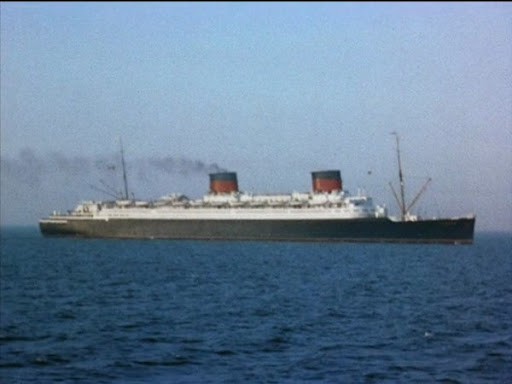
Synopsis: Microfilm detailing an enemy plot is affixed to an emerald in the possession of a notorious arms dealer; the IMF must obtain the microfilm and eliminate the enemy agent who has been sent to buy the gem.


The Emerald Megaupload Link


mission impossible- season 2- 1967-1968

Episode: 19. The Condemned
Original Airdate: January 28, 1968
Size: 895 MB
Length: 0:50:10

Synopsis: When a childhood friend of Phelps' is sentenced to death in Latin America, the IMF go "off-book" to save him.


The Condemned Megaupload Link


mission impossible- season 2- 1967-1968

Episode: 20. The Counterfeiter
Original Airdate: February 4, 1968
Size: 896 MB
Length: 0:50:12

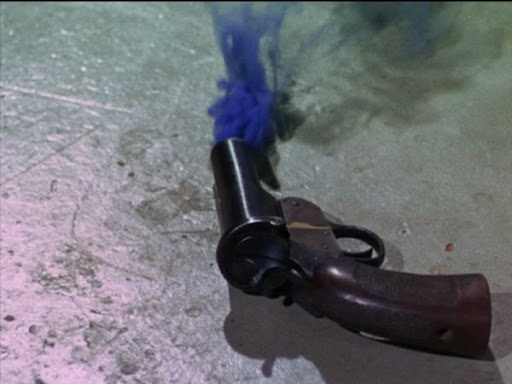
Synopsis: The IMF must arrange the arrest of the owner of a chain of medical clinics who is distributing counterfeit pharmaceuticals.


The Counterfeiter Megaupload Link

mission impossible- season 2- 1967-1968

Episode: 21. The Town
Original Airdate: February 18, 1968
Size: 895 MB
Length: 0:50:11

Synopsis: In an "off-book" mission, Phelps accidentally discovers that a small town is filled with enemy sleeper agents; he is drugged and declared paralyzed by a stroke, but Rollin smells a rat.


The Town Megaupload Link


mission impossible- season 2- 1967-1968

Episode: 22. The Killing
Original Airdate: February 28, 1968
Size: 895 MB
Length: 0:50:08

Synopsis: Conventional law-enforcement methods cannot stop a criminal mastermind, but his superstitions may be his undoing.


The Killings Megaupload Link


mission impossible- season 2- 1967-1968

Episode: 23. The Phoenix
Original Airdate: March 3, 1968
Size: 896 MB
Length: 0:50:12

Synopsis: A museum curator (Alf Kjellin) must be prevented from giving an experimental alloy to a foreign power


The Phoenix Megaupload Link


mission impossible- season 2- 1967-1968

Episode: 24. Trial by Fury
Original Airdate: March 10, 1968
Size: 896 MB
Length: 0:50:10

Synopsis: The IMF must save a Latin American political prisoner who is falsely accused of being an informant by other prisoners while being held in isolation in his totalitarian country's prison camp.


Trial by Fury Megaupload Link


mission impossible- season 2- 1967-1968

Episode: 25. Recovery
Original Airdate: March 17, 1968
Size: 895 MB
Length: 0:50:08

Synopsis: When U.S. bomber crashes behind the Iron Curtain, the IMF must recover its fail-safe before a brilliant U.S. defector (Bradford Dillman, who previously starred in Court Martial alongside Peter Graves) can reveal its secrets to the communists.


Recovery Megaupload Link


mission impossible- season 2- 1967-1968

(Use JDownloader to automate downloading)

Complete Season 2 Megaupload Links


Season 1


Spy vs. Jazz: Chick Corea- Now He Sings, Now He Sobs (1968)- 2002 Remaster- EAC CD Rip (FLAC)

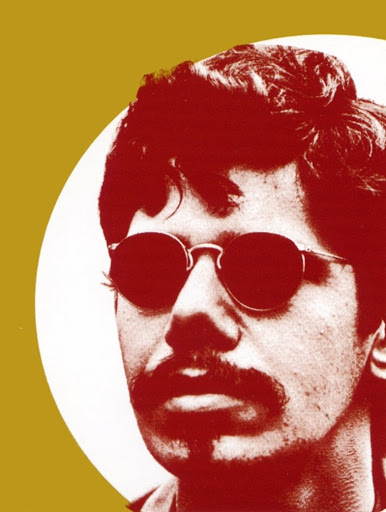
chick corea- now he sings now he sobs
This Chick Corea album is crazy. It's also the remastered version, and the sound quality is much improved over the original. Now, if I only had a good vinyl rip...


chick corea- now he sings now he sobs

From Jazzitude:

This has long been considered one of Corea's best recordings, featuring some of his best writing and a group (Corea, bassist Miroslav Vitous, drummer Roy Haynes) that must be considered one of the great piano trios. That it was out of print at one time is incomprehensible, but this, its second reissue, is great. Not only has Blue Note preserved the track order (tracks 1-5, with approximately 40 minutes of playing time comprise the original LP, followed by eight bonus tracks), but the 24-bit remastering renders the performances crystal clear.

"Steps--What Was," the first track, is nearly 14 minutes long, but the trio manages to ensure that the listener never becomes bored. Corea starts off with some piano musings that call forth the spirit of his hard bop mentor, Horace Silver, while still managing the light touch of Bill Evans. Roy Haynes takes a drum solo around five or six minutes in, much of it venturing out of time and suggesting free jazz. This is one of the beauties of this album--it rests somewhere between what had been done by post-bop innovators and what was being done by free jazz artists at the time it was recorded. When the trio comes back in, Corea explores a modal, passe-doble progression that would come up in all of his subsequent music, be it acoustic or heavily electric. In fact, it could be argued that the blueprint for everything Corea would choose to explore in his lengthy career was suggested right here.


chick corea- now he sings now he sobs

Corea had begun his career as a leader in 1966, and contributed to recordings by Stan Getz and Donald Byrd by the time Now He Sings, Now He Sobs was recorded. The recording was instantly recognized in the jazz community as signalling the arrival of a major talent. "Matrix" and "Windows" are considered to be contemporary standards, but the other works on the album are much less fleshed out, relying on a great deal of improvisation between the trio members. It is in this respect that the album most resembled the freer aspects of jazz playing. In fact, Chick went on to explore much freer playing as the new keyboardist in Miles Davis's band (these sessions were recorded in March 1968; in August Chick joined Miles's group, replacing Herbie Hancock). While playing with Miles, Corea worked with bassist Dave Holland, who was also interested in much freer playing than Miles's group allowed at the time. In 1970, after participating in the Bitches Brew sessions, Chick and Dave formed the trio Circle with drummer Barry Altschul. The group later became a quartet with the addition of Anthony Braxton, and they explored free improvisation a great deal.

The additional tracks are all very interesting and add a lot to the album. "Samba Yantra," originally recorded on a Donald Byrd session, is an excellent composition with plenty of rhythmic exploration, while "Bossa" is a quiet, impressionistic piece that recalls Bill Evans. There is also "Gemini," which is essentially a piano improvisation followed by a bass improvisation, and a version of Thelonious Monk's "Pannonica" that demonstrates Corea's mastery of bop and post-bop forms while firmly establishing an individual pianistic voice. The reissue concludes with a beautiful rendition of "My One and Only Love" that demonstrates both the place of this trio in jazz tradition as well as its uniqueness.


chick corea- now he sings now he sobs

Technical Information:

Artist: Chick Corea
Album: Now He Sings, Now He Sobs (Remaster)
Year: 1968/2002

Audio Codec(s): FLAC
Encoding: Lossless
Rip: EAC split tracks + .cue
Avg. bitrate: 743 kb/s
Sample rate: 44100 Hz
Bits per sample: 16
Channels: 2
File size: 365 MB
Length: 1:08:48


Personnel:

Chick Corea: piano
Miroslav Vitous: bass
Rob Haynes: drums


Tracklisting:

01. Steps-What Was (13:50)
02. Matrix (6:28)
03. Now He Sings, Now He Sobs (7:03)
04. Now He Beats the Drum- Now He Stops (10:35)
05. The Law of Falling and Catching Up (2:28)
06. Samba Yantra (2:41)
07. Bossa (4:45)
08. I Don't Know (2:43)
09. Fragments (4:04)
10. Windows (3:12)
11. Gemini (4:24)
12. Pannonica (3:00)
13. My One and Only Love (3:34)


chick corea- now he sings now he sobs


Now He Sings, Now He Sobs Megaupload Link


Spy vs. Jazz: Miles Davis- Miles in Berlin (1964)- EAC CD Rip (FLAC)

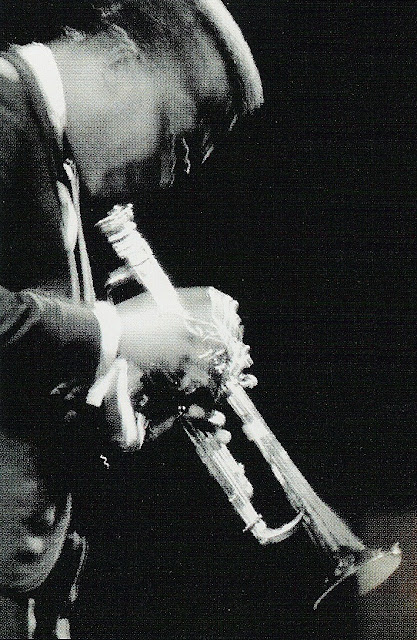
miles davis- miles in berlin
Here's some Miles to compliment the shadows.


miles davis- miles in berlin

From the liner notes:

On the evening of Sept. 25, 1964, Miles Davis began a bold new stanza in the epic poem that was his music. For it was on that evening, in the city then known as West Berlin, that the great trumpeter-bandleader recorded for the first time with what would come to be called his "second great quintet." With the addition of Wayne Shorter as his front-line partner, the most original-sounding of the post-Coltrane tenor saxophonists, Davis (1926-1921) had the ideal foil. Stimulated by the headlong rhythms and shifting accents of pianist Herbie Hancock, bassist Ron Carter, and 18-year old drum phenom Tony Williams, the quintet was poised to make the breakthrough that years later was dubbed "freebop." Although the group's choice of repertoire at the Berlin Philharmonie was not surprising (two standards, "Autumn Leaves" and the stunning, previously unreleased "Stella by Starlight," and three warp-speed renderings of "Walkin" and Davis' "So What" and "Milestones"), their multi-hued interpretations certainly were. During the next four-plus years, the second great Miles Davis quintet would brilliantly add to the tonal colors in their palette, and Miles in Berlin points towards the masterpieces to come.


miles davis- miles in berlin

Technical Information:

Artist: Miles Davis
Album: Miles in Berlin
Year: 1964

Audio Codec(s): FLAC8
Encoding: Lossless
Rip: EAC split tracks + .cue
Avg. bitrate: 415 kb/s
Sample rate: 44100 Hz
Bits per sample: 16
Channels: 2
File size: 170 MB
Length: 0:57:22


Personnel:

Miles Davis: trumpet
Wayne Shorter: tenor saxophone
Herbie Hancock: piano
Ron Carter: bass
Tony Williams: drums


Tracklisting:

01. Milestones (8:58)
02. Autumn Leaves (12:38)
03. So What (10:27)
04. Stella by Starlight (12:54)
05. Walkin' (10:40)
06. Go-Go (Theme and Announcement) (1:46)


miles davis- miles in berlin


Miles in Berlin Megaupload Link


Spy vs. Jazz: Carol Reed- The Third Man (1949)- BluRay Rip (1080p-x264)

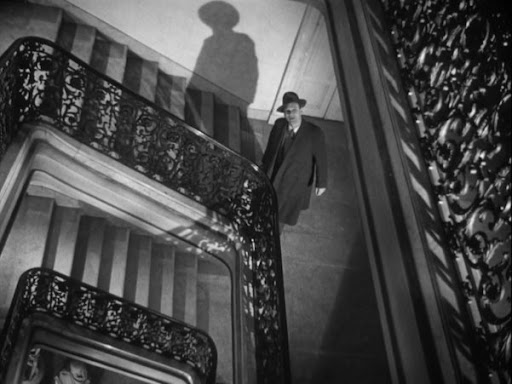
carol reed- the third man
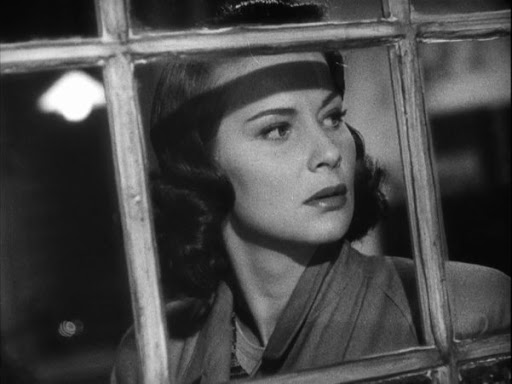
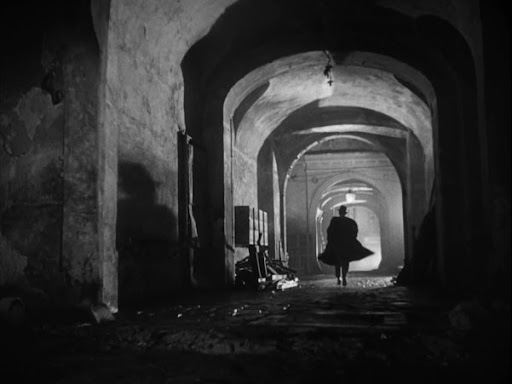
The Third Man is the most beautifully composited films I've ever had the pleasure of viewing. We needed seven screencaps for the readmore, and after close to an hour (and 23 images), I said "screwwwwwwww this...", being that I was only halfway through the film. Then it was Sophie's Choice trying to pick seven perfectly composited moments, when they were all perfect. Only Tarkovsky and Larisa Shepitko can make practically each frame of their films look like high art, but Carol Reed can do so much more with shadows, and this film is a testament to his prowess. Now that The Third Man is in BluRay, his work is even that much more stunning. Enjoy a masterpiece.


carol reed- the third man

From Charles Drazin:

In January 1948, British film producer Sir Alexander Korda, head of British-Lion and London Film Productions, commissioned novelist Graham Greene to write and research “an original postwar continental story to be based on either or both of the following territories: Vienna, Rome.” The resulting script was to be directed by Carol Reed, with whom Greene had just completed a successful collaboration on the film The Fallen Idol.

In February, Greene flew out to Vienna, which had been under the occupation of the Four Powers—France, Britain, the United States, and the Soviet Union—since the end of the war. When he arrived, he already had a skeleton of an idea about a character called Harry who appears to be dead but turns out not to be, but it was the city of Vienna itself, and its history, that put the flesh on this skeleton.

Korda’s representative in Vienna, Elizabeth Montagu, showed the writer around the badly bombed and impoverished city. “I took him everywhere,” she recalled. “I took him to the ruins, I took him to the places still standing, I took him everywhere you can think of, including the Great Wheel and all that. He became absolutely enamored of Vienna.”


carol reed- the third man

As well as showing Greene the sites, Montagu introduced him to people she thought might help him with his research. British military officials explained the black market and the tensions that existed between the Four Powers, while an Austrian journalist, Peter Smollett (né Smolka), told him about the labyrinth of sewers beneath the city and gave him some short stories he had written about the difficulties of life in the contemporary city.

At the beginning of March, Greene traveled on to Italy—not to do further research in Rome, but to write a story that drew on all he had learned about Vienna. Called “The Third Man,” this story would eventually be published as a novella, but its primary purpose was to serve as a film treatment, which Greene delivered to Korda in late April.

In early May, Korda met the American film producer David Selznick in Bermuda, where in the course of a yachting holiday he agreed to a four-film coproduction deal. The arrangement was that Korda’s London Film Productions would make the films, while Selznick would provide Hollywood stars and a proportion of the financing in return for the U.S. distribution rights. The first of these films was to be Reed’s production of Greene’s new story. An important bargaining counter in the agreement, Reed—whom Selznick considered to be “one of the finest picture makers in the world”—had joined the two producers in Bermuda. Here he had an opportunity to discuss with them the detail of Greene’s story.


carol reed- the third man

Disinclined to forgive Selznick’s clearly difficult and overbearing personality, Greene and Reed would many years later caricature him as a philistine movie mogul who had no constructive ideas to contribute, but the evidence suggests that at this early stage he inspired some important changes. A notable example is the memorable ending of the film. According to Reed’s own notes, it was Selznick who argued against the “happy ending” of Greene’s story, in which the hero, Rollo Martins (later changed to Holly Martins), and Anna become a couple after Martins kills Harry Lime: “Selznick felt this very strongly, that Anna’s love for Harry Lime should be fatal, especially since it seems impossible for her to be with Rollo immediately after the shooting of her lover.” Selznick also expressed his view that the character of Anna should be built up, and that Alida Valli, who was one of his contract stars, should play the part.

Reed and Greene worked together on a script that took into account Selznick’s comments, completing a first draft by the end of June. While Korda considered it to be a “tremendous improvement,” Selznick’s confidence was shaken by the negative reaction of his story editor, Barbara Keon, who dismissed the script as “pretty bad” and questioned whether “the story is interesting enough to be told at all.”

Alarmed, Selznick insisted that Greene and Reed come out to see him in Hollywood, and during a series of meetings in August, the pair politely fielded endless suggestions on every aspect of the script. The most pressing of Selznick’s demands was that Martins should be a stronger, more attractive hero whom the audience could root for, instead of the rather forlorn “innocent abroad” Greene had made him. Greene and Reed promised to do their best to accommodate Selznick’s wishes, but in practice quietly disregarded him, relying instead on Korda to fend off the increasingly impatient memos with which Selznick bombarded them in the weeks to come.


carol reed- the third man

The casting of the chief roles took place over the spring and summer of 1948. After reading Greene’s original story in May, Cary Grant had agreed to star, on condition that he could play either of the two male leads, but dropped out in mid-June because he was unprepared to commit himself without a finished script. Reluctantly, Reed accepted Joseph Cotten instead, one of Selznick’s contract stars.

Orson Welles was first put forward as a possibility for Harry Lime at the Bermuda meeting, in May, but Selznick thought his name would damage the film’s box office potential. So over the following months, several other actors were considered too, including Noël Coward, David Niven, Robert Taylor, and Robert Mitchum. Selznick only finally yielded to Reed’s strong preference for Welles in October, just days before the British film crew departed for Vienna.

Location shooting began in Vienna in late October. Cast and crew were based at the Astoria Hotel, in central Vienna, while the Sascha Films studio, in the suburb of Sievering, provided production facilities.

Fearing the heavy snow that might come with the arrival of winter, Reed used three units to save time, each with its own lighting cameraman. Robert Krasker was in charge of the night unit, Stan Pavey the sewer unit, and Hans Schneeberger the day unit. But Reed directed all three, day and night, around the clock.


carol reed- the third man

Welles’s failure to arrive in Vienna on time forced Reed to shoot as many shots as he could using a stand-in. When the actor finally did turn up, he refused to work in the sewers, complaining of the filthy conditions. Reed had no choice but to have a replica of the sewers built at Shepperton Studios, where nearly all of Welles’s scenes, including the famous first appearance in the doorway, would be shot many weeks later.

Perhaps the most providential gift of the trip to Vienna was the discovery of Anton Karas. When the British crew arrived, the head of Sascha Films, Karl Hartl, put on a welcome party. Karas was a little-known zither player who had been hired to provide the music for the evening, but Reed was so struck by the distinctive sound of this strange instrument that he had Karas summoned to the Astoria Hotel for an impromptu audition. Although a conventional orchestral score had already been planned for the film, Reed thought the zither’s catchy sound might serve to add a little local color to some scenes. The last day of location shooting took place on December 11. The production then transferred to British-Lion’s Isleworth and Shepperton studios, close to London. Filming there finally finished the following March.

Once again it was Welles who most tested everyone’s patience. Because he was not prepared to spend more than a week in the studio, all the sets for his scenes had to be built at the same time. But in the manner of the best prima donnas, Welles made up for his tiresome behavior with a compelling performance, which he capped with one moment of brilliant inspiration—his improvisation during the long dialogue scene with Cotten at the Great Wheel, the celebrated cuckoo clock speech: “In Italy, for thirty years under the Borgias, they had warfare, terror, murder, bloodshed . . .”


carol reed- the third man

After the completion of shooting, Reed turned his attention, in April 1949, to the editing of the film, a stage that the painstaking realization of the innovative musical soundtrack much prolonged. A weekly ritual during the filming at Shepperton had been the Wednesday rough-cut night, when Reed would view assemblies of the existing footage. This was the occasion for him to try out Karas’s zither music, which he had recorded in Vienna. Set against some silent sequences in the picture, this music turned out to be so compelling that Reed decided not to have any orchestral score at all, but to use zither music throughout the film. At the end of May, Karas came to London, where Reed put him up in his own house. Every night over the next three months, they ran a rough cut of the picture through a Moviola, Reed managing to communicate the correct dramatic framework and mood for Karas’s compositions although neither spoke the other’s language.

Greene would call Reed “the only director I know with that particular warmth of human sympathy, the extraordinary feeling for the right face for the right part, the exactitude of cutting, and not least important the power of sympathizing with an author’s worries and an ability to guide him.” At every stage of the film’s production, that guidance went hand in hand with an open-mindedness that encouraged his collaborators, whether Greene, Karas, or even Welles, to make some of their most brilliant contributions to the cinema.

On September 2, 1949, The Third Man opened at the Plaza Theatre, in London, to rave reviews. Selznick considered the picture “superb” but still decided to show it to a preview audience in New Rochelle, New York, and tailored the American-release version accordingly, cutting eleven minutes. After repeated postponements because of a bitter dispute between Korda and Selznick over credits, this shortened version finally opened in America, at the Victoria Theater, in New York, on February 2, 1950. Of course, the full, U.K. version is the one included in this release.


carol reed- the third man

Technical Information:

Title: The Third Man
Year: 1949
Country: USA
Director: Carol Reed

Source: BluRay Retail
Video Codec: 1080p x264
Container: .mkv
Size: 7.89 GB
Length: 1:45:13
Programs used: mkvmerge

Resolution: 1440x1080
Aspect Ratio: 4:3
Video: MPEG4 AVC H264 @ ~10400 kb/s
Frame Rate: 23.97 fps

Audio 1: English- Dolby AC3 Mono @ 192 kb/s
Audio 2: Russian overdub- Dolby AC3 Stereo @ 192 kb/s
Subtitles: English, Russian


Thanks to leverage for the original upload!


carol reed- the third man

(Our prefered x264 player is Media Player Classic.)
(Use JDownloader to automate downloading)

The Third Man Megaupload Links