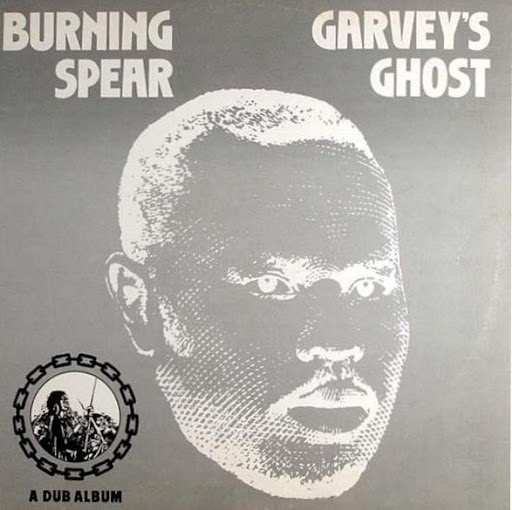
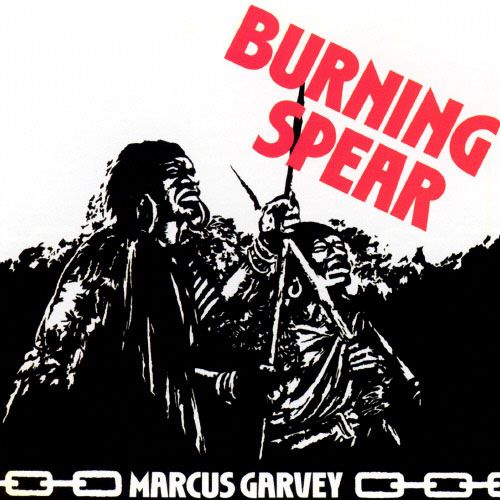
Given the popularity Marcus Garvey in both Jamaica and England (and, to a lesser extent, America), and it seemed for a while that Burning Spear might challenge Bob Marley & the Wailers as the champions of reggae. Rodney was angered by Island's remix of the album's tracks, however, which changed the speed of many songs to appeal to white audiences... a situation not assuaged by the subsequent "dub mix" of Marcus Garvey that was released by Island as Garvey's Ghost in 1976.
Garvey's Ghost downplayed Rodney's intelligent lyricism and haunting vocals in favor of instrumental mixes of the original songs that placed the emphasis on The Black Disciples' amazing musical skills. With just scattershot vocals rising above the fray, the music is free to dart and jump throughout the mix, and while ten songs of mostly-instrumental dub may seem like overkill to the casual fan, it's worth the investment in time and attention to catch the subtle nuances and the immense talent poured into the performances on Garvey's Ghost.
01. The Ghost (3:54) 02. I & I Survive (3:53) 03. Black Wa Da Da (3:52) 04. John Burns Skank (3:48) 05. Brain Food (3:11) 06. Further East of Jack (4:26) 07. 2000 Years (3:47) 08. Dread River (3:13) 09. Workshop (4:32) 10. Reggaelation (3:41)
Marcus Garvey's words come to pass, Marcus Garvey's words come to pass...
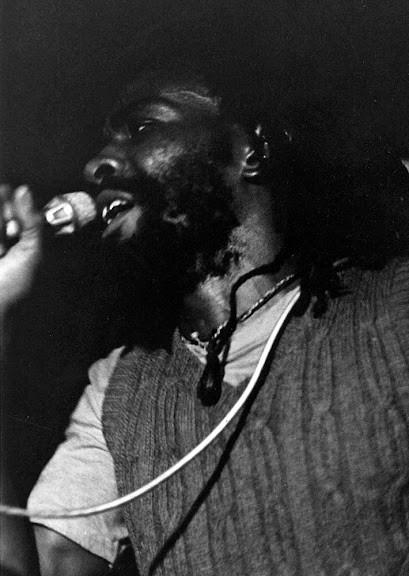
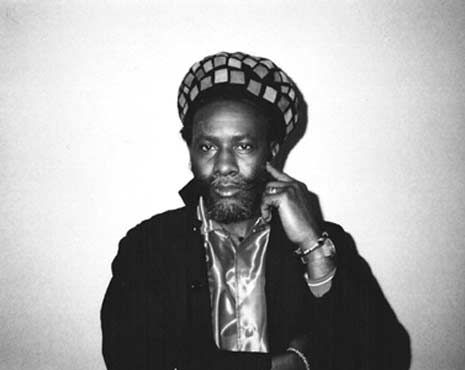
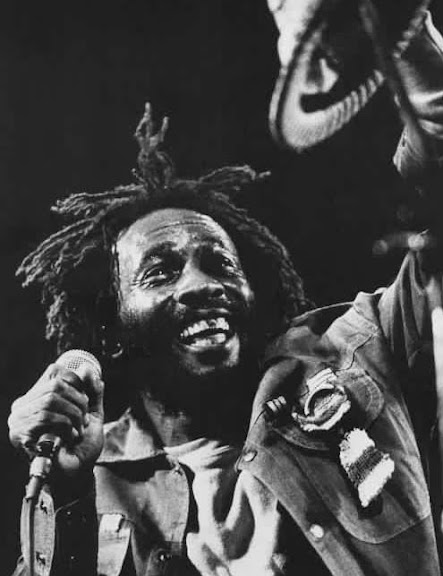
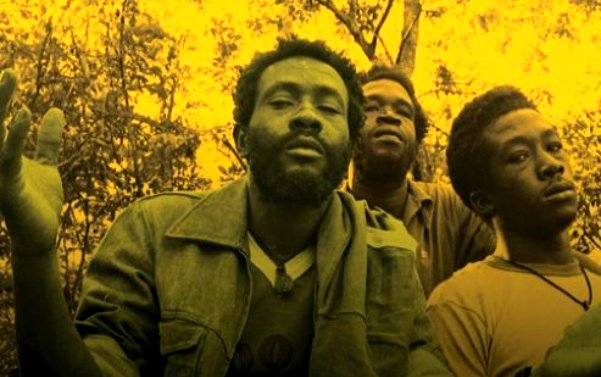
Another one of those albums I lived and breathed in my yout'...I mean youth. It's easy to forget that Burning Spear were a trinity, and not just Winston Rodney, given the lack of photo's of the group on the net, which is sad. But what is not sad is that, for my money, this is Burning Spear's best album. But it's in need of Garvey's Ghost as a companion piece, which is coming up next. Enjoy more Burning Spear!
To the casual reggae fan, the sun rises and sets with Bob Marley. From his earliest work with the original Wailers (Peter Tosh and Bunny Wailer) during the late 1960s and early '70s, to the international stardom afforded his late '70s albums (which, to be honest, were really solo albums by Marley with an assorted, albeit talented backing crew), Rasta Bob is the name and face associated with reggae for many.
Truth is, the island of Jamaica has shared many musical wonders with music lovers through the years, from the soulful Heptones, Toots and the Maytals, and the charismatic Jimmy Cliff to lesser-known, but no less talented artists like Steel Pulse and Black Uhuru. In terms of importance and popularity on the small island nation, however, perhaps none of the above-named artists personifies the pride and hope of the Rastafarian ideal better than Winston Rodney, a/k/a Burning Spear.
During a chance late ‘60s meeting with the already-legendary Bob Marley in their shared hometown, Marley pointed the young, ambitious Rodney towards Kingston and producer "Sir Coxson" Dodd's Studio One. Rodney spent around five years with Dodd, recording better than two dozen songs, and honing his craft as a singer and songwriter. It was when Rodney hooked up with sound system operator Lawrence "Jack Ruby" Lindo during the mid-70s, however, that he became the Burning Spear.
Sound systems, for those of you not in the know, were an important part of Jamaican musical culture, and the impetus for the development of both ska and reggae music. Starting in the late 1950s, sound system operators would hold large street parties in the ghettos of Kingston, with music provided by huge, turntable-driven sound systems powered by portable generators. The operators would charge admission and sell food and drink as DJs played the hottest American R&B sides for the hundreds, sometimes thousands of partiers.
These events brought in a lot of cash for the operator, and a sort of "arms war" started as they built larger and louder sound systems to compete with other operators. Eventually, as the demand for new music grew faster than American labels could supply records, operators like Sir Coxson became producers and studio owners. Enlisting Jamaican musicians, a steady stream of new music was created, and the styles of ska and reggae developed as the island's artists tried to approximate American R&B music. Often times, the songs recorded by artists like the Wailers would be "exclusive" to the producing operator, who played it at parties and would release it on 45rpm single only if demand warranted it. Jamaican immigrant DJ Kool Herc would bring the sound system to America in the late-1970s, which led to the rise of hip-hop in NYC... but that's really a story for another time.
It was from this sound system culture that Jack Ruby emerged, the owner of Jack Ruby's Hi Fi and one of the most popular "roots reggae" DJs in the country. In Rodney and Burning Spear he found his cash cow, much as Dodd had with Marley in the 1960s. The first collaboration in the studio between Ruby and Burning Spear - now a trio that included Rodney, Delroy Hines, and Rupert Willington - resulted in the scorching single "Marcus Garvey." A mesmerizing track with Rodney's lyrics paying homage to the Black nationalist hero Garvey, the three men's deep enchanting vocals are backed by the seasoned studio outfit The Black Disciples, which included bassists Robbie Shakespeare and Aston "Family Man" Barrett, drummer Leroy Wallace, and guitarists Earl "Chinna" Smith and Valentine "Tony" Chin.
"Marcus Garvey" was originally used by Ruby as a sound system exclusive, but the song's popularity led to its eventual vinyl release, and it became a best-seller. Burning Spear followed up this initial success with the blistering commentary of "Slavery Days," a hypnotizing rhythm threaded, snakelike, beneath Rodney's outraged vocals and condemning lyrics. It, too, would become a big hit and Ruby put Burning Spear in the studio with The Black Disciples to record a full-length album, resulting in Marcus Garvey, a powerful collection of roots reggae with often politically-explosive lyrics.
When the album started selling by the truckload on the island, and sensing that he was holding commercial dynamite in his hands, Ruby took Marcus Garvey to England and Chris Blackwell, where it was released by Island Records in 1975. Fueled by Rodney's socially-conscious lyrics, Burning Spear's infectious vocal harmonies, and an inspired reggae soundtrack, the album blew up almost immediately. Aside from the two aforementioned singles, Marcus Garvey included some of the darkest, scariest, and most potent reggae music then put to wax, songs like "The Invasion," with its deep dub soundtrack and trancelike vocals; the horn-driven "Old Marcus Garvey," another tribute to the Jamaican legend; and the uptempo "Jordan River," with its Biblical references and rapid-fire (almost rapped) vocals.
Technical Information:
Artist: Burning Spear Album: Marcus Garvey Year: 1975
01. Marcus Garvey (3:26) 02. Slavery Days (3:33) 03. The Invasion (3:19) 04. Live Good (3:13) 05. Give Me (3:09) 06. Old Marcus Garvey (4:02) 07. Tradition (3:31) 08. Jordan River (2:58) 09. Red, Gold & Green (3:12) 10. Resting Place (3:09)
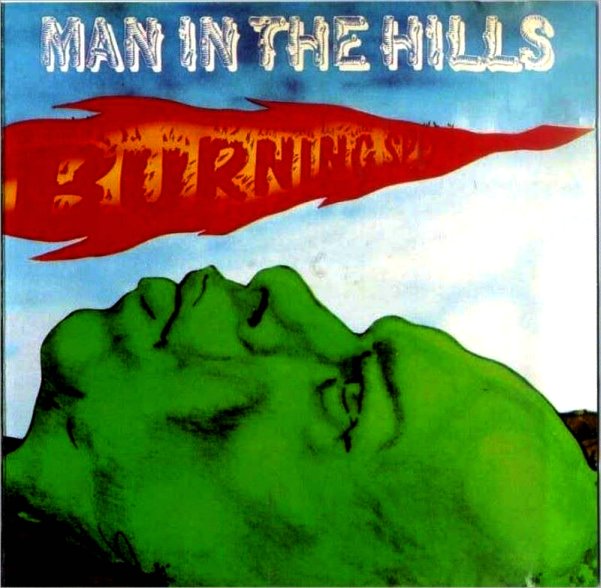
Burning Spear was a group, one of the most intriguing and heavy of Jamaican ensembles, and they released one of the best-known reggae albums ever, 1975's Marcus Garvey. This righteous blast at Babylon, produced by the legendary Jack Ruby, gets mentioned on a lot of "best album" lists, but no one ever mentions anything else they have done since then. And that, as the re-release of these three albums proves, is a huge oversight. One disc combines 1976's Ruby-produced Man in the Hills with their first self-produced album, Dry and Heavy from 1977, and the other presents Social Living from 1980, along with two extended dub mixes. Taken together, these three records prove quite a few things, including the revelation that some of those "best reggae album" lists need to be reordered to include some more Burning Spear.
The biggest misconception about this group is to equate Winston Rodney with Burning Spear. He did, in fact, become Burning Spear, but not on Man in the Hills. Here, the ghostly harmonies of bandmates Rupert Willington and Delroy Hines are absolutely central to the heavy roots attack; this is clear on the opening title track, where their chant of "And if we should live up in the hills" makes everything sweet and creepy and lovely all at the same time. But Rodney's vocal work is always sad and hopeful at the same time, yearning and patient, mournful and smiling -- his voice is a superb instrument, and he knows it: he'll repeat a line over and over in weird ways, or allow a track to shamble to a start before tying it together with the first line of a song, and reggae just hadn't heard anything like him, and there certainly haven't been a lot of singers since who even wanted to try what he effortlessly accomplishes here.
Black self-reliance is clearly the theme of this album. The good in "It's Good" is "It is good when a man can think for himself"; the children in "Children" are learning to fish even though the current is so strong and the sea so rocky; the mother in "Mother" tells Rodney, "Son, be careful / Think before you move". And the people in "People Get Ready" are being addressed by Rodney, who is speaking simultaneously as himself and Marcus Garvey and Haile Selassie: "Come, people / I wouldn't leave my people behind / No I wouldn't leave them behind / I couldn't do that".
This is all intoned in Rodney's ageless pleading tenor, with Willington and Hines there to push the call-and-response vocal lines past what had ever been done in reggae before, with heavy African repetition on "Lion" and "It's Good," and a very James Brown and the Famous Flames vibe on "People Get Ready." But it is the woozy and wild psychedelic intricacy of the backing tracks that really sends these songs over the top. "No More War" pulls in Shaft guitar scratches and blues lines from Earl "Chinna" Smith and Tony Chin, making it all sound like the Stax Reggae Song that never was. The push and pull of "Door Peep" is so thick that one four-note trombone phrase (by the amazing Vincent "Trommie" Gordon) sound like the scowl of fate, and "Groovy" contains one hell of a sick funky rhythm track thanks to the ministrations of Leroy "Horsemouth" Wallace while the bass boomage of either Robbie Shakespeare or Aston "Family Man" Barrett. (David Katz's liner notes are, as always, great on the big picture and just so-so on the song by song details.)
Technical Information:
Artist: Burning Spear Album: Man in the Hills Year: 1976/1990
Winston Rodney: vocals, percussion Earl "Chinna" Smith: guitar Donald Kinsley: guitar Bertram McLean: guitar Herman Marquis: alto saxophone Richard Hall: tenor saxophone Bobby Ellis: trumpet Robbie Barrett: bass Leroy Wallace: drums
Tracklisting:
01. Man In The Hills (4:05) 02. It's Good (2:48) 03. No More War (3:23) 04. Black Soul (3:29) 05. Lion (3:15) 06. People Get Ready (3:26) 07. Children (3:48) 08. Mother (3:41) 09. Door Peep (2:43) 10. Groovy (3:57)