.:[Double Click To][Close]:.

Online CPM Advertising | Advertising blog
Showing posts with label bluray movie. Show all posts

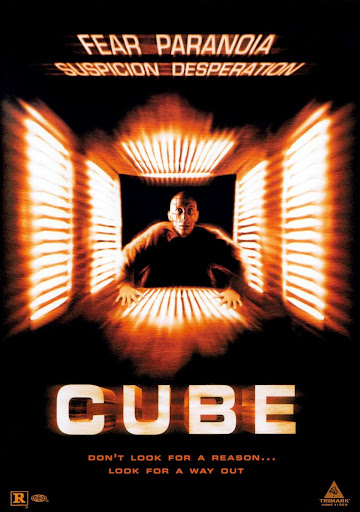
Canada Day Horror Movie Marathon: Vincenzo Natali- Cube (1997)- BluRay Rip (720p-x264)

vincenzo natali- cube
Here's Cube to end the marathon. Maybe it isn't exactly a horror movie, but it's close enough, and I have to take the dog for a walk. Happy Canada Day.

vincenzo natali- cube

From Rob Wrigley at Classic-Horror.com:

Cube, a 1997 film by Canadian writer/director Vincenzo Natale, was filmed on a single set, with a small cast, and a small budget. Part sci-fi horror, part experiment, part student film, it has all the markings of a silly, boring, and talky mess. That it avoids most of those pitfalls is a tribute to the crew and cast.

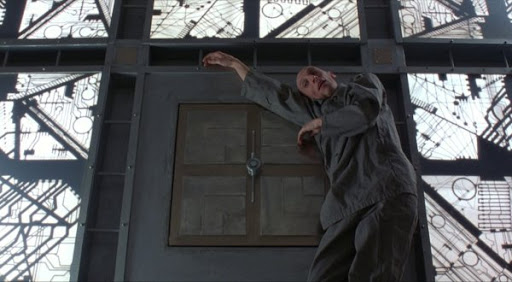
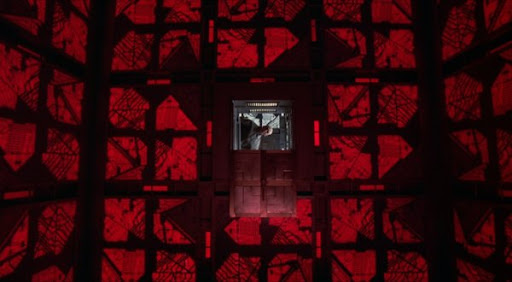
Seven strangers awake to find themselves in rooms of Cube: 14'x14' metal boxes with an exit in the center of each wall and ceiling. Some rooms are trapped with lethal sci-fi devices. None of the doors seem to lead anywhere but to other rooms. It's like something out of a computer RPG. They join together to try to find their way out, and slowly start to unravel the mystery of Cube.

vincenzo natali- cube

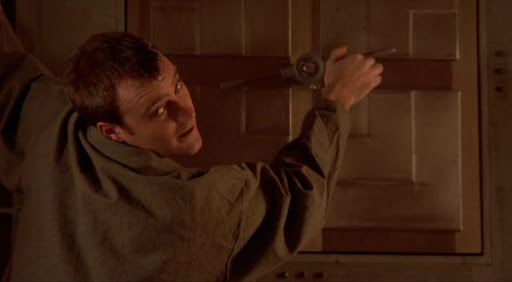
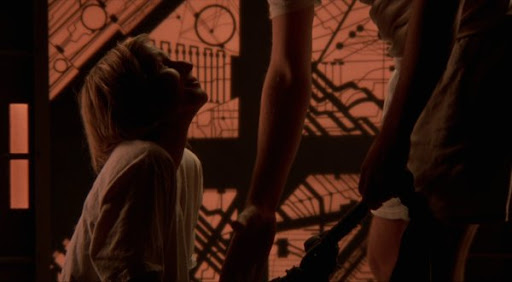
There are just seven actors, and four principals, but they are all solid and engaging: Quentin (Maurice Dean Wint), the tough cop who slowly disintegrates, Leaven, a nerdy school girl played with wit and intelligence by Nicole de Boer ("Star Trek: Deep Space Nine" and "The Dead Zone" TV show), Holloway (Nicky Guadagini, Crash), a liberal-paranoid doctor who is delighted to find her conspiracy theories confirmed, and Worth (David Hewlett), as cynical office worker used to being a cog in some unfathomable machine.

Questions of politics, philosophy, and societal standing are on touched on in the dialogues of the characters. Samuel Beckett and Franz Kafka are never far out of mind. But what really interests the director is the question: how many ways can one film a cube and still keep it engaging? The answer: more ways than you think. He uses every shot one can imagine to get the most of his limited set: colored lighting, expressionist camera angles, odd close-ups, shots from one cube into the next. The last shot is remarkable: a simple FX shot that serves as both a fitting conclusion and a spiritual metaphor.

vincenzo natali- cube

It is easy to read allegory into Cube. One character refers to it as a public works project gone unchecked and unmanaged. But the audience can just as easily read Cube as an allegory of life: we don't know the reason or purpose, we are stuck here with strangers, and we have to find a way to make the best of it and cooperate if we want to survive. Viewed this way, the ending is both nihilistic and sublime.

The film contains effective, low-budget photography, solid performances, and a good score. But what really sets Cube apart from so much sci-fi drivel is that the director never forgets that while he can be as philosophical, and intellectual, and clever as he wants, the most important thing is to be entertaining. If there are any lessons to be learned from Cube, they are for film students and low-budget directors. It won't tell you how to live a useful life in an uncaring, arbitrary universe. But will show you how to take a worn premise, a small cast, and a single set, and make a terrific little film.


vincenzo natali- cube

Technical Information:

Title: Cube
Year: 1997
Country: Canada
Director: Vincenzo Natali

Source: BluRay Retail
Video Codec: 720p x264
Container: .mkv
Size: 5.43 GB
Length: 1:30:17
Programs used: mkvmerge

Resolution: 1280x704
Aspect Ratio: 16:9
Video: MPEG4 AVC H264 @ ~8000 kb/s
Frame Rate: 24 fps

Audio: English- Dolby AC3 6.1 @ 640 kb/s
Subtitles: English, Czech, Danish, Dutch, Finnish, French, Polish, Portuguese, Slovenian, Spanish, Swedish


vincenzo natali- cube

(Use JDownloader to speed up downloading and avoid file stalls.)

Cube Megaupload Links


"I Saw the Dead Koreans" Weekend: Park Chan-wook- 친절한 금자씨/Chinjeolhan geumjassi/Sympathy for Lady Vengeance (2005)- BluRay Rip (1080p-x264)

park chan-wook- sympathy for lady vengeance
Here's the third and final installment of the Vengeance Trilogy. The influence that Sympathy for Lady Vengeance (and Korean cinema in general) has had on film-making is profound. I read an interview with Sion Sono and this film was a major stylistic influence in the making of Love Exposure. It shows. Enjoy the "fade-to-black" version of Sympathy for Lady Vengeance on this never-ending "I Saw the Dead Koreans" weekend!

"나 여기 있어요..."


park chan-wook- sympathy for lady vengeance

From Jack Eson at Cinelogue:

It’s no easy task to round out a pitch-perfect trilogy of films. Just ask Francis Ford Coppola. The same problem confronted South Korea’s Chan-wook Park when, with two vengeance-themed films to his credit – 2002’s Boksuneun naui geot (aka Sympathy for Mr. Vengeance) and 2003’s Oldboy – he found himself looking for the perfect closer. Granted the problems here were a little different then those that confronted Coppola and The Godfather, especially since Park’s films were interconnected only by theme and not by narrative. The 2005 finale, Chinjeolhan geumjassi (aka Sympathy for Lady Vengeance1), is something of a mixed success. It certainly brings some new and interesting elements into play, but it also troublingly loses its own way here and there, falling prey to the very pitfalls its predecessors worked so hard to highlight.

Like Dae-su Oh’s fifteen-year term in Oldboy, Sympathy for Lady Vengeance begins with the release of the protagonist after a lengthy period of incarceration. In this case, that protagonist is Geum-ja Lee (Yeong-ae Lee), and her thirteen-year stint inside was the result of a conviction for the kidnapping and murder of a young boy, Won-mo. Showing us a crime that shook the nation, the early sections of the film bring us on a whirlwind tour of Geum-ja’s trial, sentencing, and time in prison. Young, beautiful, and so naïve, she becomes a model inmate, helping all around her through good deeds and positive thinking. This earns her the nickname ‘Kind-Hearted Ms. Geum-ja.’ With her time served, Lee is released and it is immediately apparent that her magnanimous ways in prison do not fully represent her. Calling in favours from those she befriended in prison she sets in motion a grand plan to gain revenge against the man who forced on her the blame for the murder he committed, taking away her life and own child in the process.


park chan-wook- sympathy for lady vengeance

Lady Vengeance is, in many ways, more concerned with salvation than vengeance. The two are inextricably entwined as Geum-ja seeks to re-establish relations with her estranged daughter, now living with adoptive parents in Australia, whilst also repaying the vile Mr. Baek (Min-sik Choi) for his past crimes. Rife with religious imagery – communion rituals, bread and even various bands of disciples that centre around Geum-ja – the film expresses the difficulty of overcoming the will for vengeance and of the inherent uselessness of the act. Greeted upon her release from prison by a Catholic priest (Byeong-ok Kim), Geum-ja is offered a plate of white tofu to eat, a symbol of cleansing the soul. Having impressed the preacher with her pious ways, she now simply tips the contents of the plate onto the ground before telling him, to his horror, to leave her alone. This woman is not yet ready to be absolved of her sins. Vamped up in red eye-shadow and high heels, her outside reflects the turmoil that resides within.

Only through vengeance can she satisfy her emotions, but when her plan finally comes together, Geum-ja realises something: Won-mo was not an isolated murder. Finding a keepsake of the boy’s attached, among others, to Baek’s phone it becomes apparent that he is, in fact, a serial killer. If part of Geum-ja is a monster, surely she pales into insignificance compared to this man. Recognising that more lives than her own have been ruined by Baek’s treachery, she takes a most unusual step: she involves the parents of each of his victims in her vengeance. She will no longer be the one to kill Mr. Baek; her vengeance is given away to those he directly bereaved.


park chan-wook- sympathy for lady vengeance

Arguably the busy pacing of the first part of the film, tossing us from the past to the present and following the travails of various different characters, serves as a pointer to the unsure state of affairs Geum-ja finds herself in. As she settles on what she must do, the film slows down, allowing for longer, uninterrupted shots and sustained atmospheric exercises that are more reminiscent of Mr. Vengeance than Oldboy’s high gloss. Even with this reading, the problem remains that Lady Vengeance can’t help but feel messy and clamorous. Especially as its ideas often interrupt or usurp that which was established by the rest of Park’s oeuvre.

Presented within the film as the aggregate of many other perspectives, Geum-ja is a complex and difficult character. Held together by a voiceover that seems to belong to no one, she is unveiled through testimonies from the preacher, her fellow inmates, the detective who arrested her, the baker who now gives her employment, and her estranged daughter. It’s fitting that at one point, an image of the protagonist is projected over the static-filled screen of a television. However, certain elements of Geum-ja are far less nebulous. In a wonderful flashback, we see her as a pregnant teenager after an affair with a school-teacher, none other than the Mr. Baek she now seeks to destroy. Her back-story seems easy to grasp: an unplanned pregnancy, a dependence on a cruel man, and her subsequent martyrdom for his sake.

What is more complicated is working out just how sympathetic the figure we see before us is. Though her hatred of Baek is understandable, her kindness to the other prisoners becomes more and more visibly manipulative and superficial as the film passes by. We must ask if she was ever ‘kind-hearted’ as she aided some and hurt others. We are invited to examine Geum-ja’s vendetta against Mr. Baek, but she also committed murder, while in prison, offing a cruel bully nicknamed ‘The Witch.’ While Park manages to insert comedy into the most barbaric of sequences, it is inappropriate that The Witch’s death is played for comedy. She meets her end through a three-year session of the kind-hearted Geum-ja slipping bleach into her every meal. The Witch herself is a wholly undeveloped and vile caricature – a fat lesbian who ate her husband because he cheated on her, she now preys on other women within the walls of the prison.


park chan-wook- sympathy for lady vengeance

From a feminist perspective – a viewpoint that comes to the fore with the director’s later film, Bakjwi (aka Thirst)2 – it’s problematic to see that every woman behind bars is there because of a relationship with a man. They are all victims of the violence, the dispassion, or the deceitfulness of men. It’s difficult to discern if there’s a specific agenda behind this point. Throughout Park’s other films women tend to be engines of inadvertent destruction. Granted that may have more to do with the male-centric nature of Park’s previous films, and indeed the history of drama in general, than any critique of women themselves. In western drama the female tends to provide a dramatic fulcrum for the destruction of men largely because females have traditionally been relegated to secondary roles. When Eve plucked the forbidden fruit the damage was incalculable.

Sticking to basic gender constructs, perhaps the most cogent facet concerning this film centering on a woman rather than a man is that women traditionally have been classified as creative rather than destructive societal forces – crudely put, life-givers rather than life-takers. If Mr. Vengeance and Oldboy are forged in the masculine and conclude with total destruction, albeit with some wiggle-room in the case of the latter, then Lady Vengeance is the only film that breaks free to focus on the cost of personal redemption. Beyond this, the portrayal of gender in Lady Vengeance does not yield much fruit, other than to say it relies heavily on predetermined sketches – butch lesbians and cruel femme fatales. If Geum-ja seeks control over the man that wronged her then her relinquishing of that control mirrors Dae-su’s horrific revelation, albeit with a far lower physical cost than he incurred. Likewise, as her vengeance is inflicted and she recognises the hollowness of it all, she assumes shades of Oldboy’s Woo-jin, another architect of an elaborate revenge, but again she moves through her revelation rather than letting it crush her.


park chan-wook- sympathy for lady vengeance

Another thematic issue is in the portrayal of Mr. Baek. If Sympathy for Mr. Vengeance and Oldboy carefully stacked their decks to balance the supposed ‘heroes’ and ‘villains’ until we realise no such distinction is applicable, no such care is taken here. The character of Baek is unashamedly psychopathic and cruel. Working as a teacher, he kidnaps children from other people’s classes, collects a ransom and then murders them. When asked why, he responds that he hates children and wanted to buy a yacht. It’s as simple as that. It’s unclear if this is a gross misstep on the part of Park or if it is the final step in his thesis on the futility of vengeance to offer us a character that’s genuinely irredeemable and ask the audience to participate in his defence. Whether or not this is the case, Geum-ja herself morphs more and more into the villain with her self-serving and manipulative ways. In one of the film’s cruelest strokes, she shows the parents video recordings of their children’s final minutes to court favour for her “munificent” act of foregoing personal vengeance and handing it instead to them.

The sequence that unfolds this element of the storyline is played for great drama by Park. Reminiscent of Fritz Lang’s M and its famous ‘kangaroo court’ finale, the various parents involved, accompanied by Geum-ja and the detective who supervised her case, discuss the righteousness of an unofficial capital punishment. This sequence could not be seen to endorse the death penalty or vengeance as a whole, but even as it cleverly unveils masked hypocrisies reminiscent of those explored in Sympathy for Mr. Vengeance, there is an unfortunate air of construction and inevitability. As one poor family remarks to the clearly well-off grandmother of another victim that they suffered terribly both financially and emotionally, the grandmother counters with the story of the full devastation her grandchild’s murder caused3. The parents let their base urges take hold, and directed by Geum-ja, they quickly agree to participate in the murder of Mr. Baek, each one taking a turn to inflict pain upon him. Though Lady Vengeance is easily the least explicitly violent of the trilogy, its underlying ideas easily make it the most unsettling.


park chan-wook- sympathy for lady vengeance

Though the film again tells us that vengeance is a mindless and useless act, it spends a lot of time building a convincing case for it. Were it just Mr. Baek as an irredeemable antagonist, it could be seen as an interesting structural element or, as mentioned before, perhaps a test for those who have stuck with Park throughout his trilogy. However, with the murder of The Witch glossed over almost entirely, it’s very difficult to discern just what we’re supposed to be taking from this exercise. Becoming even more disorienting than a similar ploy used in Oldboy where the audience suddenly realises Dae-Su’s quest for vengeance is actually just a facet of Woo-jin’s grander scheme, perhaps what is intended here is for the audience to realise the frivolity of most everything that came before the crucial finale.

In a weak attempt to mark their revenge as a celebration the group gather to eat a cake, a decadent, sweet thing. As they eat, the parents’ consciences needle them and the practicality of getting their stolen money returned can’t help but surface. Meanwhile Geum-ja finds herself standing with her daughter in an alley as snow begins to fall. Holding a white cake, a recapitulation of the tofu brick that opened the film and an alternative to the cake the parents feasted upon, she realises that she feels no better for having ended Baek’s life. With her daughter tilting back her head to catch snow on her tongue, a clear nod to the Catholic communion, Geum-ja buries her face in the cake realising that she is only now ready to seek salvation. The rest was all posturing – the clothes, the make-up, the revenge itself. The question then is, does the cake absolve her of her sins or does it simply mark the true beginning of a long and arduous mission back to humanity? Whatever the case, it is a troublesome conclusion to a film that otherwise takes such care in creating detailed accounts of so many other events. Although it nearly fits, it seems to strike the wrong note.


park chan-wook- sympathy for lady vengeance

In a film filled to bursting-point with ideas, it is useful to comment on the busy aesthetic that accompanies this project. It is no surprise to find that Lady Vengeance is replete with beautiful visual details, clever and surprising CGI effects, and pitch-perfect production elements, including another exceedingly lush musical score. In the lead role, Yeong-ae Lee excels, carrying the bulk of the film even as the preponderance on slick presentation borders on the intrusive. Meanwhile a backing cast made up of familiar faces from Korean4 (and in Tony Barry’s case, Australian) cinema also play their parts with assurance to complete the deal.

Delving further into raw aesthetics, an unusual element is the colour scheme. There’s no doubt, in terms of visual design and set decoration, this film could easily bear comparison with the lavishness of Visconti’s Il gattopardo (aka The Leopard). The textures, colours and designs that adorn the walls and props in every shot suggest a dedication to surface that finds connections with Geum-ja’s own personality. As she is merely a working surface to so many people who project their own ideas onto her, then she too is obsessed with details, remarking, as she hands over the schematics for her incredibly elaborate revenge weapon, that things, “must be pretty.”

It’s worth nothing that Park’s preferred version of the film drains out all the colour as it proceeds until it exists only in black and white with only a few key items maintaining their hue, such as the marble that serves as a memento of Won-mo. Shifting from black and white to colour is nothing new for Park and can be found as a formal element in both his earliest available short film, Simpan and his contribution (N.E.P.A.L.: Neverending Love and Peace) to the omnibus feature, Yeoseot gae ui siseon (aka If You Were Me). Originally he wanted to use a chemical treatment in post-production to gradually drain the colour from Sympathy for Mr. Vengeance, but cost precluded such an exercise. The idea remained on the backburner until this film came out, although he again found it impossible to complete the effect in time for the film’s theatrical release. For home viewing, we can now watch the ‘Fade to White’ version which completes the director’s vision. Though it’s an interesting visual idea, this technique would have made more sense in the unrelentingly grim Mr. Vengeance.


park chan-wook- sympathy for lady vengeance

It is interesting to watch the colours grow increasingly faint as the kangaroo court sequence wears on until, by the time Baek has been dispatched, nothing but monochrome greets our eyes. It’s a trick that comes with positives and negatives. It stands alone as an interesting stroke and certainly doesn’t distract or detract from the film’s core ideas. Nonetheless, it’s clear that the whole film was consciously composed for colour shooting and so details are lost, particularly the iced cake served up for the revenge party – its slick surface under the soft lighting easily reminding us of pooling blood.

Finally, the dedication to black and white remains in place until the end credits, undermining the positivity of the ending. While Mr. Vengeance genuinely does descend deeper and deeper until only the end credits can release us, Lady Vengeance does not follow such a straight-forward path. The leeching colours make sense only up until a certain point. Once that point is reached, it is distracting that the world is devoid of colour while the protagonist finally finds her salvation. The ‘purity’ of a black and white world might play into the film’s varied religious overtones, or indeed ally it with Wenders’ Der Himmel über Berlin (aka Wings of Desire), but it is out of place given how the set design remains so lavish.

Lady Vengeance proves problematic because the excellence of the two features that preceded it raised lofty expectations. It finds new ground to tread, but with the basics so perfectly covered, it becomes too wrapped up in surfaces to fully convince. Park himself said that, “there are no clear paths in this film,” a quality that may stand as much as a strength as a weakness. For those who vilified the film for endorsing capital punishment and sexism5, the ending must have held no weight; while for those who argue that the film is entirely successful6, a few leaps of faith are required to tie together the disparate threads. It may not shine as brightly as the first two installments of the trilogy, but if they were so tightly constructed as to utterly convince, then the value of Lady Vengeance is the room it leaves for inquiry. Sympathy for Mr. Vengeance and Oldboy represent Park’s book of evidence but it is Lady Vengeance that stands as the real conversation piece.


park chan-wook- sympathy for lady vengeance

Technical Information:

Title: 친절한 금자씨/Chinjeolhan geumjassi/Sympathy for Lady Vengeance
Year: 2005
Country: South Korea
Director: Park Chan-wook

Source: BluRay Retail
Video Codec: 1080 x264
Container: .mkv
Size: 9.10 GB
Length: 1:55:12
Programs used: mkvmerge

Resolution: 1920x1080
Aspect Ratio: 2:35.1
Video: MPEG4 AVC @ 10.4 Mb/s
Frame Rate: 23.976 fps

Audio: Dolby AC3 5.1 @ 640 kb/s
Subtitles: English, Dutch, Hungarian, Romanian, Turkish, Polish, Swedish, Croation, Bulgarian, French, Spanish


park chan-wook- sympathy for lady vengeance

(Use JDownloader to speed up downloading and avoid file stalls.)

친절한 금자씨 Megaupload Links


"I Saw the Dead Koreans" Weekend: Park Chan-wook- 올드보이/Oldboy (2003)- BluRay Rip (1080p-x264)

park chan-wook- oldboy
So...let's consider it a "lost week" and speak no more of it. We promised the "Vengeance Trilogy", but we never said how long it would take. Maybe we were locked in a room and couln't post. Maybe we just got lazy. Anyway, here's Oldboy loaded down with subs and an even more loaded Sympathy for Lady Vengeance is sure to follow- hopefully sooner than later.


park chan-wook- oldboy

From Henry Sheehan at henrysheehan.com:

Park Chan-wook’s Oldboy’s seething concoction of sexuality, violence, and cinematic ingenuity doesn’t lead to quite exactly to the climactic explosion one expects – at least given its unceasing uproar till then. But then, South Korea’s own modern history of turmoil and dislocation hasn’t led to revolution, either. Although not overtly a political film, Oldboy is about the distortions of personality that occur under modern, ruling-class formations. It’s an angry work, and only avoids bitterness by balancing its hopes on the thinnest of imaginable remedies. With it, Park has fashioned one of the most important movies to emerge from South Korea, one of world cinema’s current hot spots. True, thanks to its harshness, it’s not a film likely to be “liked” by a lot of people, but it demands to be grappled with.

Immediately following a short, confusing scene during which a wild-haired man dangles another from the edge of a high-rise, the movie’s principle narrative opens in a Seoul police station, where businessman Oh Dae-su (Choi Min-sik, who is rivetingly ferocious), is making a drunken nuisance of himself. Dae-su had been on his way home from work with a birthday gift -- angel wings -- for his 3-year-old daughter, but whatever respectability that errand may bespeak is undone by his obnoxious behavior, which even turns off the various ruffians forced to share a bench with him. Only the timely appearance of his friend, Joo Hwan, rescues Dae-su from a night in the pokey.


park chan-wook- oldboy

Joo-hwan gets Dae-su to call home from a phone booth, but while the solicitous friend takes a turn talking to the birthday girl, Dae-su mysteriously disappears. The movie cuts to a prison cell, where, with the help of a voice-over delivered by Dae-su from some time in the future, we find out the businessman has been – will be – imprisoned for 15 years. The twist is that it’s a private set-up, a hidden penitentiary for those who can afford to have their enemies kidnapped and locked up. Dae-su’s nemesis has not only paid for the 15 year stretch; he’s refused to make himself known, an extra prod to Dae-su’s deteriorating condition. The prisoner sits at a desk in his comfortable cell, which resembles a very comfortable studio apartment sans kitchen, and writes out a lengthy list of people he’s offended or injured enough to have plotted this revenge.

Park is playing a very complex game with our sympathies here. Obviously, we’re sympathetic to Dae-su for a number of reasons. For one thing, any pent-up prisoner is bound to elicit our pity, especially if he hasn’t committed any crime (which we know Dae-su hasn’t, because he’s been released from police custody). Even in terms of the film’s structure, we’re inclined to take Dae-su’s side of things; the camera’s focus has been on him from the film’s beginning, so we’re taking the movie’s narrative journey together with him; in a way, he’s our empath.


park chan-wook- oldboy

But Dae-su’s behavior in the police station was not that of a “cute” drunk; it was thoroughly off-putting. Moreover, Park shoots Dae-su steadily from the viewpoint of the desk sergeant (whom we never see), who is the character who must take the brunt of Dae-su’s misbehavior. And, as mentioned, when Dae-su writes up his enemies list, it is prodigiously long.

Still, we’re not repulsed, thanks in part to his voice-over. Dae-su speaks that narration in a calm, detached manner that, nevertheless, suggests a wounded psyche (another example of Choi Min-sik’s skill). The voice augurs a greater trial to come and evokes our sympathy for Dae-su if, for not him-in-the-moment, then for him-in-the-future. Perhaps the him dangling the man from the high rise, because by now we know that it’s a post-prison Dae-su who is in fact the man from the opening film snippet.

Dae-su’s imprisonment begins in 1988, the last year of the rule of Chun Doo-hwan, a brutal and murderous military dictator who ruled South Korea with the help of a secret police force, intimidation, indoctrination, and all the tools of a modern authoritarian state. Dae-su has a television set in his cell, so he is able to watch political developments more or less as they occur. But they come at him in the weird, leveling flood typical of TV images. The return of political dissident (and future president) Kim Dae-jung, for example, is given no more (and no less) emphasis than the wedding and subsequence death of Princess Diana. Dae-su’s greatest television fixation is reserved for a young singer he seems to regard as his lover, but most of the time he flicks from channel to channel. Politics and sex, both a factor of imprisonment, get all mixed up in the gently pulsating beam.


park chan-wook- oldboy

Politics – particularly as its understood as the control of one group (even if it’s a group of one) by another – sex, and imprisonment are really what Oldboy is about. You could schematize those three elements by arguing that Park presents us with a South Korea that still hasn’t thrown off the imprisoning mind-set of its authoritarian past, if for no other reason that too many of the capitalists who got rich under the likes of Chun are still in charge. For doing the bidding of the owning class, the South Korean middle class is paid off with a comfortable living; but they’re locked in. Even when they’re literally released from a cell, there are social and political strictures that prevent them from doing what they want. These internalized rules distort normal desire, leading to….

That kind of analysis leads us away from Oldboy’s status as a movie, of which it is a hellacious example. Park’s mastery of form is so nonpareil that it would take ours to recapitulate his sequences in words.

Let’s just say that Dae-su is, after 15 years, released from his prison and wanders into a sushi bar where he meets Mido (Kang Hye-jeong), an 18-year-old sushi chef with whom he soon takes up. During this middle section, Dae-su is contacted over a cell phone he’s slipped – and, eventually, through email – by the mysterious man who paid for his imprisonment. Dae-su also tracks down the prison’s location and wreaks a little revenge of his own on his hired jailers.


park chan-wook- oldboy

This middle section is, at times, extremely violent, though the physical violence seems perfectly appropriate when you match it up to the psychic violence. Also, Park throughout the film, has employed distancing devices. He’ll use a medium shot instead of a close-up whenever he can, a long-shot instead of a medium shot. His camera movements aren’t virtuosic to the point of being annoying, but just stately enough to remind us we’re watching a movie. The movie’s big fight scene – during which Dae-su pummels a platoon of pole-wielding thugs with a hammer (and wins) – is filmed in a beautiful, long, Godardian parallel track. Just before the fight begins, when Dae-su holds his hammer over the head of his first victim, a dotted line suddenly appears on screen tracing the path the hammer will take to the man’s pate.

Park’s visual language can be lovely, as well. In his cell, Dae-su had been susceptible to hallucinations in which ants had crawled all over his face and arms and under his skin. Mido, who reads about it in his journals, tells him she feels bad for him; she’s read that people who dream about ants are lonely. To show the idea of loneliness and ants as Mido imagines it, Park uses a computer trick to have an oncoming subway car cross the frame from upper right to lower left; whether intentional or not, it mimics the motion of the engine in the Lumiere brothers’ 19th-century L’Arrivée d’un train en gare de la Ciotat. When he cuts to the inside of a train car, it’s empty but for Mido in one corner, all alone, and a placid-looking giant ant all alone in another. It’s an antique moment, strangely serene, odd, and wholly different from Dae-su’s experience.


park chan-wook- oldboy

The middle portion of Oldboy belongs to Dae-su and Mido, their burgeoning relationship and how it tries to take hold under what turns out to be the surveillance of Dae-su’s foe. The final third belongs to Dae-su and that foe who, by then, has openly revealed himself and prodded Dae-su to discover the source of his enmity.

We live in an era of revenge movies, just as the English under James I lived in an era of revenge dramas. For the most part, our movies play out their hunts for bloodthirsty vengeance blindly, never questioning the ends they pursue or the spurs that set them in motion.

Park Chan-wook’s Oldboy delivers a package of filmed vengeance that is steeped in rage and violence. But it’s also a rigorously introspective movie, of the times but also for the times.


park chan-wook- oldboy

Technical Information:

Title: 올드보이/Oldboy
Year: 2003
Country: South Korea
Director: Park Chan-wook

Source: Retail BluRay
Video Codec: 1080p x264
Container: .mkv
Size: 10.2 GB
Length: 1:59:56
Programs used: mkvmerge

Resolution: 1916x832
Aspect Ratio: 2:35.1
Video: MPEG4 AVC @ 10300 kb/s
Frame Rate: 23.976 fps

Audio 1: Korean- Dolby DTS-HD Master 7.1 @ 2049 kbps
Audio 2: Korean- Dolby Digital 5.1 @ 842 kb/s
Audio 3: Korean- Dolby AC3 Stereo @ 224 kb/s (Commentary)

Subtitles: English, Spanish, German, French, Slovenian, Croatian, Swedish, Turkish


park chan-wook- oldboy

(Use JDownloader to speed up downloading and avoid file stalls.)

Oldboy Megaupload Links


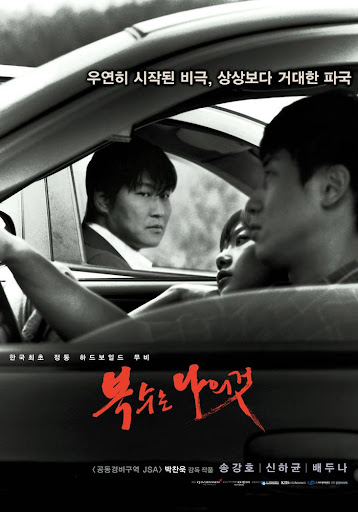
"I Saw the Dead Koreans" Weekend: Park Chan-wook- 복수는 나의 것/Sympathy for Mr. Vengeance (2002)- BluRay Rip (720p-x264)

park chan-wook- sympathy for mr vengeance
This trilogy might take some time. Sympathy for Mr. Vengeance will probably be the only 720p post, because I'm thinking of doing both Sympathy for Lady Vengeance and Oldboy in AVCHD in order to not be so damn xenphobic and retain the wealth of subtitles that the BluRay releases offer. There might be a healthy wait, though. Muxing and demuxing takes time...and patience is a virtue. Enjoy some Park Chan-wook!


park chan-wook- sympathy for mr vengeance

From Jack Eason at Cinelogue:

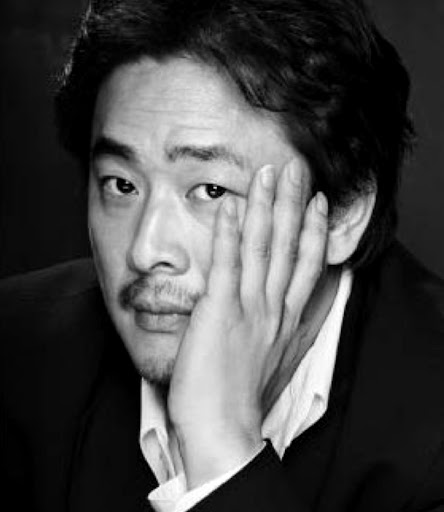
Although it was with his 2000 release J.S.A.: Joint Security Area that Chan-wook Park made a name for himself in his native South Korea and 2003’s Oldboy that assured him a cult following internationally, for many in the west it was 2002’s Bokseneun naui geot (Sympathy for Mr. Vengeance) that first garnered serious attention. Having made waves with his earlier film, Sympathy for Mr. Vengeance was the first of Park’s films to gain a DVD release in the UK and Ireland. This was a savvy move by the late Tartan Video as they capitalised on the rising interest in contemporary Asian cinema- a wave they largely helped create.

If Hideo Nakata’s Ringu first pulled eyes eastward, and Takashi Miike’s Audition seemingly dared those same eyes to flinch and look away, as the decade wore on there seemed a clear shift in focus from Japan to their neighbour, South Korea. In terms of production quality, J.S.A. was not alone; a blossoming domestic cinema industry consistently outperformed Hollywood in Korean theatres. With the massive success of J.S.A., Park was afforded free reign with his next film. The result is perhaps his finest achievement.

The plot, tightly wound but languidly paced, takes on a dualistic structure as the exploits of two conflicting protagonists are depicted. The initial protagonist is Ryu (Ha-kyun Shin), a green-haired deaf mute. Ryu works every shift he can at a local factory in order to save money for his sister, who is desperately in need of a kidney transplant. She must await a donation as she and her brother do not share the same blood type1. While waiting, they have to find the money to pay for the procedure. When Ryu loses his job, the first of many strokes of bad luck, he seeks the help of organ dealers. They rob him, not only of his savings, but also of a kidney, stealing away any chance of happiness when a suitable donor is unexpectedly found.


park chan-wook- sympathy for mr vengeance

Needing money quickly, Ryu takes the advice of his anarchist girlfriend Yeong-mi (Doo-na Bae) and together they kidnap a young girl, Yu-sun (Bo-bae Han). The plan is simple: her father is rich and will pay quickly, and the girl won’t even know she’s been taken. After all, such a transaction is, Yeong-mi argues, sound practice for helping to energise dormant capital. Scuppering these best-laid plans, Ryu’s sister discovers his plans and commits suicide, rendering the ransom money useless. In his grief and hindered by his deafness, Ryu’s attentiveness to Yu-sun lapses just long enough for the girl to drown.

With these elements in place, the film’s focus swaps to Yu-sun’s father, factory president Dong-jin Park (Kang-so Song), a man who has lost more than anyone knew. Coming out of a bitter divorce, Park maintains an air of financial well-being, but in actuality is reeling from economic developments that have left him struggling to defend the business he founded from a potential hostile take-over. When his only daughter is kidnapped, he is left with no option but to sell his remaining interest in the company. His reward for this last ditch effort is the death of his daughter. This final development spoils forever any chance of returning to a normal life. For both men, wronged in their own way, vengeance is the only recourse they can now envision.

It’s virtually impossible to explore the various facets of this film without revealing its many plot details. Park, who has played a role in writing all he’s brought to the screen, is among the very best in the industry at tying narrative structure to thematic content. Unfolding like a Euripidean tragedy, what is central to the film is the careful illumination of both sides of a single crime. Far from trying to administer blame, what is key is that desperation and unlucky coincidence fuel almost the entirety of Ryu’s actions, be it his physical handicaps, his sister’s health problems, his poverty or the series of misadventures that render his best efforts criminally unprofitable. Indeed the foundation of the plot is largely predicated on mistakes. What Park has crafted here could be termed an anti-narrative. It eschews the simple progression of decision to outcome for the more haphazard idea of each decision leading to a failure, which furthers the story in a way that none of the characters could foresee.


park chan-wook- sympathy for mr vengeance

Tempering this precise construction, and lending breadth to what is undoubtedly a cripplingly bleak feature, is the director’s trademark vein of uneasy comedy. One of Park’s standout talents is his ability to inject humour into scenarios that seem fundamentally opposed to such a detail; shades of Japan’s ‘Beat’ Takeshi Kitano abound. In Sympathy for Mr. Vengeance, the humour found throughout is of greater importance than anywhere else in his career. Far from leavening the tone or diminishing the mounting tragedy, the comedy instead highlights the inherent absurdity of so much of human action and reminds us that it is this vulnerability that really makes us human.

Absurdity is a cruel but omnipresent element as Park provides us with a wealth of little details that colour our perception of the project as a whole. The downward arc each protagonist inevitably follows comes laced with the plea for each of us to move beyond base perception when applying judgements in our daily life. The film mirrors this with sly set-pieces such as a group of men2 living next door to Ryu who masturbate to the moans of his sister, thinking they’re the result of sexual ecstasy rather than of agony. The joke on top of that is that the deaf Ryu enjoys his ramen completely oblivious to both. Elsewhere Park incorporates repetition to convey connections between the two men, often to subtle comic effect, such as Dong-jin using a seatbelt to keep the ransom money safe just as Ryu will later ‘protect’ his already deceased sister by strapping her in. The result is a film that clearly understands the good in people even if it must also acknowledge their potential for destruction.

If there’s a downside, it does seem that the film requires a certain degree of accommodation from the audience. Park pushes buttons and hijacks tropes that can lead to confusion for those not familiar with his style. The marketing for the film, both in its native Korea and as it travelled westward under the auspices of Tartan and others, suggested that what we have here is a hardboiled, gritty revenge thriller. There’s some truth in that yet more in the idea that Park has specifically subverted that very format. The often extremely explicit depiction of violence certainly makes it easy to throw the film into a pile with various other ‘genre’ titles, but the dual-pronged nature of the narrative necessarily robs it of the cheap catharsis that is the stock and trade of the genre.


park chan-wook- sympathy for mr vengeance

Talk of violence is, in may ways, overstated as the film only boasts a select few graphic sequences amidst a feature that runs just over the two hour mark. In the words of director Seung-wan Ryoo, “The audience thought the film was violent because it showed something they wanted to avoid.”34 The pacing and construction throughout often defy the basic logic of the genre; the kidnapping of Yu-sun is elided over completely whilst the ransom trade-off, usually an easy excuse for rapid crosscuts building tension as they track both parties, instead focuses mostly on Ryu’s sister and Yu-sun enjoying their time together at the apartment.

Criticisms of the film as being misanthropic, pessimistic and overly violent, are somewhat unwarranted, though it must be acknowledged that the film does venture into such territory. The main offender here is perhaps the depiction of the organ traffickers. They are integral to the plot but boast very little screen time, resulting in them often being touted as caricatures. If this is the case, then the sequence where Ryu, acting on the only impetus he has left, summarily slaughters them, does possess a cathartic ‘justice’ which the rest of the film works hard to deny. The criticism can be legitimately posited, but Park still manages to throw a spanner in the works with his presentation. They certainly wronged Ryu, but he is also transferring his own mistakes onto them, trying to make sense of the death of his sister and the young girl. In addition, they may be cruel and profit from suffering but in their final moments it’s revealed to the audience that they are a family too- the female overseer is the mother of the two men.


park chan-wook- sympathy for mr vengeance

Although many might feel their deaths are warranted for their cruel injustices against Ryu and countless others, the moment of their death is counterpointed by the revelation that one of the these ‘monsters’ is simply called Chulseung by his dear mother. He has a name and he has people who care for him. Although Sympathy for Mr. Vengeance can’t spare the space to elaborate further it’s easy to imagine, with all that has gone before and all that will transpire afterwards, that a similarly unkind fate pushed this family to this most despicable of professions as pushed Ryu down his unfortunate path. Park has even suggested that the mother is a former doctor who lost her job because of a crippling morphine addiction3. Whatever back-story you might wish to instil, this detail finds fellowship with another of the film’s vignettes, that of a laid-off employee committing suicide with his family. Horrific outcomes can have such banal origins.

Likewise some other sequences seem to trip viewers up as they follow the unfolding events. Perhaps the most obvious of these is the autopsy of Yu-sun which some believe is attended by her own father. Such a reading would render the scene utterly egregious, although some mistakenly try to chalk it down to some manner of cultural difference that suggests Koreans might actually be allowed, and indeed want, to attend their own daughter’s post-mortem5. Given Park’s advanced structuring it becomes clear with further reflection that the sequence is intended as a morbid fantasy. Importantly, we never see the father and corpse in the same room, and the procedure is outlined through the use of sound and Dong-jin’s facial reactions. His presence in the autopsy room links him only in place rather than time with the procedure.


park chan-wook- sympathy for mr vengeance

We might take precedence from a more obviously fantastical scene where he is visited by his soaking wet, recently deceased daughter. In this framework the autopsy sequence is not a cold-hearted leap of fancy, but rather an interesting emotional stepping stone that later finds repetition as Dong-jin, growing ever more callous, finds time to yawn at the thought of Ryu’s sister’s post-mortem.

Another question that arises is the role of the cerebral palsy sufferer who bothers Ryu as he tries to bury his sister. Deemed insensitive by some, the portrayal6 is far more than a throwaway caricature and plays back into the recurring idea of looking beyond initial perceptions. It is this character who reveals the make and registration number of Ryu’s car to Dong-jin, who later chides the police for never bothering to question the man, remarking that, “He is handicapped, not stupid.”

Intrinsic to the success of Park’s design, delicately balanced between high tragedy and genre thrills, is the superb contribution of the entire cast. We can only be grateful for Park’s insistence as it took four attempts before Kang-ho Song took on the role of President Park. Likewise, the wordless performance of Ha-kyun Shin as Ryu suggests a simplicity and intrinsic honesty that is tested to the breaking point. Elsewhere Doon-na Bae’s energy and personability contrasts sharply with her character’s obvious failings. She is an object of destruction but she could never realise just what form that would take until it’s already far too late. The pacing and framing of the film gives great help to the actors to flesh out their performances. Unlike more basic genre cinema that is more concerned with event and spectacle, Sympathy for Mr. Vengeance often nestles into long, uninterrupted conversations, showcasing interaction between one or more of the film’s many denizens. No better example of this can be found than the single, static shot of Dong-jin, dumbfounded and obscured by the outside of the car in which he sits, trying to talk to a detective about his daughter’s death. Meanwhile the police officer, obviously familiar with this sort of thing, can’t offer Park any genuine consolation. There’s certainly no feel, as might be expected in a more typical genre film, of any of these actors simply collecting a paycheque.


park chan-wook- sympathy for mr vengeance

Also of note, and a mainstay of all of Park’s post- Simpan features, are the exquisite production values throughout. What perhaps first caught the attention of western audiences when modern Korean cinema began to disseminate around the world was the superb quality they maintained. Like his prior feature J.S.A., Sympathy for Mr. Vengeance boasts a clarity of image and a quality of design that is indistinguishable from the multi-million dollar productions of Hollywood. Boasting a palette that favours green, a colour scheme that Park says is unusual in Korean cinema3, the film’s world moves between the bright and sunny and, in times of crisis, steely cold and muted- the latter bringing to mind Jean-Pierre Melville’s Le samouraï. It’s impressive when looking at the depth of sorrow and adversity in the film that Park refrains almost entirely from shooting at night and prefers instead to let the film unfold largely during the day. The awful truth is that the tragedies that can destroy man don’t need to hide in shadows.

Elsewhere Park’s sound design is highly advanced and no doubt reveals the director as a follower of Hitchcock. Subjective audio, often used to immerse us in Ryu’s world, heightens sympathy for the character as we watch his disability inevitably quicken his downfall. Brightening proceedings, Ryu’s deafness also allows Park to visually orient subtitles into the frame as he has animated discussions with his girlfriend. Rarely staying at the bottom of the screen, the captions move and embellish the visual, suggesting a genuine and playful relationship. Finally we have the experimental music of The Uhuhboo Project. Though generally left aurally unaccompanied, the film uses the harsh tones of the Korean group’s music to great effect; the final credits rolling to something akin to a Shinto death chant all the while mingling with the final death groans of one of the main characters as their pain lingers on even as the film ends.Though certainly open to critique, it’s easy to cite this as Park’s masterpiece. While it may be less ornate and immediately intriguing than the more popular Oldboy, it is also more rewarding in its various nuances. The violence and some of the other representational elements outlined previously may stagger viewers, but Park’s overall intent and carefully composed structure offer us one of cinema’s finest explorations of violence and its cost. If the cinema of Robert Bresson instilled in audiences the price of tears, then Chan-wook Park makes us fully confront the cost of blood.


park chan-wook- sympathy for mr vengeance

Technical Information:

Title: 복수는 나의 것/Bokseneun naui geot/Sympathy for Mr. Vengeance
Year: 2002
Country: South Korea
Director: Park Chan-wook

Source: BluRay Retail
Video Codec: 720p x264
Container: .mkv
Size: 6.55 GB
Length: 2:01:02
Programs used: Unknown

Resolution: 1280x552
Aspect Ratio: 2.35:1
Video: MPEG4 AVC H264 @ ~6247 kb/s
Frame Rate: 23.98 fps

Audio: Korean- Dolby DTS 5.1 @ 1510 kb/s
Subtitles: English, Swedish, Indonesian


park chan-wook- sympathy for mr vengeance

(Use JDownloader to speed up downloading and avoid file stalls.)

복수는 나의 것 Megaupload Links


"I Saw the Dead Koreans" Weekend: Kim Ji-woon- 악마를 보았다/I Saw the Devil (2010)- BluRay Rip (AVCHD)

kim ji-woon- i saw the devil
If slasher movies in the U.S. were this well made, I'd go to the theater every once in a while. But they're not. He're a Korean slasher film that's beautifully shot, well directed and has solid acting. In no way is I Saw the Devil on the same level as Memories of Murder, nor does it need to be. It's a fun watch that could use some tightening up, but it is a very solid and entertaining film. My major complaint is that Choi Min-sik's character loses his creepiness as the film progresses and if a serial killer doesn't have the Vengeance is Mine factor, I get bored real quick. Another complaint is that the protégé character did nothing for the film and should have been cut (pardon the pun). More psychology and less gratuitous gore, I suppose. A worthy download though. A worthy download. Enjoy.


A note from Team Dishwasher:

This film is AVCHD, which is a format that we've never posted. Don't let it freak you out. You can still play this in MPC or VLC media players, but you can also burn this onto standard dual-layer DVD media and play it in a Blu-Ray player that is compatible with the AVCHD format. 1080p on inexpensive media. Pretty cool, huh? We'll be posting more of this format in the future, so we wanted to give a heads-up. Here's a wiki on AVCHD if you want to read more on the subject.


kim ji-woon- i saw the devil

From Scott Tobias at A.V. Club:

The idea that revenge corrodes the soul of the avenger is an old theme in vigilante movies, perhaps because it’s the only moral route down an exceedingly dark path; otherwise, retribution and lawlessness rule the day. Korean director Park Chan-wook explored this theme thoroughly in a trilogy bookended by 2002’s Sympathy For Mr. Vengeance and 2005’s Lady Vengeance, and epitomized by the 2003 cult smash Oldboy, a mega-revenge tale set to an operatic pitch. Enter Park’s countryman Kim Ji-woon, a gifted genre alchemist who fused J-horror style with florid melodrama in 2003’s A Tale Of Two Sisters and Eastern-ized the spaghetti Western with 2008’s The Good, The Bad, The Weird. Not to be outdone, Kim goes to ever-nastier extremes with I Saw The Devil, but he also extends the revenge theme into a mesmerizing study of the nature of evil itself.


kim ji-woon- i saw the devil

Executed in high style, with a narrative coherence that sometimes eludes Park, I Saw The Devil opens with serial killer Choi Min-sik (star of Oldboy) claiming his latest victim, a female driver caught with a flat in a snowstorm. Turns out the woman’s fiancé, played by Lee Byung-hun, is an ass-kicking special agent who receives the news stoically, then sets about finding the perpetrator and making sure he pays dearly for the crime. Using a high-tech GPS capsule that makes him constantly aware of Choi’s location, Lee seeks to torment before he kills, hoping to make Choi feel the same fear and pain he inflicted on Lee’s wife-to-be. Thus begins a cat-and-mouse game that twists and turns and escalates in tension as it unfolds.


kim ji-woon- i saw the devil

It should come as no surprise that Lee’s spectacular quest for revenge comes back to haunt him, but I Saw The Devil is less about that than about the immutability of evil, which can’t be transformed or obliterated, but simply exists, cold and black, as a force of absolute destruction. Lee looks into the abyss and the abyss looks back at him, with a twinkle in its eye. Though Kim’s penchant for black comedy makes it more palatable, I Saw The Devil is still a nasty piece of work, extreme even by the hair-raising standards of extreme Asian cinema. But for stout-hearted genre aficionados—“sickos,” if you will—it’s essential viewing.


kim ji-woon- i saw the devil

Technical Information:

Title: 악마를 보았다/Akmareul boattda/I saw the Devil
Year: 2010
Country: South Korea
Director: Kim Ji-woon

Source: Retail BluRay
Video Codec/Format: AVCHD
Container: .M2TS
Size: 7.69 GB
Length: 02:22:11
Programs used:

Resolution: 1920x1080
Aspect Ratio: 16:9
Video: MPEG4 AVC H264 @ 4398 kb/s
Frame Rate: 23.976 fps

Audio 1: Korean- Dolby DTS 5.1 @ 1510 kb/s
Audio 2: English- Dolby DTS 5.1 @ 1510 kb/s

Subtitles: English, Spanish


kim ji-woon- i saw the devil

(Use JDownloader to speed up downloading and avoid file stalls.)

악마를 보았다 Megaupload Links


"I Saw the Dead Koreans" Weekend: Bong Joon-ho- 살인의 추억/Memories of Murder (2003)- BluRay Rip (720p-x264)

bong joon-ho- memories of murder
If you're going to have a Korean serial killer weekend, where do you start? Well, we started with our personal favorite. When I throw out the word "masterpiece", I always do it with great care. Memories of Murder is a masterpiece. Bong Joon-ho plays his cards to perfection in this film, much in the same way Imamura took a pitch-black storyline of Unagi/the Eel and somehow turned it into a bumbling comedy. This is a "must-download". Three more to follow...


bong joon-ho- memories of murder

From Christopher J. Wheeler at HanCinema:

Released in 2003, "Memories of Murder" is a true Korean genre film. Famed director Bong Joon-ho ("Barking Dogs Never Bite", "The Host", "Mother - 2009") has created a deeply rich crime thriller that is well paced, captivating and very satisfying to watch.

The film is inspired by a series of brutal murders of 10 women during the 80's in a small town in Gyeonggi Province. Korea was still under a militaristic and authoritarian government at the time when progressive social and political change was just on the horizon. In an interview with The Korea Society, Bong Joon-ho mentions how Korea during the 1980's wasn't ready to tackle a case of this magnitude. During which police investigations were hampered by inefficient procedures, dated investigatory methods, and a problematic and unsupportive socio-political climate. Amongst this instability, two cops from radically different backgrounds find themselves paired together in the hope of catching the elusive serial killer.


bong joon-ho- memories of murder

The dynamic Song Kang-ho plays Detective Park Doo-Man, a local detective whose passion for the job is unquestionable but he lacks the savvy required to crack such a case. He is quick to assume facts and assign blame, and even manipulates suspects into false confessions. His rash actions are paired with the physical abuse dished out by his fiery and impulsive partner. Such a character, however, doesn't protrude as much as you think-this is Korea during the 80's after all.

Detective Seo Tae-Yoon (Kim Sang-kyeong) is a Seoul cop who volunteers to assist on the case. He is pragmatic and observant, and while he brings a modern and professional dimension to the rural police outfit, he is not immune in becoming personally invested in the case. He is the perfect counter to detective Park Doo-man as well as to Song Kang-ho himself. This detective duo is airtight within the story and their characters and interactions provide a compelling social commentary on the issues of the time.


bong joon-ho- memories of murder

The case received a lot of media attention at the time and the film does well in its handling of this. There are a couple of scenes that show hordes of journalists covering the story and the detectives' actions, but this notion of it being a well publicised case was largely left as an off-screen implication, a contextualising tool of sorts. What this does is cement the investigators personal stories in the investigation, and that's what "Memories of Murder" is all about.

Although the case was never actually solved, "Memories of Murder" manages to create suspense throughout the film. As I mentioned, because the films attention is largely wrapped around the two detectives, it allows for a more personal identification with the characters and the events depicted. The suspense is not created through the detectives' pursuit of an identified suspect, but rather as a result of their experiences and emotional attachments to the case. The fact that the killer is still at large in reality is transferred beautifully to the narrative, but not at the expense of our enjoyment or satisfaction.


bong joon-ho- memories of murder

The last scene, in which Detective Park Doo-Man turns and faces the camera, is a clear attempt by the filmmaker to almost expose the real killer. Bong Joon-ho said in an interview that when the detective does so he would, by chance, be looking directly at the real killer. But the viewer is, in all likelihood, not the killer. This self-reflexive technique makes all who watch the film question themselves in some way because, as spectators, we are occupying the same space in which Bong Joon-ho has suggested the killer would be. I find this particularly intriguing when this idea is met with the films social commentary of the time. Bong Joon-ho was willing to place his entire audience under suspension in the off chance that he was right about the actual killer watching his film. An idea shared by the very eyes staring back at us in that intrusive final scene. Brilliant.


bong joon-ho- memories of murder

Technical Information:

Title: 살인의 추억/Sarinŭi Ch'uǒk/Memories of Murder
Year: 2003
Country: South Korea
Director: Bong Joon-ho

Source: BluRay Retail
Video Codec: 720p x264
Container: .mkv
Size: 6.55 GB
Length: 02:11:08
Programs used: Unknown

Resolution: 1280x696
Aspect Ratio: 16:9
Video: MPEG4 AVC H264 @ 5650 kb/s
Frame Rate: 23.976 fps

Audio: Korean- Dolby DTS 5.1 @ 1510 kb/s
Subtitles: English


bong joon-ho- memories of murder

(Use JDownloader to speed up downloading and avoid file stalls.)

살인의 추억 Megaupload Links


Tarik Saleh- Metropia (2009)- BluRay Rip (1080p-x264)

tarik saleh- metropia
Anytime Vincent Gallo is part of an animation, I'm gonna be there. We got turned onto this film as a result of searching for a Cargo 200 OST. I'd never heard of the film and downloaded it on a whim off of the Russian tracker I was mining. Then I made the mistake of watching it that night, at three in the morning. On second thought it wasn't a mistake. Metropia is form-fitted to be watched while everyone else is asleep. Watch it while everyone else is asleep. As always, enjoy.


tarik saleh- metropia

From Jeanette Catsoulis at the New York Times:

The distinctive voices of Vincent Gallo and Juliette Lewis emerge from the lead characters in “Metropia” but provide no comfort: Tarik Saleh’s dystopian vision of a depleted, smog-engulfed, financially collapsed Europe in the year 2024 seems a touch too close to home. In any case, the real star here is the film’s eerily unsettling animation, a digitally manipulated photomontage that makes everyone look almost human — in a heavily medicated, genetically suspect kind of way.

The film’s paranoid centerpiece is Roger (wonderfully voiced by Mr. Gallo), a Swedish call-center worker consumed by suspicions. His girlfriend may be cheating, his thoughts may be monitored, and the government-mandated subway system may be part of a sinister international conspiracy. A dandruff-shampoo model and the bellybutton of a Hello Kitty doll will play crucial roles in Roger’s (if not the audience’s) gradual enlightenment; if only the voice in his head would stop telling him what to do.


tarik saleh- metropia

With nods to Orwell, Kafka and the work of Terry Gilliam (particularly “Brazil”), Mr. Saleh, a former graffiti artist, paints the power of advertising and the omnipotence of multinationals in subterranean hues. Moldy greens and funereal grays coat the screen; saucer-eyed faces float in the blackness of underground rooms and tunnels. Visually and conceptually oppressive, the film is a seamless match of form and content. But that very synchronicity is also its main problem, exerting a near-tyrannical hold on atmosphere and stifling the film’s ability to move.

Technically innovative but narratively moribund, “Metropia” is all stasis and shadows. Perhaps Mr. Saleh could have listened to a lighter voice.


tarik saleh- metropia

Technical Information:

Title: Metropia
Year: 2009
Country: Sweden, Denmark, Norway, Finland
Director: Tarik Saleh

Source: BluRay Retail
Video Codec: 1080p-x264
Container: .mkv
Size: 4.64 GB
Length: 1:25:42
Programs used: mkvmerge

Resolution: 1920x1040
Aspect Ratio: 16:9
Video: MPEG4 AVC H264 @ ~5794 kb/s
Frame Rate: 24 fps

Audio 1: Russian- Dolby AC3 5.1 @ 448 kb/s
Audio 2: English- Dolby DTS 5.1 @ 1510 kb/s

Subtitles: Russian


tarik saleh- metropia

(Use JDownloader to speed up downloading and avoid file stalls.)

Metropia Megaupload Links